Dementia Mimics: Conditions That Look Like Dementia But Aren't
When someone starts forgetting names, getting lost in familiar places, or acting out of character, the first thought is often dementia, a group of brain disorders causing progressive memory and thinking decline. But here’s the truth: dementia isn’t the only culprit. Many other medical issues can copy its symptoms so closely that even doctors miss them at first. These are called dementia mimics—and catching them early can mean the difference between irreversible decline and full recovery.
One of the most common mimics is delirium, a sudden, temporary state of confusion often caused by infection, medication changes, or dehydration. It hits fast, usually over hours or days, and can look exactly like Alzheimer’s—but it’s reversible if you treat the root cause. Then there’s depression, a mental health condition that can cause memory lapses, slow thinking, and apathy, especially in older adults. People with severe depression often seem "demented" because they stop talking, forget appointments, and lose interest in everything. It’s not brain damage—it’s a treatable mood disorder. Another hidden mimic is normal pressure hydrocephalus, a buildup of spinal fluid that presses on the brain, causing walking problems, bladder issues, and memory loss. A simple MRI and shunt procedure can restore function in many cases. And don’t overlook vitamin B12 deficiency, a nutritional gap that causes nerve damage, confusion, and balance issues. It’s easy to fix with supplements, but often goes undiagnosed because it’s not on routine blood panels.
These aren’t rare edge cases. Studies show that up to 20% of people diagnosed with dementia actually have one of these treatable conditions. That’s one in five people who might be given the wrong prognosis—and the wrong meds—when they could get better. The key is knowing what to look for: sudden onset? Check for infection or drug reactions. Mood changes before memory loss? Rule out depression. Trouble walking and peeing? Consider hydrocephalus. Fatigue and tingling? Test B12. These clues don’t show up in standard memory tests. They show up in careful history-taking and targeted labs.
The posts below dive into real cases and conditions that look like dementia but aren’t. You’ll find clear guides on spotting delirium in seniors, understanding how depression masquerades as cognitive decline, and why a simple blood test for B12 could change everything. You’ll also see how medications, chronic illnesses, and even sleep disorders can create brain fog that mimics Alzheimer’s. This isn’t about fear—it’s about empowerment. If you or someone you care about is showing signs of memory loss, don’t assume it’s dementia. Ask the right questions. Push for the right tests. The answer might be simpler than you think.
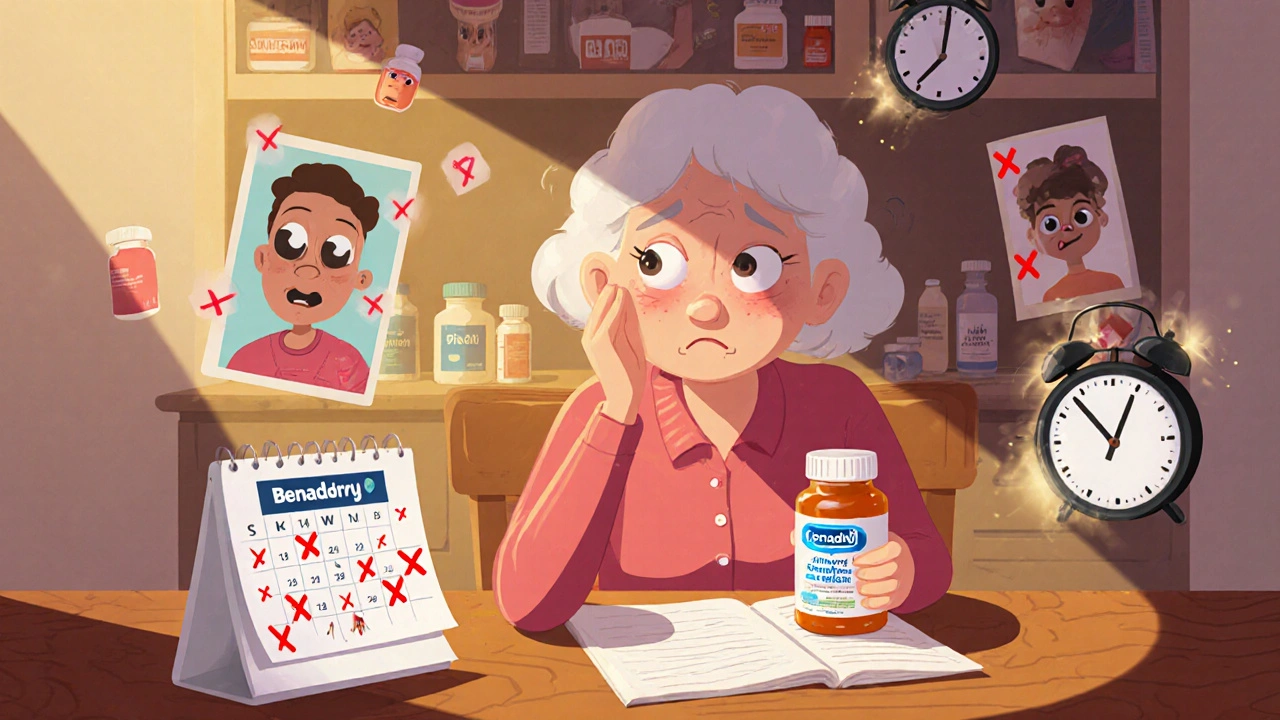
Many seniors experience memory loss and confusion not from aging, but from common medications like Benadryl or bladder pills. Learn how to spot these drug side effects - and reverse them.