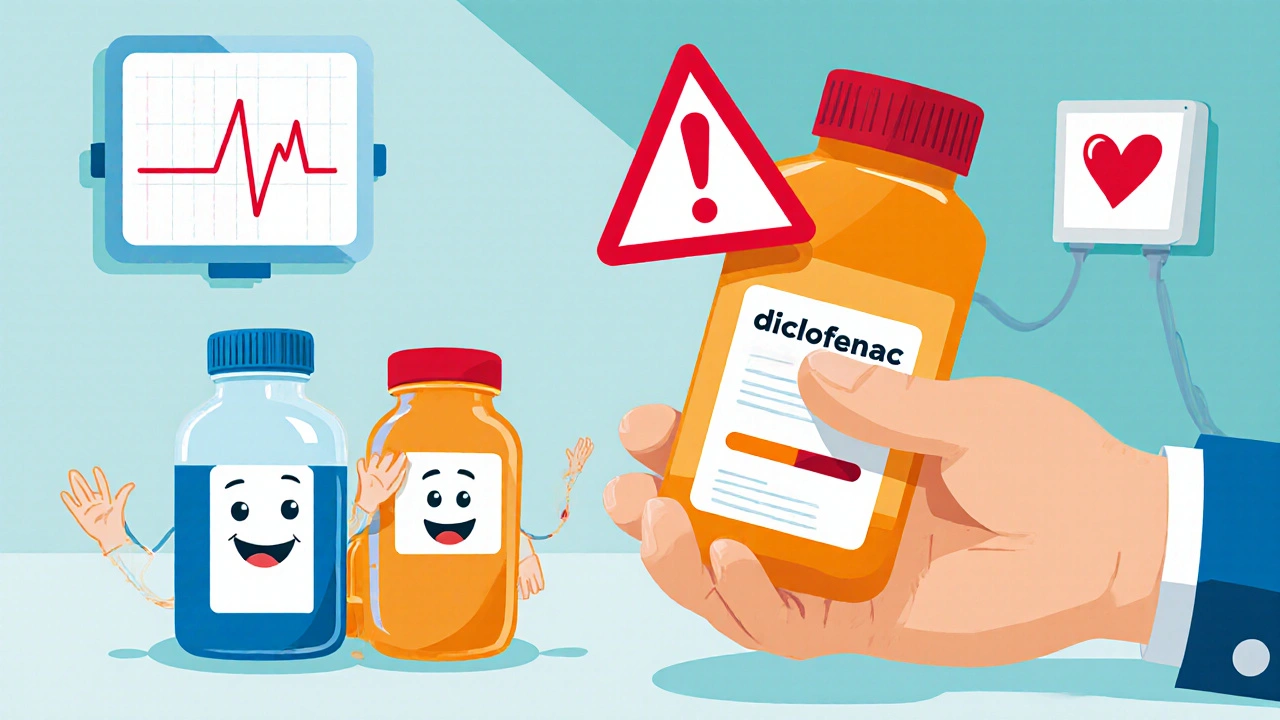
Diclofenac: Uses, Risks, and What You Need to Know
When you reach for a pain reliever after a bad back or swollen knee, you might grab diclofenac, a nonsteroidal anti-inflammatory drug used to reduce pain and swelling. Also known as Voltaren, it’s one of the most prescribed NSAIDs worldwide—but it’s not harmless. While it works fast for joint pain, muscle strains, or menstrual cramps, it can silently damage your stomach, heart, or kidneys if used carelessly.
Diclofenac belongs to a class of drugs called NSAIDs, medications that block enzymes causing inflammation and pain. But unlike ibuprofen or naproxen, diclofenac has a stronger effect on COX-2 enzymes, which makes it more powerful—but also riskier. Studies show it raises the chance of heart attack or stroke, especially if taken long-term or at high doses. People with high blood pressure, heart disease, or a history of ulcers should talk to their doctor before using it. Even over-the-counter versions aren’t safe for daily use without supervision.
It’s not just your heart you need to watch. gastrointestinal bleeding, a serious side effect linked to long-term NSAID use can happen without warning. You might feel fine until you notice black stools or vomiting blood. That’s why many doctors now recommend the lowest effective dose for the shortest time possible. If you’re using diclofenac for chronic pain like osteoarthritis, ask about alternatives—topical gels, physical therapy, or even acetaminophen for milder cases.
What you won’t find on the label is how diclofenac interacts with other meds. If you’re on blood thinners, antidepressants, or diabetes drugs, mixing them with diclofenac can be dangerous. It also messes with kidney function, especially in older adults or those dehydrated. And yes, it’s been linked to rare but severe skin reactions—so if you get a rash or blisters after starting it, stop and call your doctor immediately.
Below, you’ll find real-world stories and expert insights on how diclofenac fits into daily health routines. Some posts show how it’s used alongside other treatments for arthritis, while others warn about hidden risks tied to common medications. You’ll see how people manage side effects, when to switch drugs, and what alternatives actually work. This isn’t just about pills—it’s about making smarter choices so you don’t trade one problem for another.
Diclofenac is effective for pain and inflammation, but carries higher risks than alternatives like ibuprofen, naproxen, and topical gels. Learn which options are safer and just as effective for arthritis, joint pain, and more.