SGLT-2 Inhibitors: How They Work, Who They Help, and What Alternatives Exist
When your body can’t manage blood sugar the way it should, SGLT-2 inhibitors, a class of diabetes medications that cause the kidneys to remove sugar through urine. Also known as gliflozins, they’re not just about lowering glucose—they’ve been shown in real-world studies to cut heart failure hospitalizations and slow kidney decline in people with type 2 diabetes. Unlike insulin or metformin, these drugs don’t depend on your pancreas or insulin sensitivity. They work by blocking a protein in your kidneys called SGLT-2, which normally reabsorbs sugar back into your blood. When it’s blocked, sugar exits through your pee—no extra insulin needed.
This makes SGLT-2 inhibitors especially useful for people who’ve tried other meds but still struggle with high blood sugar, or those who also have heart or kidney issues. Three main drugs make up this group: empagliflozin, a brand-name drug proven to reduce cardiovascular death in high-risk patients, canagliflozin, linked to lower rates of kidney failure in clinical trials, and dapagliflozin, shown to improve heart function even in patients without diabetes. These aren’t just sugar-lowering pills—they’re disease-modifying tools. But they’re not for everyone. If you’re prone to urinary tract infections, dehydration, or have very low kidney function, your doctor might look elsewhere.
What you’ll find in the posts below are real-world comparisons and practical insights. You’ll see how SGLT-2 inhibitors stack up against other diabetes drugs like metformin and GLP-1 agonists, what side effects to watch for, how diet and hydration affect their performance, and why some people switch from one gliflozin to another. There’s also advice on managing common issues like genital yeast infections, which can happen when sugar is floating in your urine. You’ll learn when these drugs make the most sense—and when alternatives like DPP-4 inhibitors or insulin might be safer or more effective. No fluff. Just clear, usable info based on what patients and doctors are actually dealing with.
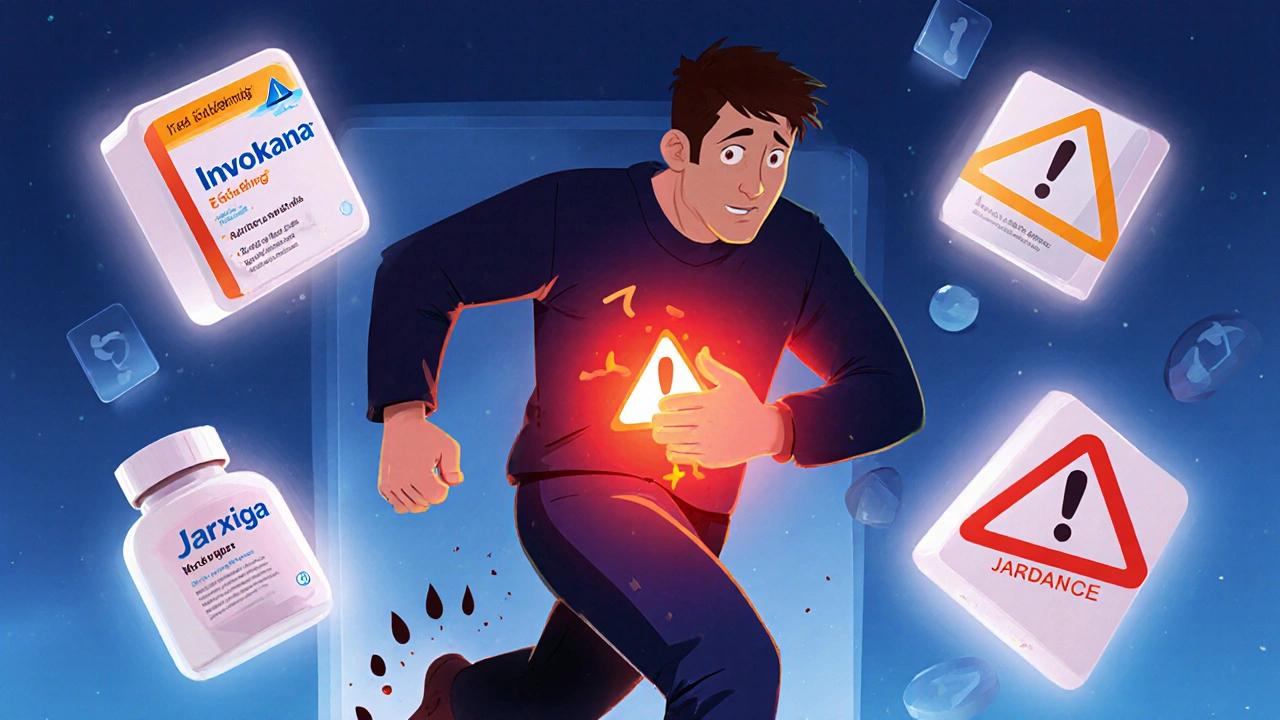
Fournier’s gangrene is a rare but deadly infection linked to SGLT-2 inhibitor diabetes drugs. Know the emergency signs-pain, swelling, fever-and act fast. Your life could depend on it.