
Every year, Americans fill over 6.8 billion prescriptions. More than 90% of them are for generic drugs. Yet, nearly 4 in 10 people still think generics are weaker, less safe, or not as good as brand-name pills. Why? Because the information they’re given is either too confusing, too technical, or just plain misleading.
What Generic Drugs Really Are
A generic drug isn’t a copy. It’s not a knockoff. It’s the exact same medicine, just without the fancy branding. The FDA requires that generics have the same active ingredient, strength, dosage form, and route of administration as the brand-name version. If your brand-name pill is 20mg of esomeprazole in a capsule taken once daily, the generic must be 20mg of esomeprazole in a capsule taken once daily. No exceptions.
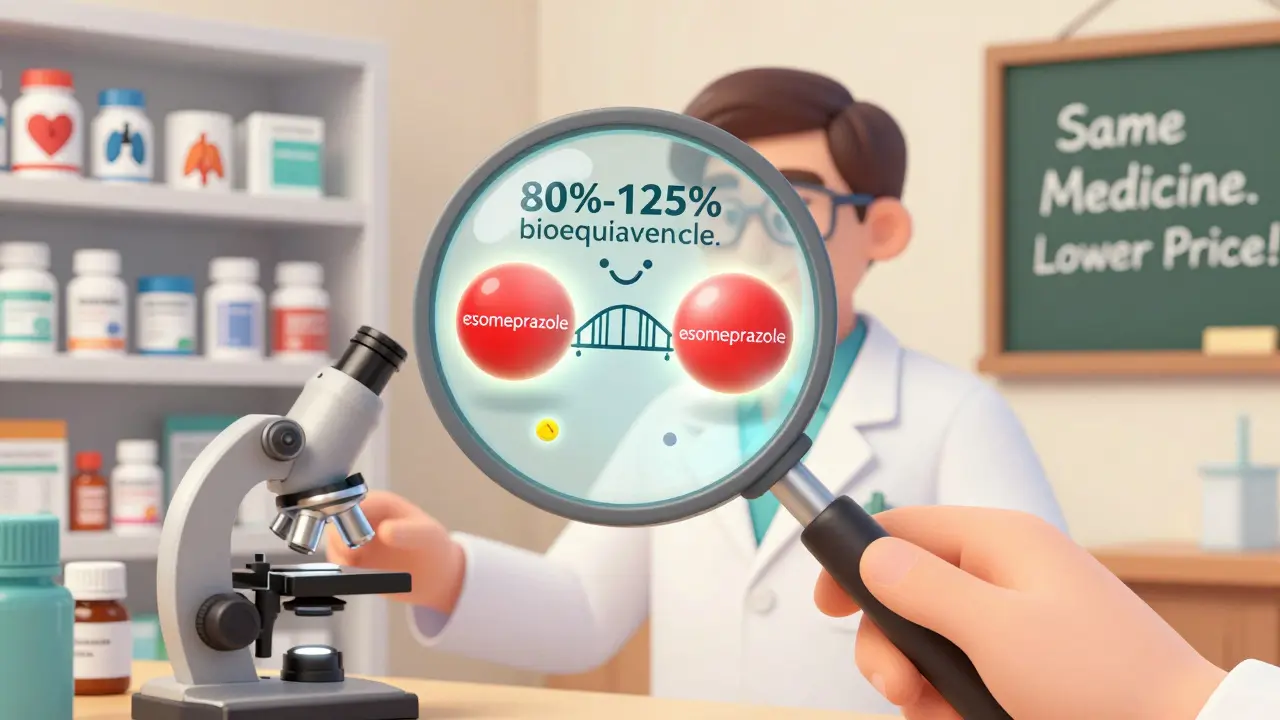
The key word here is bioequivalence. That means the generic must deliver the same amount of medicine into your bloodstream as the brand-within a range of 80% to 125%. That’s not a guess. It’s a strict, scientifically proven standard. Over 98% of the 11,000 generic drugs approved since 2010 met this bar. For most medications, this means they work exactly the same way, in exactly the same time, with the same results.
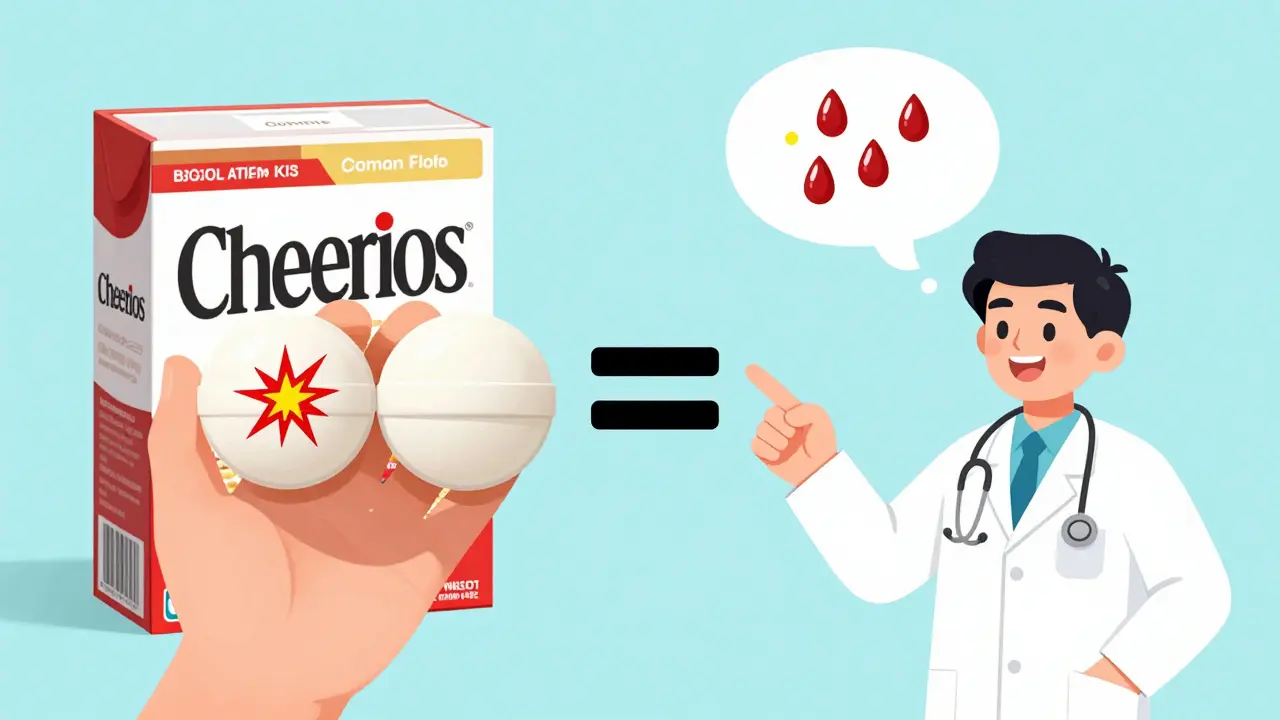
Think of it like cereal. Brand-name Cheerios and store-brand Cheerios have the same ingredients, same nutrition, same taste. The only difference? Price. And packaging. And maybe the shape of the box. Generic drugs are the same. The active ingredient is identical. The effect on your body is identical. What changes is the color, the shape, the filler ingredients-like lactose instead of cornstarch. These fillers don’t affect how the medicine works. They’re just there to hold the pill together.
Why People Don’t Trust Generics
Confusion starts with the name. If you’ve been taking Lipitor for years, and your pharmacist hands you a pill labeled “atorvastatin,” it feels like a different drug. Your brain doesn’t connect the two. Add to that the fact that generics look different-different color, different logo, different size-and it’s easy to assume something’s changed.
Then there’s the myth that generics are made in cheaper factories. That’s false. The same factories often make both brand and generic versions. Many brand-name companies even produce their own generics under different labels. These are called “authorized generics.” They’re identical to the brand, just sold without the brand name. And they have a 28% lower chance of patients switching back to the brand, according to CVS Caremark’s 2023 data.
But the biggest issue? Oversimplification. Some guides say, “Generics are exactly the same.” That’s true for most drugs. But not all. For drugs like levothyroxine (for thyroid), warfarin (for blood thinning), or phenytoin (for seizures), tiny differences in how the drug is absorbed can matter. That’s why doctors sometimes recommend sticking with one brand or one generic maker. It’s not because generics are bad-it’s because these are narrow therapeutic index drugs. Small changes can have big effects. That’s why the FDA launched its Generic Drug Education Initiative in 2023, specifically targeting these high-risk medications with tailored guides.
How Good Language Guides Work
Effective consumer language guides don’t just simplify. They clarify. They replace jargon with everyday words. They use analogies. They show pictures. They ask questions.
The FDA’s “Generic Drug Facts” page, updated quarterly since 2010, is the gold standard. It uses side-by-side images of brand and generic pills. It explains bioequivalence with a simple graph. It lists common brand names and their generic equivalents-like Tylenol → acetaminophen, Nexium → esomeprazole. A 2022 survey found that 82% of pharmacists said this chart reduced patient confusion.
Pharmacies like CVS, Walgreens, and Walmart now use standardized talking points. Pharmacists are trained to spend 90 seconds explaining three things:
- Same active ingredient - “This pill has the same medicine as your brand-name one.”
- Same effect - “The FDA requires it to work the same way in your body.”
- Same savings - “You’re saving about $387 per prescription on average.”
They also use the “teach-back” method. Instead of just handing out a handout, they ask: “Can you tell me in your own words why you’re switching to this generic?” If the patient can explain it back, they understand. If not, the pharmacist keeps talking.
Good guides avoid absolutes. They don’t say “all generics are the same.” They say “most are, but for some medicines, your doctor may recommend staying with one brand.” They mention authorized generics. They explain why generics look different. They even include real patient stories: “I was scared to switch from Prilosec to omeprazole. But after three months, my heartburn was gone-just like before.”
What’s Missing From Most Guides
Many consumer guides are too basic. They skip the exceptions. They don’t mention that the FDA withdrew one generic version of Wellbutrin XL in 2012 because it didn’t work the same. They don’t explain that some generics for levothyroxine vary slightly between manufacturers, which is why the American Association of Clinical Endocrinologists recommends sticking with the same brand or generic maker.
And they rarely mention cost. The average savings? $387 per prescription. That’s not a small amount. For someone on multiple meds, it adds up to thousands a year. In 2022, generics saved the U.S. healthcare system $2 trillion over the last decade. But if patients don’t understand that, they’ll keep paying more.
Even worse, some guides are written at a 10th-grade reading level. The NIH recommends 6th-grade level for health materials. The FDA’s guides hit that mark. Many pharmacy handouts don’t. That’s a problem. Nearly half of U.S. adults read at or below a 6th-grade level. If your guide is too hard to read, it’s useless.
What’s Changing in 2025
Things are getting better. In January 2025, Medicare Part D plans are required to give all enrollees generic drug education materials that meet NIH health literacy standards. That means clearer language, simpler visuals, and real patient-friendly explanations.
Pharmacies are also starting to use AI tools that adjust explanations based on the patient’s reading level, age, and medication history. Kaiser Permanente is testing a system that pulls up a personalized guide when a pharmacist enters a patient’s name and prescription. If you’re on levothyroxine, the system highlights the need for consistency. If you’re on atorvastatin, it shows the 2016 NEJM study proving generics work just as well.
And the data is clear: when patients understand generics, they take them. The FDA found that proper explanations increase adherence by 22% and cut switch-back rates to brand-name drugs by 34%. That’s not just about saving money. It’s about keeping people healthy.

What You Can Do
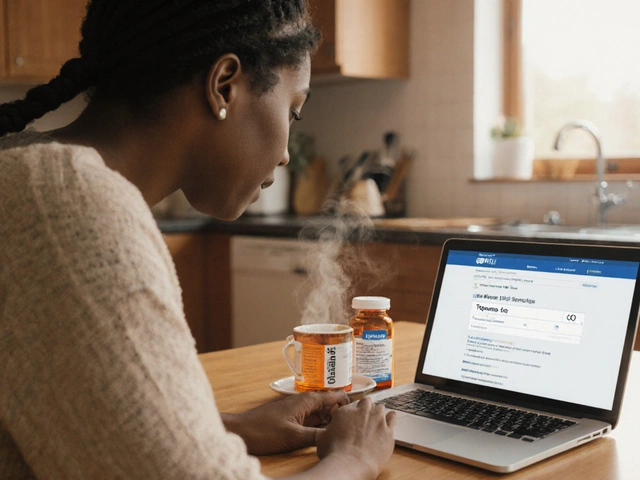
If you’re on a generic drug and feel unsure, ask your pharmacist. Don’t just accept the pill. Ask: “Is this the same as my brand-name one?” “Why does it look different?” “Are there any special things I should know?”
Check the FDA’s website for their “Generic Drug Facts” page. Look up your drug. See the brand name next to the generic. See the picture of the pill. Read the simple explanation. You’ll likely find your fears were based on myths, not facts.
And if you’re helping someone else-like a parent, spouse, or elderly neighbor-explain it to them like you would to a friend. Use the cereal analogy. Show them the picture. Tell them it’s the same medicine, just cheaper. And remind them: saving money doesn’t mean saving on quality.
The system is working. Generics are safe. They’re effective. They’re the standard. The problem isn’t the medicine. It’s the message. And that’s changing-slowly, but for the better.
Are generic drugs as safe as brand-name drugs?
Yes. The FDA requires generic drugs to meet the same strict safety and quality standards as brand-name drugs. They’re tested for purity, strength, and stability. The same manufacturing rules apply. In fact, many brand-name companies also make generic versions of their own drugs.
Why do generic drugs look different?
By law, generic drugs can’t look exactly like the brand-name version. So they change the color, shape, or markings. But the active ingredient-the part that makes the medicine work-is identical. The differences are only in the fillers, dyes, or coatings, which don’t affect how the drug works in your body.
Can I trust generics for serious conditions like high blood pressure or thyroid disease?
For most people, yes. Studies show generics for high blood pressure, cholesterol, and diabetes work just as well as brand names. But for narrow therapeutic index drugs-like levothyroxine, warfarin, or phenytoin-small changes in how the drug is absorbed can matter. Your doctor may recommend sticking with the same brand or generic maker to avoid fluctuations. Always talk to your provider if you’re unsure.
What’s an authorized generic?
An authorized generic is the exact same drug as the brand-name version, but sold without the brand name and at a lower price. It’s made by the original brand company and has the same inactive ingredients. These have the lowest switch-back rates-28% lower than regular generics-because they’re identical in every way.
Why do some people say generics don’t work for them?
Sometimes, it’s because they switched between different generic manufacturers, and each one has slightly different fillers that affect absorption. This is rare, but more common with drugs like levothyroxine. Other times, it’s because they expected a different side effect or didn’t notice the medicine working because they weren’t tracking symptoms. If you feel a difference after switching, talk to your pharmacist or doctor. Don’t assume the generic is bad-ask for help figuring out why.
How can I find reliable information about my generic drug?
Start with the FDA’s website: fda.gov/generics. It has fact sheets, pill images, and lists of brand and generic names. Your pharmacist can also give you a printed guide. Avoid relying on drug ads or social media rumors. Stick to official sources like the FDA, CDC, or your pharmacy’s patient education materials.
Next Steps for Patients
If you’re on a generic drug and feel unsure, do this:
- Check the FDA’s Generic Drug Facts page for your medication.
- Ask your pharmacist: “Is this an authorized generic?”
- Compare the pill image on the FDA site with the one in your bottle.
- If you’ve had problems before, ask if you can stay on the same generic maker.
- Use the “teach-back” method: explain back to someone why you’re taking it.
Generic drugs are one of the biggest wins in modern medicine. They save lives and money. But only if people understand them. The information is out there. You just need to ask for it-and use it.

Robyn Hays
Okay but imagine if your cereal box changed colors every time you bought it and you had to relearn how to open it. That’s what switching generics feels like. I used to panic every time my pill looked different-until I found the FDA’s pill images. Now I just check the logo and breathe. Same medicine, different T-shirt. 🙌
Liz Tanner
I work in a pharmacy and this is the most accurate summary I’ve seen. Patients think generics are ‘cheap versions’ like knockoff handbags. But it’s like buying the same coffee beans in a plain bag instead of a branded one. The roast doesn’t change. The caffeine doesn’t lie. We teach them with the cereal analogy every day-and it works.
Babe Addict
Let’s be real-bioequivalence is a statistical loophole. 80-125% is a massive window. That’s not ‘same medicine,’ that’s ‘kinda similar under lab conditions.’ I’ve seen patients on levothyroxine crash after switching generics. It’s not paranoia-it’s pharmacokinetics. The FDA approves these things like they’re approving a new flavor of Gatorade.
Satyakki Bhattacharjee
People forget that money drives everything. Big pharma makes billions from brand names. Generics are the people’s medicine. But they want you to doubt it. Why? Because if you know the truth, you stop paying extra. Truth is simple. Cheap is not bad. Trust your body, not the ads.
Anna Weitz
Generics are fine until you realize the same factory that makes your Lipitor also makes the generic but with a different dye because the FDA says they can’t look alike so they add weird chemicals just to make it different and then wonder why people get weird side effects
Jane Lucas
my grandma switched from nexium to esomeprazole and thought she was being poisoned for a week until i showed her the fda pic. now she calls it her ‘boring pill’ and saves 200 bucks a month. same stuff. just no fancy logo.
Elizabeth Alvarez
Have you ever wondered why the FDA allows generics to have different fillers? Because they’re not just about cost-they’re about control. The same companies that make brand-name drugs also make the generics. They control the supply chain. They control the narrative. They control which fillers are ‘safe.’ And guess what? The inactive ingredients are patented too. They’re not harmless. They’re designed to make you dependent on the same manufacturer. It’s not about medicine. It’s about market lock-in. And they call it ‘bioequivalence’ to make you feel safe while they profit from your confusion.
Miriam Piro
Okay but what if the ‘authorized generics’ are just the brand-name drugs with the logo sandblasted off? 😏 The same pills. Same factory. Same everything. But now you pay less because they don’t want to pay for marketing. And the FDA lets them do it because they’re ‘the same.’ But what if they’re not? What if the fillers change slightly between batches? What if your body remembers the original logo and panics when it’s gone? I switched to an authorized generic for my thyroid med and felt like my soul left my body for two weeks. Coincidence? Or is your mind just wired to believe the brand? 🤔
dean du plessis
Generics saved my dad’s life. He was on three meds and spending half his pension. Switched to generics. Same results. No side effects. He says the pills look weird but his blood pressure doesn’t care. Simple truth. Medicine is medicine. Let’s stop overcomplicating it. Peace