Every pill, injection, or capsule that ends up in a patient’s hands should come from a trusted source. But in today’s global pharmaceutical market, that’s not always guaranteed. Counterfeit drugs are a real and growing threat-estimated to make up about 1% of the global drug supply, worth $200 billion annually. For pharmacies, the stakes couldn’t be higher. A single bad batch can lead to patient harm, legal liability, or even a shutdown. That’s why legitimate drug procurement isn’t just a best practice-it’s a legal and ethical requirement.
What Legitimate Drug Procurement Actually Means
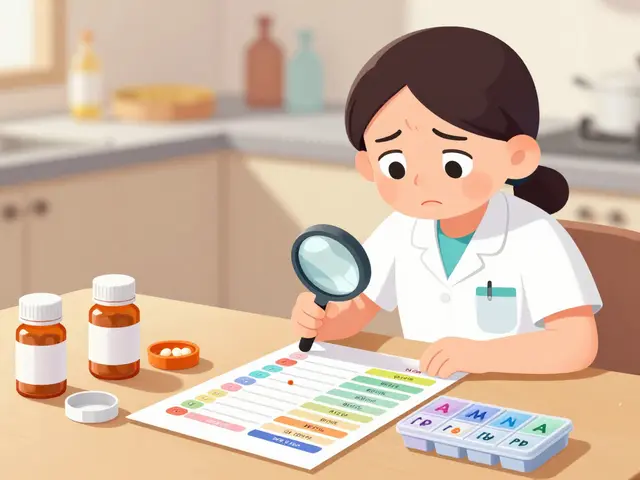
Legitimate drug procurement means buying medications only from suppliers who follow strict federal and state rules. It’s not enough to get a good price or fast delivery. You need proof that every drug came from a verified manufacturer, moved through licensed distributors, and was tracked at every step. The foundation of this system in the U.S. is the Drug Supply Chain Security Act (DSCSA), passed in 2013 and fully enforced by November 2023. This law requires every pharmacy, wholesaler, and manufacturer to exchange electronic data about each drug package-its identity, history, and transaction details. Without that data, you can’t legally receive or dispense the product.The goal? To make it impossible for counterfeit, stolen, or contaminated drugs to slip into the supply chain. Think of it like a digital passport for every medicine. If the passport is missing, expired, or fake, the drug gets rejected.
Who Can You Buy From? The Supplier Rules
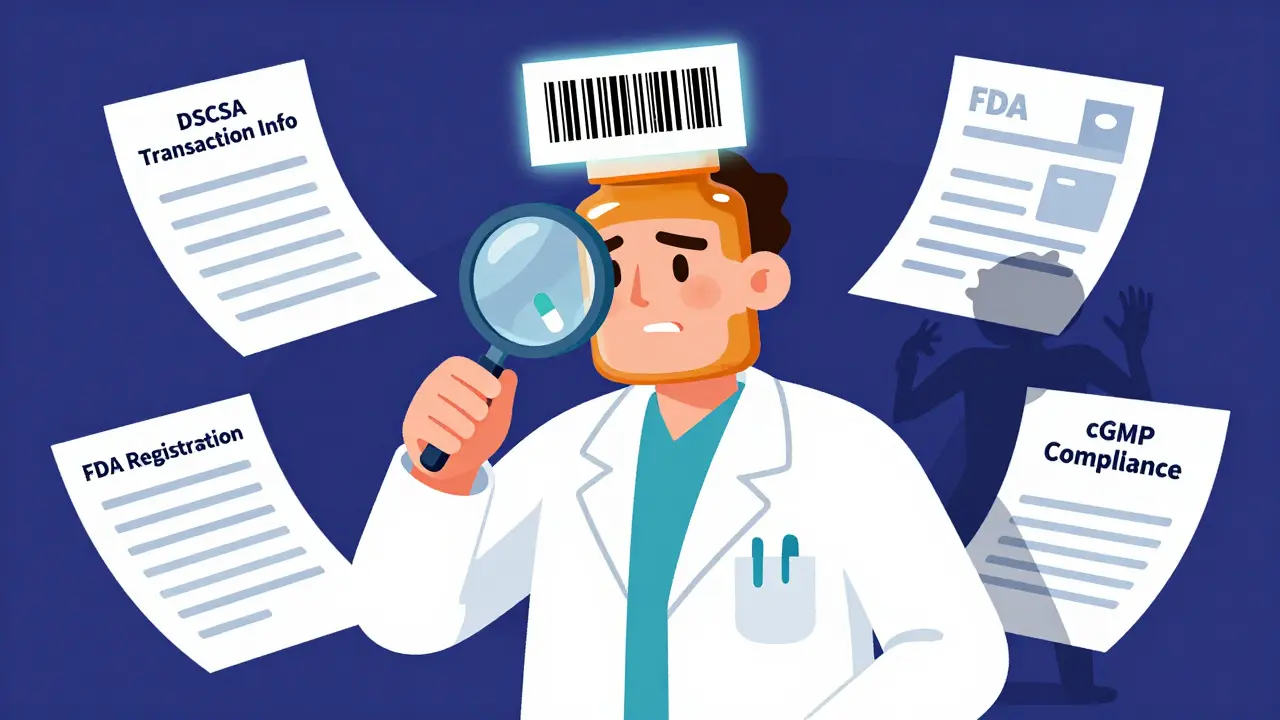
Not every supplier is created equal. The American Society of Health-System Pharmacists (ASHP) lays out clear criteria for choosing who you do business with. You must verify seven things before signing a contract:- Current FDA registration
- Valid state pharmacy licenses
- Compliance with current Good Manufacturing Practices (cGMP)
- History of product recalls or safety issues
- Security measures to prevent theft or diversion
- Financial stability (you don’t want to buy from a company that might vanish)
- DSCSA compliance with full transaction tracing
Don’t accept verbal assurances. You need documents. At least three years’ worth of compliance records. If a supplier can’t provide them, walk away. A 2022 ASHP survey found that health systems using all seven criteria cut procurement-related medication errors by 63%.
The Paper Trail: DSCSA and Transaction Records
Since late 2023, every time a drug changes hands-from manufacturer to wholesaler to pharmacy-it must come with three pieces of electronic data:- Transaction Information (what product, lot number, quantity)
- Transaction History (who owned it before)
- Transaction Statement (certification that the chain is compliant)
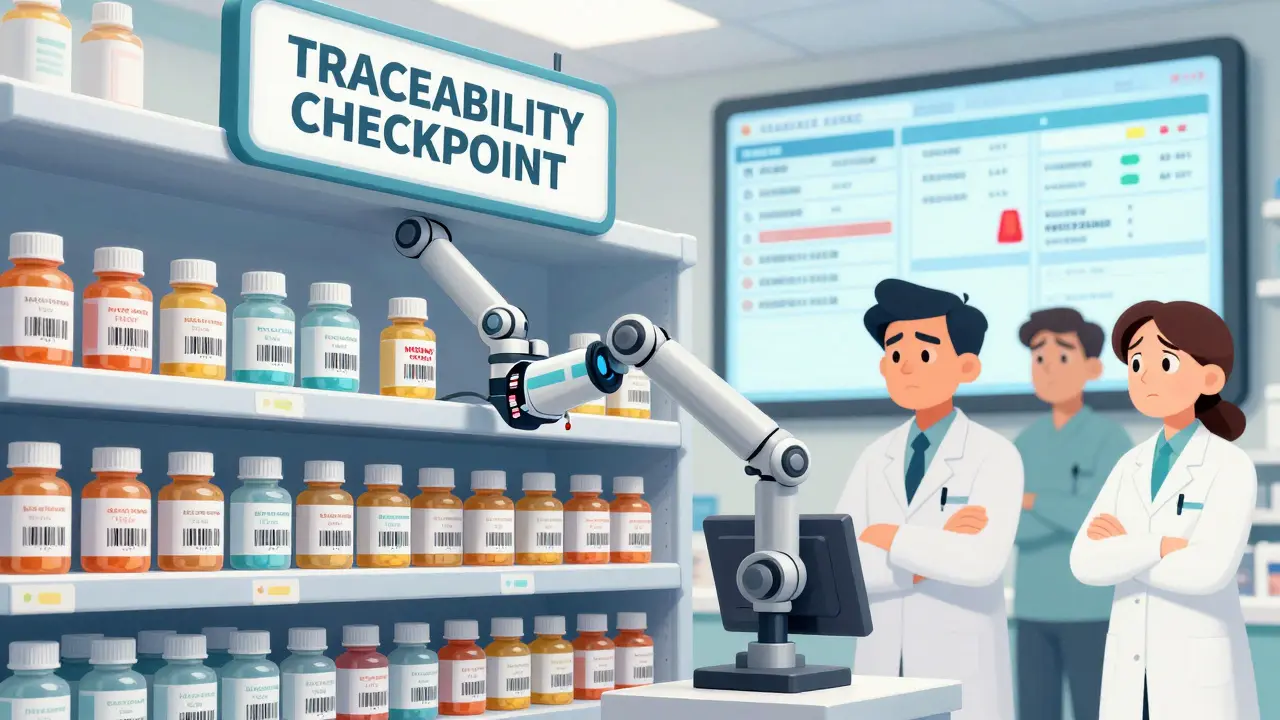
Pharmacies must scan barcodes on every incoming package and match it to the purchase order. If the National Drug Code (NDC) or lot number doesn’t match, the shipment is quarantined. One hospital pharmacy manager on Reddit reported having to hold $87,000 in drugs last year because a distributor’s system glitched and failed to send the full traceability data. That’s not a rare event-it’s becoming the norm.
These records must be kept for six years. And they’re not just for show. The FDA and state boards audit them. One mistake can trigger a full investigation.
White Bagging, Brown Bagging, and the Hidden Risks
Some pharmacies try to cut corners using alternative supply methods like “white bagging” or “brown bagging.” White bagging means a specialty pharmacy ships drugs directly to a clinic. Brown bagging is when a patient picks up a drug at a retail pharmacy and brings it to their doctor’s office.Both methods are risky. ASHP found that 42% of health systems using these approaches had at least one medication error linked to improper handling, temperature exposure, or lack of verification. A drug that’s supposed to be kept cold at 2-8°C might sit in a patient’s car for hours. No one checks. No one documents. And when the patient has a bad reaction, the pharmacy is still on the hook.
Stick to direct, traceable channels. Even if it costs 5-15% more, it’s cheaper than a lawsuit.
Special Cases: 340B, Compounding, and Orphan Drugs
Not all drugs are the same. The 340B Drug Pricing Program lets safety-net hospitals buy certain medications at steep discounts-but only if they can prove the drugs are used for eligible patients. In 2022, federal auditors found $1.3 billion in non-compliant 340B purchases. That’s not just a financial penalty-it’s a fraud risk.Compounded drugs (custom-made medications) are another minefield. Facilities that compound under 503A (traditional compounding) or 503B (outsourcing facilities) have different rules. 503B facilities are regulated like manufacturers and must meet stricter standards. If you’re buying compounded drugs, you need proof the facility is registered with the FDA and has passed inspections.
Orphan drugs (for rare diseases) often have complex pricing and billing rules. Forty-two percent of health systems reported billing errors tied to these drugs, leading to denied claims and audits. Know the rules before you order.
Technology Is Your Ally-But Not a Magic Fix
You can’t manage this by hand. You need systems. A good pharmacy procurement setup requires three tools working together:- EMR (Electronic Medical Record) to track prescriptions
- ERP (Enterprise Resource Planning) for inventory and purchasing
- Traceability Platform (like TraceLink or rfxcel) to handle DSCSA data
But here’s the catch: only 35% of health systems have these systems talking to each other. If your inventory system doesn’t sync with your traceability platform, you’re flying blind. That’s why many pharmacies are turning to AI. By 2026, 90% of providers plan to use AI to flag suspicious patterns-like sudden price drops, unusual order volumes, or mismatched NDCs. Early adopters say it’s cut counterfeit incidents by up to 75%.
Who’s Getting It Right-and Who’s Struggling
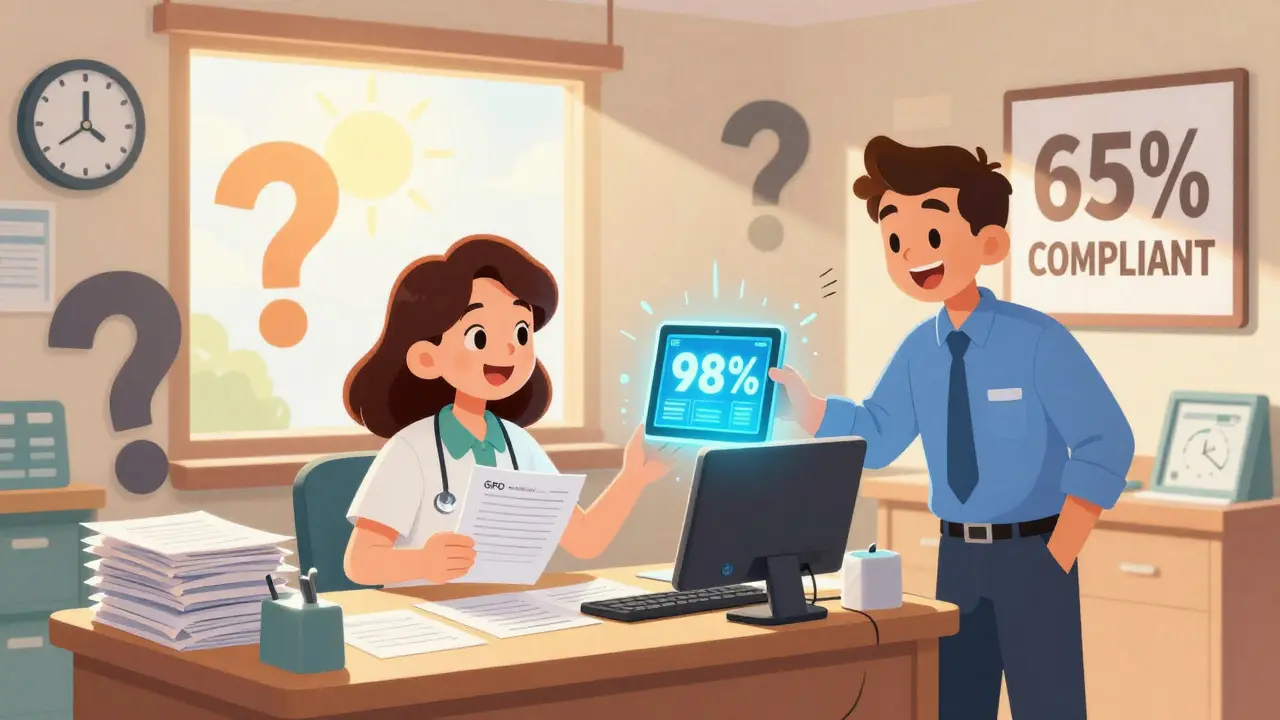
Large hospitals with over 200 beds? 98% are fully DSCSA-compliant. They have teams, budgets, and tech. Independent pharmacies? Only 65% are compliant. Why? Because compliance eats up 10% of their operating budget-compared to 6% for big chains. One independent pharmacist told the National Community Pharmacists Association: “I spend 20 hours a week just chasing paperwork from suppliers.”Group Purchasing Organizations (GPOs) are changing that. Hospitals using GPOs with dedicated compliance teams had zero supply chain security incidents in 2022. For small pharmacies, joining a GPO isn’t just smart-it’s survival.
The Cost of Cutting Corners
The financial cost of compliance is real. Since DSCSA launched, procurement-related compliance costs have jumped 220%. But the cost of not complying? Much higher.- Recalls can cost hundreds of thousands in lost inventory
- Regulatory fines run into millions
- Reputation damage can drive patients away forever
- Liability from patient harm? That’s a lawsuit you can’t insure against
The FDA received over 2,100 reports of suspected drug diversion in 2022-a 28% jump from the year before. Counterfeiters are getting smarter. They’re not just slapping fake labels on bottles anymore. They’re forging entire supply chains-complete with fake licenses, fake invoices, and fake traceability data.
There’s no room for shortcuts. Every pharmacy, no matter how small, must treat procurement like a security protocol. Because in this game, the weakest link isn’t the system-it’s the person who thinks “it won’t happen to me.”
What You Should Do Today
If you run a pharmacy, here’s your action list:- Review every supplier’s documentation. Do they have current FDA registration and state licenses?
- Confirm they’re DSCSA-compliant with full electronic transaction records.
- Install barcode scanning for 100% of incoming drugs.
- Set up a 6-year record retention system.
- Train your staff on DSCSA and ASHP guidelines-120 hours of training is the industry standard.
- Join a GPO if you’re independent. It’s the fastest way to reduce compliance burden.
- Start planning for AI-powered traceability tools. They’re not optional anymore.
The rules aren’t going away. They’re getting tighter. The FDA just got a 35% funding boost in 2024 to crack down harder. If you’re not ready, you’re not just behind-you’re at risk.
What happens if a pharmacy buys drugs from an unlicensed supplier?
The pharmacy can face severe penalties: FDA enforcement actions, state pharmacy board sanctions, loss of licensure, civil fines up to $1 million per violation, and criminal charges if counterfeit drugs cause harm. All drugs from unlicensed sources must be quarantined and destroyed. Insurance may not cover liability, and patient lawsuits are likely.
Can I buy generic drugs from international sources to save money?
No. Importing drugs from outside the U.S. supply chain is illegal under FDA rules, except in very rare, approved cases. Even if the drug looks identical, it lacks FDA inspection, DSCSA tracking, and U.S. quality controls. Up to 50% of drugs sold online from foreign sources are counterfeit, according to the WHO. The savings aren’t worth the risk.
How do I verify if a supplier is DSCSA-compliant?
Ask for their DSCSA Transaction Information, Transaction History, and Transaction Statement for at least three recent shipments. Confirm they’re registered with the FDA as a dispenser or wholesaler. Check their status on the FDA’s Drug Supply Chain Security Act registry. If they can’t provide this electronically or claim they’re exempt without documentation, they’re not compliant.
Do I need to scan every single pill bottle?
Yes. ASHP recommends 100% barcode scanning for all incoming pharmaceutical products. Even if you’re getting a case of 100 bottles, each one must be scanned and matched to the purchase order. This ensures the NDC, lot number, and expiration date are correct. Skipping scans is the #1 way counterfeit drugs enter a pharmacy.
What’s the difference between 503A and 503B compounding pharmacies?
503A pharmacies are traditional compounding labs that make custom prescriptions for individual patients. They’re regulated by state boards. 503B facilities are outsourcers that produce larger batches for multiple clinics and are regulated by the FDA like manufacturers. They must follow cGMP standards. You can buy from 503A only for specific patient needs. For bulk orders, you must use 503B and verify their FDA registration.
Is blockchain the future of drug tracking?
Yes. Blockchain technology creates tamper-proof, real-time records of every drug movement. By 2025, 73% of health systems plan to adopt blockchain-based verification systems. While DSCSA doesn’t require blockchain yet, it’s the most secure way to meet future standards. Early adopters report fewer disputes, faster recalls, and stronger supplier trust.