
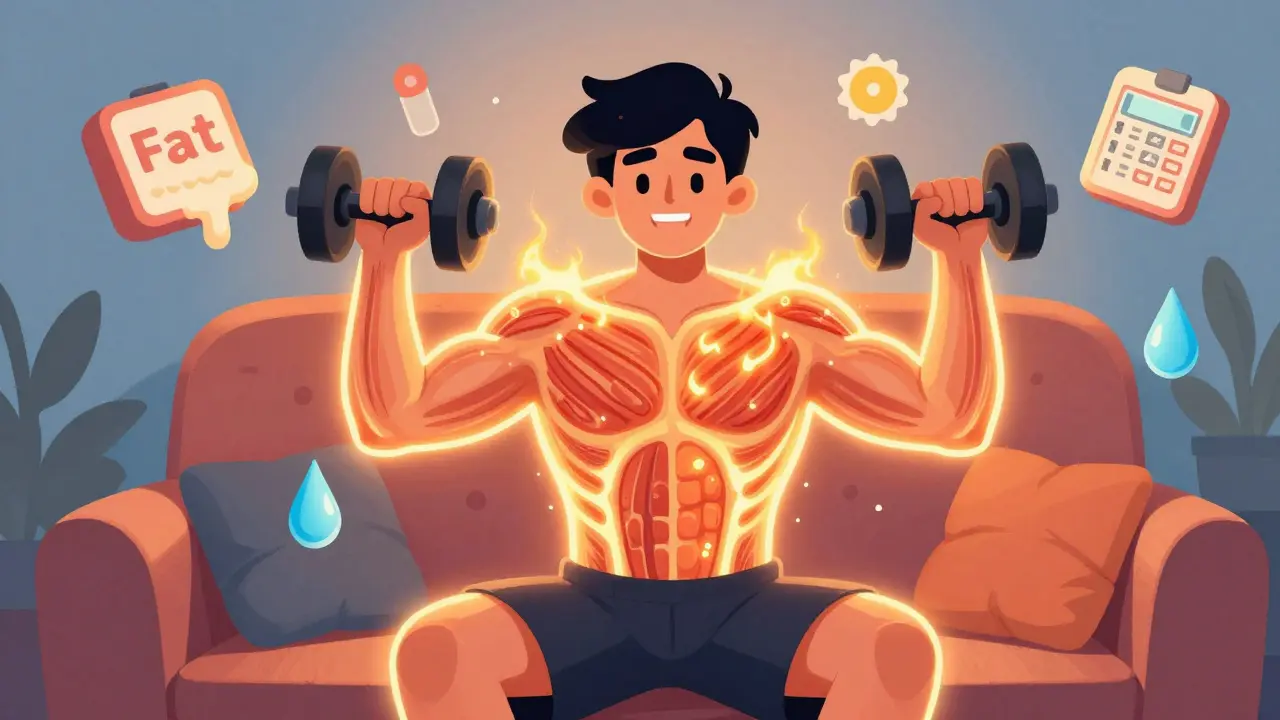
Most people think fat loss means endless cardio, long runs, or hours on the elliptical. But if you’ve been doing that for months and still don’t see changes in your mirror, you’re not alone. The truth is, strength training is the most powerful tool you’re not using for fat loss - and it’s backed by science, not just gym myths.
Here’s the simple math: muscle burns more calories than fat, even when you’re sitting still. Each pound of muscle uses about 6-10 calories a day just to exist. Fat? Only 2-3. That’s why someone with more muscle can eat more and still lose fat. Strength training doesn’t just help you burn calories during the workout - it rewires your body to burn more all day, every day.
Why Strength Training Beats Cardio for Fat Loss
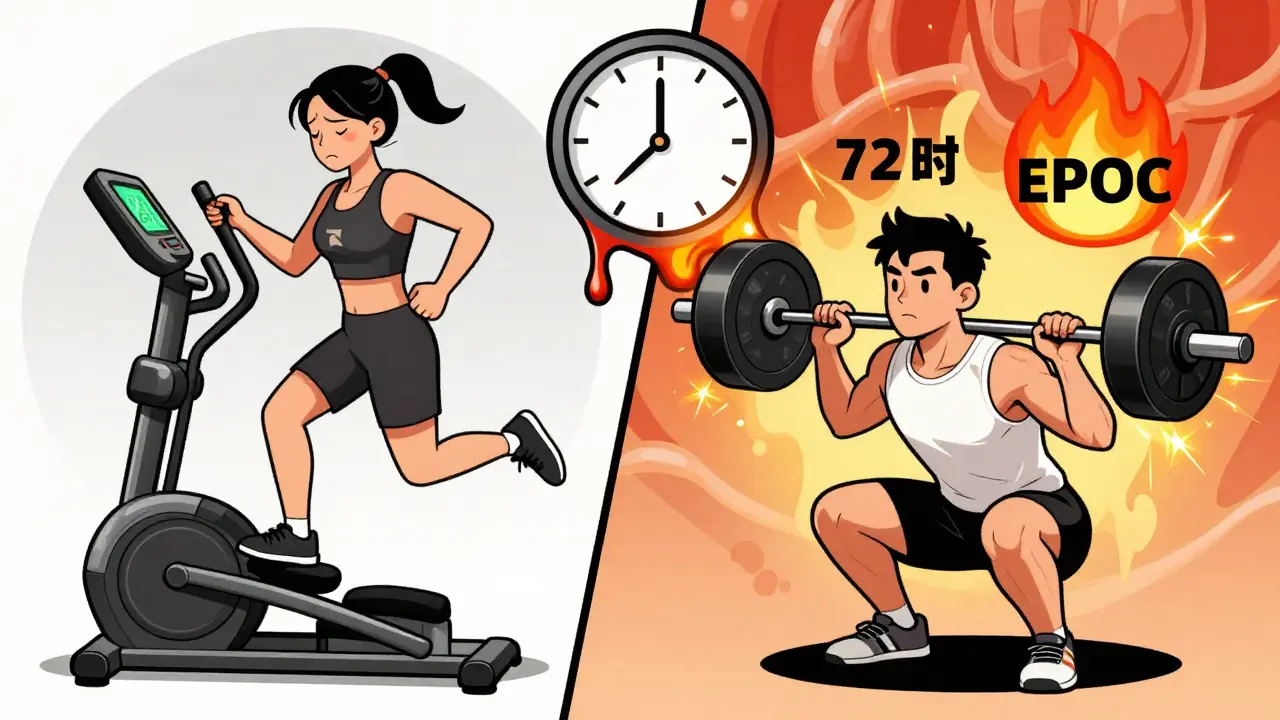
Cardio burns calories during the activity. Strength training burns calories during, after, and long after. That’s because of something called EPOC - excess post-exercise oxygen consumption. After a heavy lifting session, your body keeps working hard for up to 72 hours to repair muscle tissue, restore energy, and cool down. Studies show this can add 6-15% more calories burned on top of what you burned in the gym.
Compare that to steady-state cardio, which stops burning extra calories as soon as you stop moving. Worse, long hours of cardio without lifting can actually eat away at your muscle. A 2022 meta-analysis of 28 studies found that people who only did cardio lost 12.4% of their lean mass during weight loss. Those who lifted weights? They kept 95.3% of it.
That difference isn’t just about looking better. It’s about staying lean long-term. Muscle is your metabolic insurance. Lose it, and your body slows down. Keep it, and your metabolism stays high - even when you’re not working out.
How to Structure Your Strength Program for Fat Loss
This isn’t about lifting heavy for big arms. It’s about smart, efficient programming that burns fat and builds functional muscle. Here’s what works:
- Rep ranges: 8-12 reps for big lifts like squats, deadlifts, and bench presses. Go to 12-15 reps for isolation moves like bicep curls or lateral raises. This range hits muscle growth and metabolic stress without overloading your nervous system.
- Sets: 3-5 sets per exercise. More isn’t better - consistency is.
- Rest: 2-3 minutes between heavy sets. Shorter rest (30-60 seconds) works for circuits or supersets to keep your heart rate up.
- Tempo: Control the movement. Try a 2-second lift, 2-second lower. This keeps tension on the muscle longer, burning more energy.
Start with full-body workouts 3 times a week. That means every session includes a push (like bench press), a pull (like rows), and a lower-body move (like squats). This hits every major muscle group, keeps sessions short (45 minutes max), and maximizes calorie burn.
After 2-3 weeks, switch to an upper/lower split: two days upper body, two days lower body. This lets you train each muscle group harder while still keeping volume high.
Progressive Overload: The Secret Sauce
You won’t lose fat if you keep doing the same weights week after week. Your body adapts. Then it stops changing.
Progressive overload means getting stronger over time. That’s the trigger. You don’t need to max out. Just get better. Here’s how:
- If you hit the top of your rep range (e.g., 12 reps on squats) for all sets, increase the weight by 5% (women) or 10% (men).
- Track your lifts. Write them down. If you can’t improve, you’re not progressing.
- Don’t chase the scale. Chase the barbell. If your squat weight goes up, your body is changing - even if the number on the scale doesn’t.
One Reddit user, FitJourney2023, lost 48 pounds over six months. The scale only moved 32 pounds. The rest? Muscle gained while fat burned off. That’s the power of progressive overload.
Cardio? Yes - But Not Like You Think
You still need cardio - but not as your main tool. Use it to support your strength training, not replace it.
- One steady-state cardio day (30-40 minutes at a conversational pace - think brisk walking or cycling).
- One HIIT day (20 minutes: 30 seconds sprint, 90 seconds walk, repeat 8 times).
That’s it. Two cardio days max. The rest of your energy should go into lifting. A 2023 study from Speediance showed people who did 3 strength sessions + 2 cardio days lost 1.8 pounds of fat per week. Those who only did cardio? Just 1.3 pounds. Strength-only? 1.1 pounds. The combo wins.
Nutrition: It’s Not Optional
Strength training without proper nutrition is like driving a car without gas. You can rev the engine, but you won’t go anywhere.
Protein is king. Aim for 1.6-2.2 grams of protein per kilogram of body weight. For a 70kg person, that’s 112-154 grams a day. Spread it across meals - 30-40g per meal. Studies show this boosts muscle repair and keeps you full longer.
Carbs shouldn’t be feared. They fuel your workouts. Aim for 30% of calories from complex carbs like oats, sweet potatoes, or quinoa. Fats (30%) from nuts, avocado, and olive oil keep hormones balanced.
And yes - you still need a calorie deficit. But strength training lets you eat more while still losing fat. That’s the advantage.
What to Track (Besides the Scale)
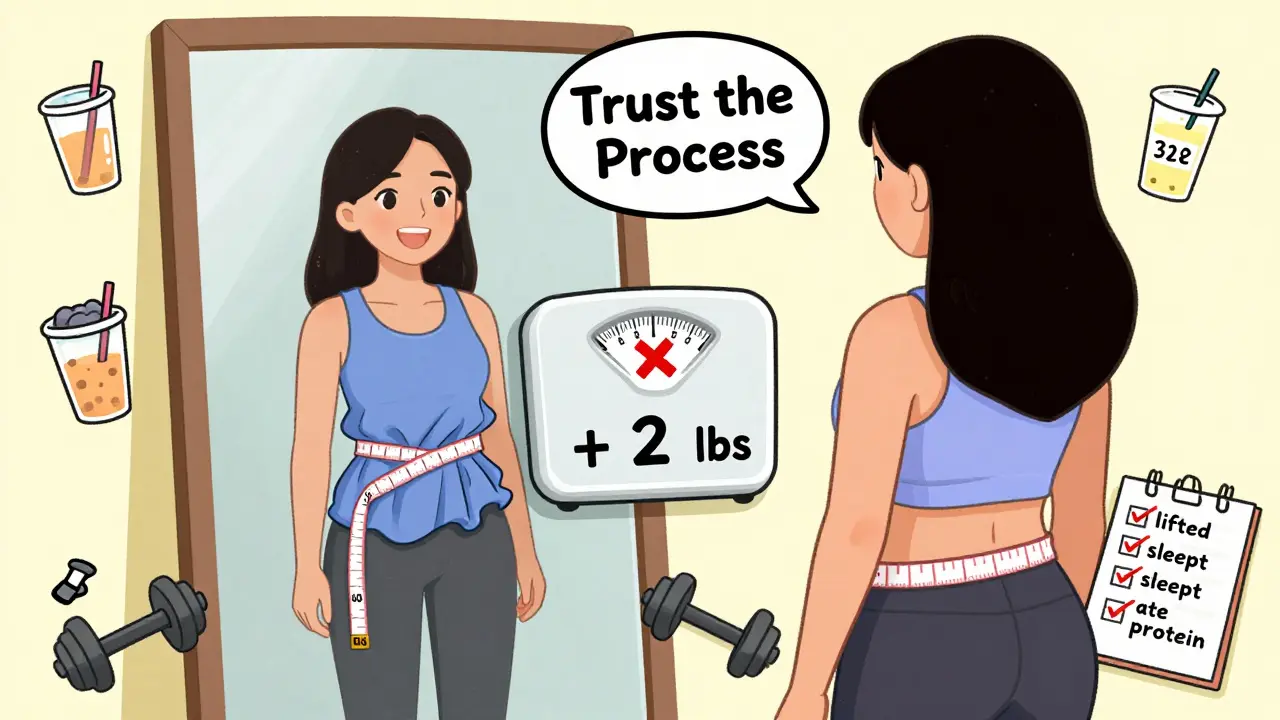
The scale lies. It doesn’t know the difference between muscle and fat. If you’re lifting and eating right, you might gain weight - and still be losing fat.
Track these instead:
- Waist, hips, and chest measurements - take them every two weeks.
- Progress photos - same lighting, same time of day, same clothes.
- How your clothes fit - if your jeans are looser, you’re winning.
- Strength gains - can you lift more? Do more reps? That’s progress.
A 2023 Speediance study found 78% of people experienced “scale confusion” between weeks 3 and 4. Their weight didn’t budge. But their waist shrunk. Their arms got tighter. Their energy soared. That’s when they knew they were on the right path.
Common Mistakes and How to Fix Them
Most people quit because they expect quick results. Strength training doesn’t work that way.
- Mistake: Skipping warm-ups or using bad form. Fix: Watch videos. Do 5 minutes of dynamic stretching before each session. If you’re unsure, get one session with a trainer. It’s worth it.
- Mistake: Doing the same routine every week. Fix: Change the weight, reps, or order every 3-4 weeks. Your body adapts fast.
- Mistake: Ignoring recovery. Fix: Sleep 7-8 hours. Walk 10 minutes after workouts. Foam roll for 10 minutes. This cuts soreness by 35%.
- Mistake: Thinking you need a gym. Fix: Dumbbells, resistance bands, and bodyweight moves work. A 15-lb dumbbell and a door anchor are enough to start.
Who It Works Best For
Strength training for fat loss is ideal for:
- Anyone who’s tried cardio and hit a plateau.
- Women over 25 looking to tone up without getting bulky.
- People with sedentary jobs who want to look and feel stronger.
- Anyone tired of losing weight just to gain it back.
It’s less ideal for elite athletes cutting weight fast for competition. But for 95% of people? It’s the most reliable, sustainable path.
The Bottom Line
You don’t need to run marathons. You don’t need to starve yourself. You don’t need fancy equipment or 2-hour workouts.
You need three things:
- Strength training 3x a week with progressive overload.
- Enough protein to rebuild muscle.
- Patience - because real change takes time.
Start small. Lift consistently. Track your progress. And remember: the body you want isn’t built by cardio alone. It’s built by lifting, eating right, and refusing to quit.
Can I lose fat with strength training alone?
Yes - but only if you’re in a calorie deficit. Strength training preserves muscle and boosts metabolism, but you still need to burn more than you eat. Combine lifting with proper nutrition for the best results.
How long until I see results?
Most people notice changes in 4-6 weeks. Your clothes will fit better before the scale moves. Muscle gain can offset fat loss on the scale, so focus on measurements and photos, not just weight.
Do I need to lift heavy to lose fat?
Not heavy like maxing out. But you need to lift challenging weights - enough that the last 2 reps feel hard. This triggers muscle growth, which drives fat loss. Light weights with high reps won’t cut it.
Is strength training safe for beginners?
Absolutely. Start with bodyweight moves or light dumbbells. Focus on form over weight. Use videos or a single trainer session to learn squats, deadlifts, and presses. Most injuries happen from ego lifting - not from starting slow.
How often should I train each muscle group?
Each major muscle group should be trained 2x per week for optimal growth and fat loss. Full-body workouts 3x/week or upper/lower splits 4x/week both work well. Rest at least 48 hours between training the same muscles.





Milad Jawabra
Bro. I lost 38 lbs in 5 months just lifting. No cardio. Just squats, deadlifts, and dumbbell presses. The scale didn’t move for 3 weeks. Then BAM. Jeans were falling off. Muscle ain’t pretty on paper but it’s everything in real life. 🤘
Levi Viloria
I’ve been doing this for a year now. Started with just bodyweight. Now I’m lifting 3x a week. My energy’s through the roof. I don’t even feel like I’m dieting anymore. Just eating protein, sleeping, and lifting. It’s weird how simple it gets when you stop overthinking it.
Zacharia Reda
So let me get this straight… you’re telling me I don’t need to run 10 miles a day to lose fat? I just need to lift and not be a potato? Mind blown. Also, why does every fitness article sound like a TED Talk? Just say it plain: lift heavy, eat protein, sleep. That’s it. No magic. Just math.
Matt Alexander
Protein is 1.6-2.2g per kg. For a 150lb person that’s like 110-150g. One chicken breast is ~30g. So 4 meals with meat or eggs or whey and you’re good. No need for fancy shakes. Just eat.
Gretchen Rivas
Measurements > scale. Photos > numbers. Clothes fit > pounds lost. Do this for 6 weeks. You’ll be surprised.
Mike Dubes
I tried this last year. Thought I was doing it right. Then I realized I was doing 20 reps with 10lb dumbbells like it was a yoga class. Then I started lifting heavier. Like… actually heavy. My body changed in 4 weeks. I didn’t even know I was that weak. Now I’m hooked. Also, sleep is not optional. I used to think I could ‘power through’ 5 hours. Nope. Not anymore.
Helen Brown
They’re lying. Muscle doesn’t burn more calories. That’s a myth made by gym owners. The real reason you lose fat is because they’re selling you protein powder and supplements. You don’t need to lift. Just stop eating carbs. That’s what really works. They don’t want you to know this.
John Cyrus
If you're not tracking your macros and doing 4x a week full body with 3 min rest between sets you're wasting time. Also cardio is for losers. And stop using the word 'toning'. There's no such thing. You either build muscle or you don't
John Smith
Yo I went from 220 to 175 in 6 months lifting only. No cardio. No juice cleanse. Just dumbbells and eggs. People thought I was on drugs. Then they saw my arms. Now they ask me for tips. I told em: stop crying. Lift. Eat. Sleep. Repeat. That’s the whole damn program. No fluff. No BS. Just steel and sweat. 🤠