
You're at the pharmacy or looking at a new prescription, and you notice a bold, stark black border surrounding a section of the fine print. It looks like a danger sign. For many, this is the first time they encounter an FDA Boxed Warning is the most serious type of safety alert mandated by the U.S. Food and Drug Administration for medications that carry significant risks of serious harm or death. Also known as a Black Box Warning, it's designed to scream for your attention before you take the first dose.
Seeing one can be terrifying. Does it mean the drug is poison? Should you refuse to take it? Not necessarily. The real goal of a boxed warning isn't to scare you away from treatment, but to ensure you and your doctor have a honest conversation about whether the benefit of the drug outweighs its specific, serious risks. In fact, over 400 medications currently carry these warnings, which is about 10-15% of all prescriptions in the U.S. market. From antidepressants to cancer therapies, these alerts are common tools in drug safety monitoring.
What Exactly is a Boxed Warning?
Think of a boxed warning as the "red alert" of the medical world. While most drugs have a list of side effects-like nausea or a dry mouth-boxed warnings are reserved for things that can actually kill you or cause permanent disability. The FDA requires these to be placed prominently at the very beginning of the prescribing information, using a distinct black box with bold text to ensure no doctor or pharmacist misses it.
These warnings didn't just appear out of nowhere. They evolved from the Kefauver-Harris Amendments of 1962, which were passed after the thalidomide tragedy revealed the desperate need for stricter safety requirements. Today, the FDA follows strict formatting guidelines (like document FDA-2011-D-0694) to keep these warnings consistent, ensuring the font size and spacing make the risks impossible to ignore.
How Boxed Warnings Differ from Other Alerts
Not all safety warnings are created equal. It's easy to confuse a general "precaution" with a "boxed warning," but they occupy very different levels of urgency. The FDA uses a hierarchy to communicate risk, and the boxed warning sits at the very top.
| Alert Type | Severity Level | Typical Purpose |
|---|---|---|
| Boxed Warning | Highest | Alerts to life-threatening risks or permanent harm. |
| Drug Safety Communication | High | Public alerts about new, emerging risks after a drug is on the market. |
| Label Change | Moderate | Updates to side effects or usage instructions without a "box." |
| Medication Guide | Informational | Patient-friendly summaries of how to use a drug safely. |
A key difference is that boxed warnings are legally binding parts of the drug's approved labeling. While a "Safety Communication" might be a news blast about a new trend, the boxed warning is a permanent requirement for the product's sale. Interestingly, about 70% of these warnings are added after the drug has been on the market. This happens because clinical trials usually only involve a few thousand people, while real-world use involves millions, revealing rare but serious risks that didn't show up in the lab.
Common Medications With Boxed Warnings
You might be surprised to find that some of the most widely prescribed drugs in the world have these warnings. It doesn't mean they are "bad" drugs; it just means they require a higher level of vigilance. Some of the most frequent categories include:
- Antipsychotics and Antidepressants: Many carry warnings regarding increased risk of suicidal thoughts, especially in children and young adults.
- Diabetes Medications: Certain SGLT2 inhibitors recently received warnings about serious urinary tract infections.
- Cancer Therapies: Because chemotherapy is inherently aggressive, these often have warnings about severe immune suppression.
- Retinoids: For example, Isotretinoin (Accutane) has a severe birth defect warning that requires patients to enroll in the iPLEDGE risk management program to ensure pregnancy prevention.
What to Discuss With Your Doctor
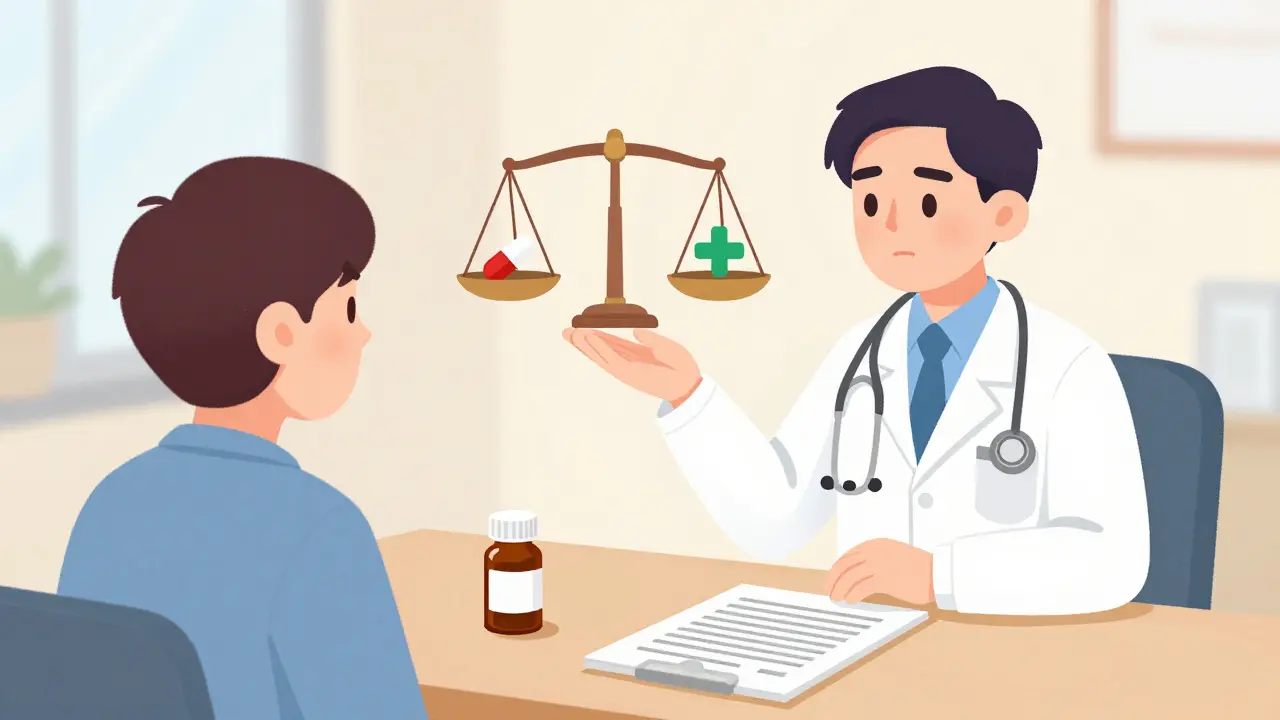
If your doctor prescribes a medication with a black box, don't panic, but do be proactive. You aren't just looking for a "yes" or "no" on whether the drug is safe; you're looking for a personalized risk assessment. A warning for the general population might not apply to you, or your specific health needs might make the risk worth taking.
Use the "teach-back" method. After your doctor explains the risk, repeat it back in your own words to make sure you actually get it. You should leave the office with clear answers to these four questions:
- What is the exact nature of the risk? (e.g., "Does this increase my risk of a heart attack, or is it about liver toxicity?")
- What are my personal risk factors? (e.g., "Because I have high blood pressure, am I more susceptible to this side effect?")
- What are the "red flag" symptoms? (e.g., "If I see a yellowing of my eyes or feel extreme fatigue, should I stop the drug immediately?")
- What is the monitoring plan? (e.g., "Do I need blood tests every three months to check my kidney function?")
For instance, consider methotrexate. It has a long-standing boxed warning for liver toxicity. For a patient who ignores the required liver function tests, the drug can be deadly. For a patient who follows the monitoring schedule, the drug can be a life-saving treatment for rheumatoid arthritis.
How to Report Side Effects
The system only works if the data keeps flowing. If you experience a reaction that wasn't mentioned or seems more severe than described, you can contribute to the safety of other patients. The FDA manages a program called MedWatch is the FDA's safety information and adverse event reporting program.
By using Form 3500, patients can report adverse events directly to the government. With over 2 million reports submitted annually, this real-world evidence is exactly how the FDA decides when to add a new boxed warning or, in extreme cases, pull a drug from the market entirely, as happened with Vioxx after cardiovascular risks became clear.
The Future of Drug Warnings
The "one-size-fits-all" black box is starting to feel a bit outdated. The FDA is currently moving toward more patient-centered communications. They've launched pilot programs to replace dense medical jargon with plain language summaries that a regular person can actually understand without a medical degree.
Furthermore, the Sentinel Initiative is now using electronic health records to monitor millions of patients in real-time. This means the FDA can spot a dangerous trend in weeks rather than years, potentially triggering safety warnings much faster than the old system allowed. The goal is to move from a broad "warning for everyone" to "nuanced, patient-specific risk information."
Does a black box warning mean I should not take the medication?
No. It means the medication has a risk that requires careful management. Many people take medications with boxed warnings safely for years. The decision to use the drug depends on whether the benefit it provides to your specific health condition outweighs the risk described in the warning.
Why are some warnings added years after the drug was approved?
Clinical trials usually only include a few thousand people. Some serious side effects are so rare (affecting perhaps 1 in 10,000 people) that they don't appear until millions of people start using the drug in the real world. Once this pattern is detected through systems like MedWatch, the FDA adds the warning to protect future patients.
How can I find out if my current medication has a boxed warning?
The easiest way is to check the "Prescribing Information" or the "Package Insert" that comes with your medication. Look for a bold black border at the top of the document. You can also ask your pharmacist or search the FDA's official drug database.
Is a boxed warning the same as a recall?
No. A recall means the drug is being removed from the market, often due to a manufacturing error or an unacceptable risk-benefit ratio. A boxed warning means the drug is still approved for use, but it comes with a severe warning that must be discussed with a doctor.
What is the iPLEDGE program?
iPLEDGE is a specific risk management program for medications like isotretinoin. Because of the extreme risk of severe birth defects, the program requires patients, doctors, and pharmacists to verify that the patient is not pregnant (and using contraception) before each single monthly refill can be dispensed.
Next Steps for Patients
If you've just discovered your medication has a boxed warning, don't stop taking it abruptly, as that can often be more dangerous than the risk itself. Instead, schedule a brief follow-up with your provider. Bring a list of your other medications and any health changes you've noticed recently. If you're still unsure, independent resources like Consumer Reports or the Drug Effectiveness Review Project can help you put the risk into a broader context compared to other treatment options.






Darius Prorok
Everyone knows these boxes are basically just lawyers protecting the drug companies from getting sued. It is just a legal shield so they can say they warned you while still making billions on the drug.
Victoria Gregory
It's really a matter of balance, isn't it??? ⚖️ Some risks are just part of the journey toward healing!!! I think it's wonderful that we have these warnings to help us be more mindful... ✨💖
Benjamin cusden
The obsession with "plain language" is a tedious slide toward mediocrity. Medical terminology exists for a reason: precision. Reducing complex pharmacology to a children's book format only serves to infantilize the patient and obscure the actual biochemical mechanisms at play.
Laurie Iten
risks are just a reflection of the fragile line between medicine and poison. its interesting how we trust a box more than our own intuition sometimes
Windy Phillips
One would think that a basic level of literacy would allow people to read the insert before complaining, but apparently, we need a giant black box to prevent total chaos... How utterly predictable!!!
Kathleen Painter
I've always felt that the relationship between a patient and a provider should be a gentle partnership, and while these warnings look scary, they actually open a door for a much deeper conversation about our bodies and how we react to chemicals, which is honestly where the real healing begins because when we understand the "why" behind a risk, we can navigate our health journey with a lot more grace and confidence, and I think that's a beautiful thing for everyone involved in the healthcare system.
Jitesh Mohun
stop whining about labels and just follow the doctors orders if you want to get better man it is not that hard
Jay Vernon
I just ask my pharmacist about this stuff 💊 they usually know the best way to explain it simply! 👍
shelley wales
It is so important to remember that we are all in this together. If you are feeling overwhelmed by a warning, just take a deep breath and know that there are millions of others successfully managing their health with these same medications. You've got this!
Toby Sirois
Wrong. The clinical trials are usually a joke anyway. Most of these drugs get pushed through because the companies pay for the studies. A black box is just the FDA admitting they messed up the initial approval process after people started dying in the real world. It is basic common sense if you actually know how the industry works. The whole system is rigged and anyone who thinks otherwise is just naive.
charles mcbride
I truly believe that the transparency provided by these alerts is a positive step toward patient autonomy. It is quite encouraging to see the move toward more patient-centered communication in the medical field.