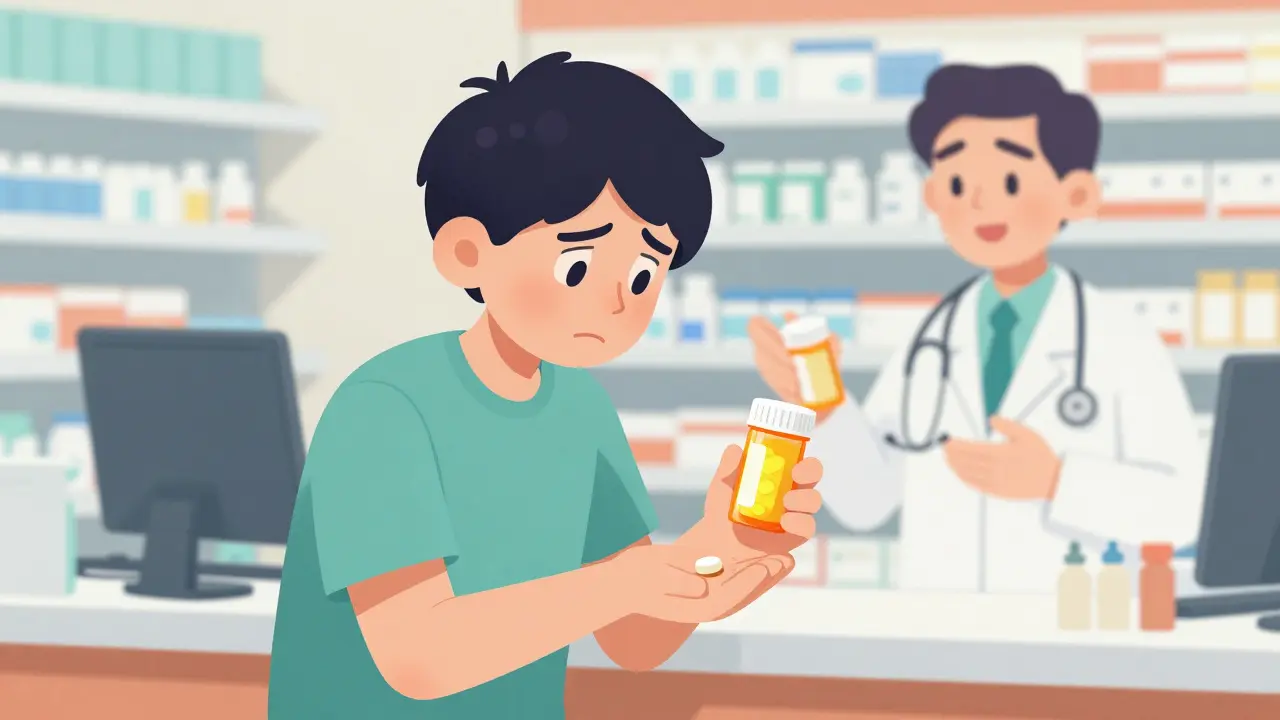
You go to the pharmacy to pick up your monthly refill, and you notice something odd. The pill is a different shape or a different color than the one you've been taking for years. Your pharmacist tells you it's still the same medication-just from a different manufacturer. For most people, this is a non-event. But for others, this small change can lead to unexpected side effects or a sudden drop in how well their treatment works. Switching between generics is a common practice driven by cost and supply chains, but it isn't always a seamless process.
The goal of generic medications is to provide an affordable alternative to brand-name drugs without sacrificing quality. However, the reality is that not all generics are identical. While they contain the same active ingredient, the "inactive" ingredients (fillers and binders) vary. In most cases, your body doesn't care about these differences. But when you're dealing with medications that require precision, a switch in the company making the pill can be a big deal.
What Exactly Happens When You Switch Generics?
When a brand-name drug's patent expires, multiple companies can create their own versions. These Generic Manufacturers are pharmaceutical companies that produce medications with the same active ingredients as a brand-name drug after the original patent expires must prove their product is "bioequivalent."
Bioequivalence doesn't mean the drugs are clones. It means the generic version delivers the active ingredient into your bloodstream at a rate and extent similar to the brand. In the U.S., the FDA the Food and Drug Administration, the federal agency responsible for protecting public health by ensuring the safety and efficacy of drugs allows a range where a generic can deliver between 80% and 125% of the active ingredient concentration compared to the brand. This creates a potential 45% difference between two different generic versions-one on the low end and one on the high end. For a blood pressure pill, this might not matter. For a seizure medication, it's a massive gap.
| Feature | Brand-Name Drug | Generic Version |
|---|---|---|
| Cost | Highest price point | 80% to 85% cheaper |
| Active Ingredient | The original standard | Bioequivalent (80-125% range) |
| Inactive Ingredients | Consistent formulation | Varies by manufacturer |
| Consistency | High (same manufacturer) | Variable if pharmacy switches brands |
The Danger Zone: Narrow Therapeutic Index (NTI) Drugs
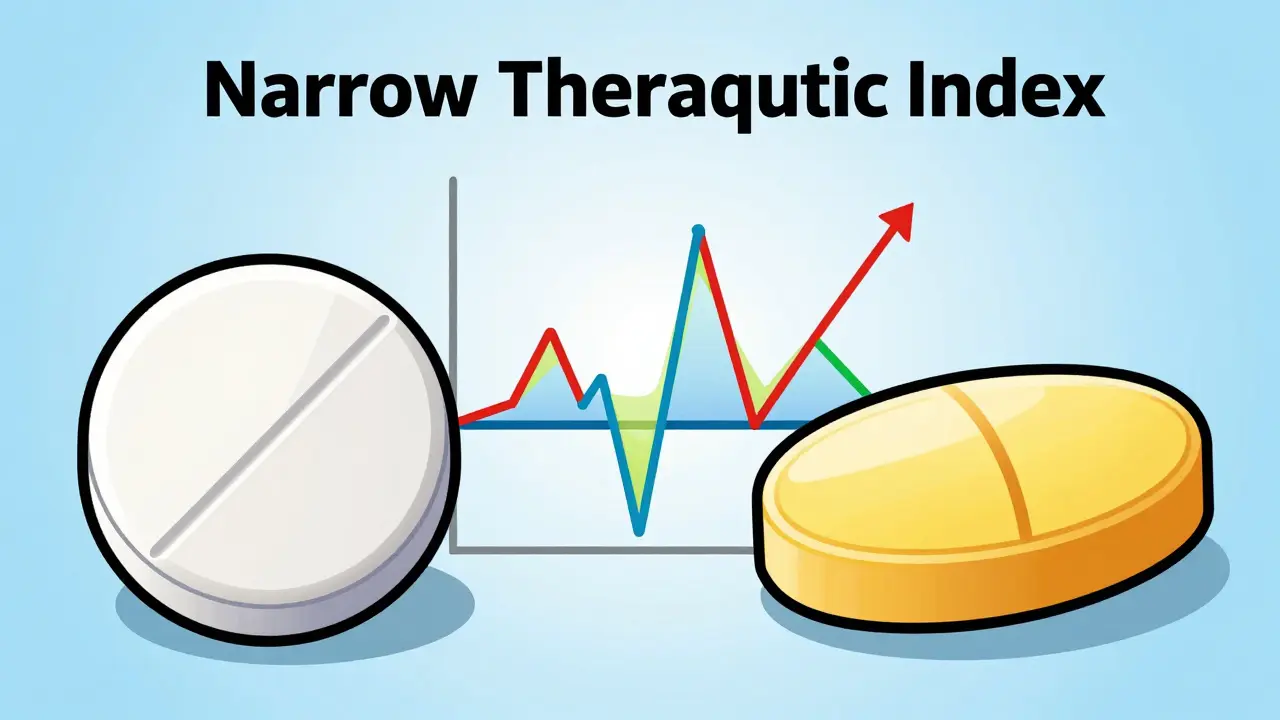
Most medications have a wide "therapeutic window," meaning there is a large gap between the dose that helps you and the dose that is toxic. However, some drugs have a Narrow Therapeutic Index a characteristic of drugs where small differences in dose or blood concentration may lead to serious therapeutic failure or adverse drug reactions (NTI). For these, a tiny shift in absorption can throw everything off.
Take Levothyroxine a synthetic hormone used to treat hypothyroidism by replacing thyroid hormone as an example. This drug has a very tight window. If you switch from one generic manufacturer to another, your TSH levels might swing, leaving you feeling exhausted or anxious for weeks while your doctor tries to find the right dose again. Medsafe has specifically recommended avoiding switches for this medication whenever possible.
Other NTI drugs that demand caution include:
- Warfarin: A blood thinner where a slight change in concentration can either cause a clot or lead to dangerous bleeding. Frequent INR testing is required after any manufacturer change.
- Tacrolimus: Used in transplant patients to prevent organ rejection. A switch here can lead to a sudden change in blood levels, risking organ failure.
- Antiepileptic Drugs: These have some of the highest "switch-back" rates. Many patients report breakthrough seizures when their pharmacy changes the generic manufacturer, as their blood levels can drop significantly.
Why Do Pharmacies Switch Your Generic?
You might wonder why your pharmacy doesn't just stick to the one that works. It usually comes down to the business side of healthcare. Many pharmacies use unified purchasing systems to get the best price, or they are forced by insurance companies to use the cheapest available option. If Manufacturer A raises their price by 10 cents and Manufacturer B lowers theirs, the pharmacy system may automatically switch the order.
Drug shortages also play a role. If one manufacturer has a production delay, the pharmacy will source from another to ensure you don't miss a dose. While the intent is to keep you medicated and save money-potentially billions of dollars annually across the population-it can create a "medication roulette" for the patient.

The Psychology of the Pill: Confusion and Adherence
It's not just about the chemistry; it's about the visual. A surprising 67% of patients identify their medications by how they look (the color, shape, or imprint). When a pill changes from a round white tablet to an oval yellow one, it creates mental friction. This often leads to two dangerous outcomes: medication duplication or skipped doses.
Imagine a patient who takes five different generics. If three of them change appearance in one month, the patient might forget they already took the yellow pill and take a second one, or assume the new pill is a different medicine entirely. About 11.5% of patients have accidentally duplicated their medication because they didn't recognize the new generic version. This is why clear counseling from a pharmacist is vital during any transition.
How to Manage a Safe Switch
If you are taking a standard medication like a statin or a common blood pressure drug (like Lisinopril), you likely won't notice a difference. But if you are on an NTI drug or have a history of sensitivity, you need a proactive strategy.
First, ask your pharmacist if they can "lock in" a specific manufacturer. Some health systems have programs to ensure that once a patient is stable on one generic, they stay on that exact version. If that's not possible, request that the pharmacist note the manufacturer on the prescription label.
Second, if you notice a change in your pill's appearance, don't just ignore it. Check the bottle. If it's a different manufacturer, contact your doctor. For NTI drugs, you should plan for 1-2 additional follow-up visits or blood tests (like an INR test for Warfarin) to ensure your levels remain stable.
Finally, keep a log. If you start feeling "off"-more tired, more anxious, or experiencing new symptoms-note the date and which manufacturer you are currently using. This data is invaluable for your doctor to determine if the generic switch is the culprit.
Are all generic drugs the same?
While all approved generics must be bioequivalent to the brand-name drug, they are not identical. They contain the same active ingredient but can have different inactive ingredients (excipients) and may fall within a range of 80% to 125% of the brand's concentration. For most people, this is negligible, but for some, it can affect how the drug works.
Why did my pill change color but the name is the same?
This happens when your pharmacy switches to a different generic manufacturer. Because different companies use different dyes and fillers, the physical appearance of the pill changes even though the active medication remains the same.
Should I be worried about switching generics for blood pressure?
Generally, no. Antihypertensives and statins have very low "switch-back" rates, meaning most patients do not experience clinical differences when moving between manufacturers. However, if you notice a spike in your readings, notify your provider.
What is a Narrow Therapeutic Index (NTI) drug?
An NTI drug is a medication where a very small change in the dose or the amount of drug in your blood can lead to either a failure in treatment or toxicity. Examples include warfarin, levothyroxine, and certain anti-seizure medications. These require much closer monitoring during a manufacturer switch.
Can I request the same generic manufacturer every time?
Yes, you can ask your pharmacist for a "lock-in" or to specify the manufacturer on the prescription. While insurance requirements and supply shortages can sometimes make this difficult, pharmacies can often accommodate this request if there is a clinical reason for it.