

While the experience is terrifying, the good news is that there is a gold-standard treatment that works without the heavy side effects of systemic medications. If you're dealing with these attacks, understanding how to use oxygen effectively can be the difference between a lost week and a manageable day.
The Essentials of Oxygen Therapy for Cluster Attacks
Oxygen therapy isn't just about breathing; it's about delivering a specific concentration and volume of gas to the brain to abort an attack. According to the American Academy of Neurology, the goal is to flood the system with 100% oxygen to constrict dilated blood vessels and dampen the neurological trigger.
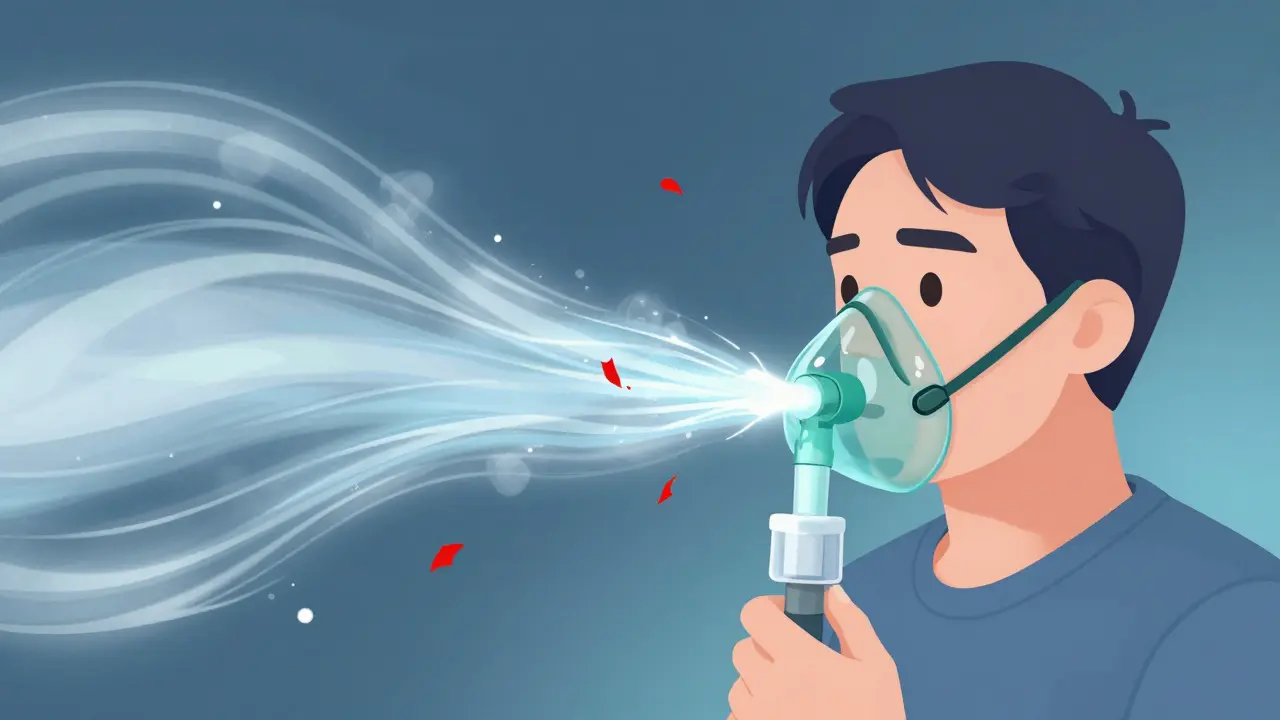
To get the best results, you can't just use a nasal cannula (the little prongs that sit in your nose). You need a Non-Rebreather Mask is a specialized face mask with a reservoir bag that prevents exhaled air from mixing with the pure oxygen being delivered . This ensures you're getting a concentrated dose rather than a mix of oxygen and room air.
For most people, the "sweet spot" for flow rates is between 12 and 15 liters per minute (L/min). While some insurance policies might suggest 4 L/min is enough, clinical data shows that 12 L/min is significantly more effective, leaving about 78% of patients pain-free within 15 minutes. If you start the treatment within the first 5 to 10 minutes of an attack, the relief is usually much faster.
Comparing Oxygen to Other Acute Treatments
When you're in the middle of a cluster cycle, you'll likely hear about triptans-medications like sumatriptan used to stop attacks. While effective, they aren't for everyone. Many people have cardiovascular issues that make triptans dangerous. Oxygen, on the other hand, has an incredibly clean safety profile with virtually no reported adverse events in clinical trials.
| Treatment Method | Efficacy (15 Min) | Common Side Effects | Best For... |
|---|---|---|---|
| High-Flow Oxygen | ~78% | None/Minimal | Safety, Speed, Pregnancy |
| Subcutaneous Sumatriptan | ~74% | Chest tightness, Dizziness | Those without heart issues |
| Intranasal Zolmitriptan | ~50% | Nasal irritation | Mild to moderate attacks |
One major advantage is the speed of onset. In communities like r/ClusterHeadaches, users frequently report that a 12 L/min flow gets them pain-free in under 10 minutes. Unlike drugs, there's no "rebound" effect or systemic grogginess afterward.
Setting Up Your Home Oxygen System
Getting your setup right is crucial. If the mask doesn't seal against your face, you're just wasting oxygen. If the flow rate is too low, the attack won't break. To do this properly, you'll need a few specific pieces of gear.
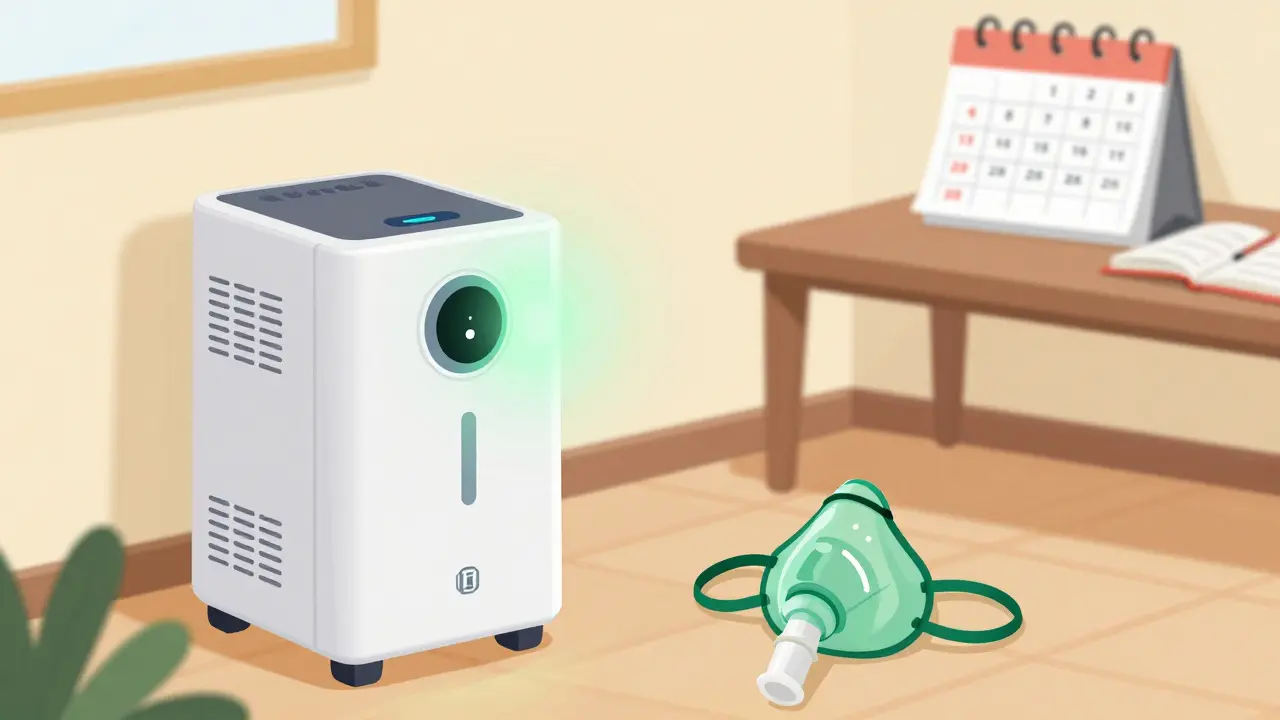
First, you need a source. A Oxygen Concentrator is a medical device that filters nitrogen out of the air to provide a concentrated stream of pure oxygen . Models like the Invacare Perfecto2 are common for home use because they can sustain a high flow of 15 L/min. If you need to travel, newer portable options like the Inogen One G5 allow you to take relief on the road, though you should check if they meet the flow requirements for your specific needs.
The practical setup looks like this:
- Prescription: You need a doctor to prescribe medical oxygen (ICD-10 code G44.0).
- DME Provider: A Durable Medical Equipment provider usually handles the delivery and setup of the concentrator.
- Mask Seal: Ensure the non-rebreather mask fits snugly. A loose seal is the #1 reason for treatment failure in the first few attempts.
- Strategic Placement: Since speed is everything, place units in every room where you spend time-your bedroom, office, and living room.
Why It Doesn't Work for Everyone
It's important to be honest: oxygen isn't a magic bullet for 100% of people. About 20% of patients don't respond well to it. Research in Cephalalgia suggests a few patterns among those who find oxygen ineffective.
If you've never been a smoker, you might actually be less likely to respond to oxygen therapy. Similarly, if your attacks consistently last longer than 180 minutes or if you suffer from persistent headaches even between cluster cycles, the oxygen might not be enough to break the attack. In these cases, doctors often suggest combining oxygen with other therapies or looking into neuromodulation devices like gammaCore.
Navigating the Insurance Nightmare
The biggest hurdle isn't the medical side; it's the paperwork. Many patients find that insurance companies treat oxygen therapy as a luxury rather than a necessity. For example, some Medicare claims are denied because they require proof that you've tried and failed at least two different triptans first.
If you're facing a denial, don't give up. Many patients work with organizations like Clusterbusters to find the right language for their appeals. Be sure your doctor explicitly documents the severity of the pain and the failure of other pharmacological options. In some US states, specific laws have been passed to force insurance coverage for cluster-related oxygen, so check your local legislation.
How long should I breathe oxygen during an attack?
Most experts recommend breathing 100% oxygen for 15 to 30 minutes. Even if the pain disappears after 10 minutes, continuing for a bit longer can help prevent a immediate recurrence of the attack.
Can I use a nasal cannula instead of a mask?
Generally, no. Nasal cannulas cannot deliver the high concentration of oxygen needed to abort a cluster headache. A non-rebreather mask is the clinical standard because it ensures you are breathing nearly pure oxygen.
Is there a risk of oxygen toxicity?
For the short durations used in cluster headache treatment (15-30 minutes a few times a day), there is no significant risk of oxygen toxicity for the vast majority of patients. It is considered one of the safest acute treatments available.
What is the best flow rate for relief?
While 4-6 L/min can work for some, the most effective rate is typically 12-15 L/min. This high-flow volume is what provides the rapid relief most patients experience.
What if the oxygen isn't working for me?
If you are using a non-rebreather mask at 12-15 L/min and still feel pain, you may be in the 20% of non-responders. Talk to your neurologist about "bridge" treatments or neuromodulation devices like gammaCore to supplement your care.
Next Steps and Troubleshooting
If you're just starting out, your first priority is getting a correct diagnosis. Cluster headaches are often misdiagnosed as migraines for years. Once diagnosed, ask your doctor for a medical oxygen prescription and a referral to a DME provider.
For those struggling with access:
- Document everything: Keep a headache diary showing the frequency and intensity of attacks to justify the medical necessity to your insurer.
- Check for Portable Options: If your job requires travel, look into FDA-cleared portable concentrators specifically rated for high-flow delivery.
- Seal Check: If the oxygen feels ineffective, try a different mask size. A tiny gap in the seal can drop the oxygen concentration significantly.






David Snyder
Getting a proper concentrator really changed my life. It's a bit of a hurdle to get the insurance to play ball but once you have that 15 L/min flow it's like a switch flipping off for the pain.