
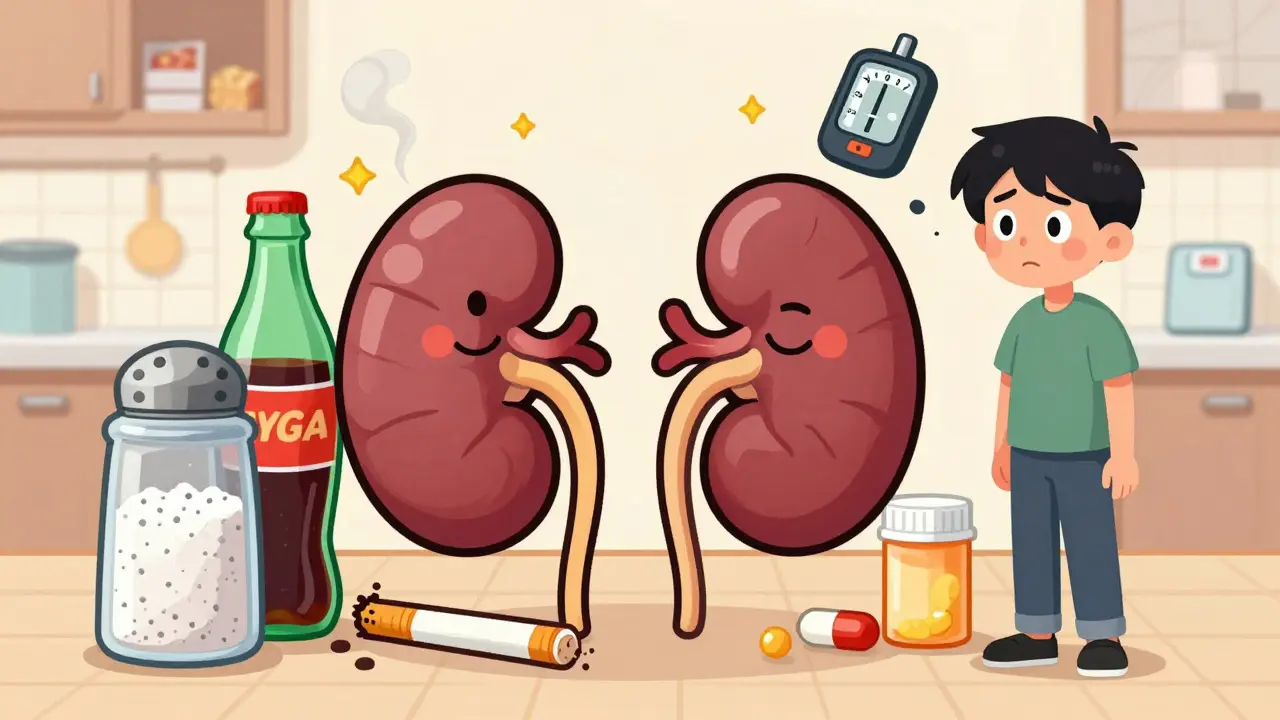
One in three adults in the U.S. has a risk factor for kidney disease - and most don’t even know it. Chronic kidney disease (CKD) affects 37 million Americans, yet 90% of those with it are unaware. That’s not because it’s rare - it’s because it sneaks up silently. By the time symptoms show up, the damage is often advanced. The good news? Most cases are preventable. You don’t need a miracle. You need to know what’s harming your kidneys and how to stop it.
What Actually Damages Your Kidneys?
Your kidneys filter about 120 to 150 quarts of blood every day. They remove waste, balance fluids, and help control blood pressure. When they’re under constant stress, they start to fail. The biggest threats aren’t mysterious toxins or bad luck - they’re everyday habits tied to two major conditions: high blood pressure and diabetes.Diabetes is the leading cause of kidney failure, responsible for 40% of cases in the U.S. High blood sugar slowly damages the tiny filters in your kidneys. Hypertension is the second biggest culprit, affecting 68% of people with CKD. When your blood pressure stays too high, it puts too much strain on those filters, causing them to leak and scar over time.
But it doesn’t stop there. Obesity, smoking, and chronic use of common painkillers like ibuprofen and naproxen also play a role. NSAIDs can cause 3-5% of new kidney disease cases each year. Smoking cuts off oxygen to kidney tissue and speeds up damage by 30-50%. And if you’re overweight, every extra 5 kilograms of body weight increases your CKD risk by 25-30%.
How Much Salt Are You Really Eating?
Most people think they’re eating “a little” salt. They’re not. The average American consumes 3,400 mg of sodium daily - way over the 2,300 mg limit recommended by the CDC and NHS. That’s like eating over a teaspoon of salt every day, mostly from packaged foods, canned soups, deli meats, and restaurant meals.Your kidneys can’t handle that load. Excess sodium makes your body hold onto water, which raises blood pressure. And high blood pressure = kidney damage. Cutting salt doesn’t mean giving up flavor. Use herbs, garlic, lemon, or vinegar instead. Read labels. Choose “low sodium” versions. And avoid adding salt at the table - your taste buds will adjust in a few weeks.
Fruit, Veggies, and the Right Kind of Protein
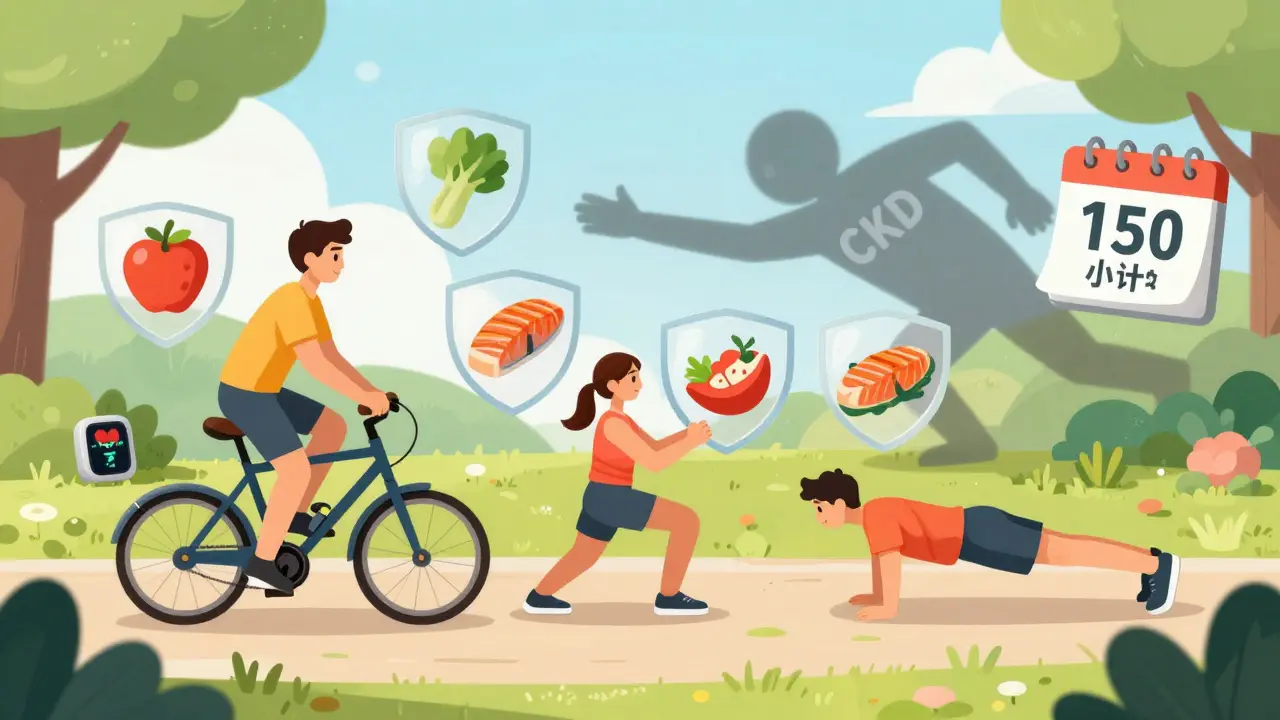
Eating five portions of fruits and vegetables a day isn’t just a suggestion - it’s a shield. These foods are rich in potassium, fiber, and antioxidants that help regulate blood pressure and reduce inflammation. A 2023 review from the NHS confirmed that people who eat more plants have slower kidney function decline.But protein matters too. Too little isn’t the problem - too much is. If you’re eating more than 1.2 grams of protein per kilogram of body weight daily, you could be overworking your kidneys. That’s about 85 grams for a 150-pound person. That doesn’t mean you need to go vegan. Just swap out some red meat for fish, chicken, beans, or tofu. A grilled salmon salad is better than a double cheeseburger three times a week.
Move More - It’s Not About Running Marathons
You don’t need to hit the gym five days a week. The CDC and NHS agree: 150 minutes of moderate activity per week is enough. That’s 30 minutes, five days a week. Brisk walking, cycling, dancing, swimming - anything that gets your heart rate up a little and makes you breathe harder.And don’t forget strength training. Two days a week of lifting weights, using resistance bands, or doing bodyweight exercises (squats, push-ups, lunges) helps control blood sugar and reduces fat around your organs. If 30 minutes feels overwhelming, start with 10. Walk after dinner. Take the stairs. Park farther away. These small choices add up. People who move regularly cut their CKD risk by 25% compared to those who sit all day.
Alcohol, Smoking, and the Hidden Dangers of Painkillers
If you drink, keep it moderate: one drink a day for women, two for men. Excessive alcohol raises blood pressure and contributes to 20-30% of hypertension cases. And if you smoke - stop. Smokers lose kidney function 50% faster than non-smokers. Quitting doesn’t just help your lungs - it saves your kidneys.And those OTC painkillers? Ibuprofen, naproxen, even aspirin in large doses - they’re not harmless. They reduce blood flow to the kidneys. If you have high blood pressure or diabetes, using them regularly can trigger kidney injury. Use them only when necessary, and never take more than the label says. Talk to your doctor about safer alternatives like acetaminophen if you need daily pain relief.
Check Your Numbers - Even If You Feel Fine
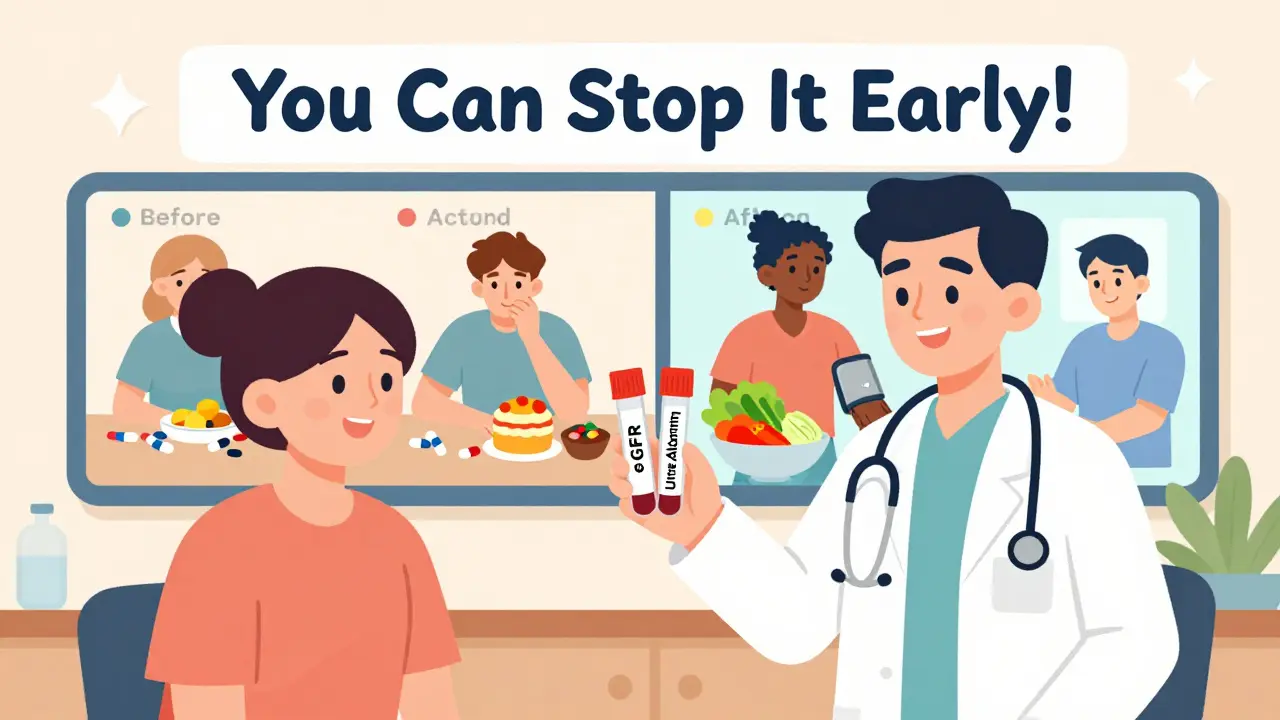
This is the most important step: get tested. Chronic kidney disease has no symptoms in its early stages. You won’t feel tired, you won’t have back pain, you won’t notice swelling - until it’s too late.Ask your doctor for two simple tests:
- eGFR - a blood test that measures how well your kidneys filter waste. A number below 60 for three months means CKD.
- Urine albumin - a urine test that checks for protein leaking into your urine. That’s an early warning sign.
If you have diabetes, get tested yearly. If you have high blood pressure, get tested yearly. If you have a family history of kidney disease, get tested yearly. Even if you feel fine. That’s the only way to catch it early - when lifestyle changes still work.
Control Blood Sugar and Blood Pressure Like Your Life Depends on It
Because it does.If you have diabetes, aim for an A1C under 7% - but your doctor may set a different goal based on your age and health. Test your A1C at least twice a year. More often if it’s high. Use a glucose monitor if needed. Small daily choices - skipping soda, eating veggies first, walking after meals - add up to better numbers.
For blood pressure, target 120/80 mm Hg. That’s the sweet spot for kidney protection. If you’re on medication, take it as prescribed. But don’t rely only on pills. Diet, exercise, sleep, and stress management are just as powerful. A 2023 study showed that people who combined lifestyle changes with medication cut their kidney decline by 40% compared to those who only took pills.
Stress, Sleep, and the Mind-Kidney Link
It’s not just food and movement. Chronic stress raises cortisol, which increases blood pressure and blood sugar. Poor sleep messes with hormones that control hunger and insulin. Both can push you toward kidney damage.Studies from Johns Hopkins show that people who practice mindfulness, meditation, or deep breathing for just 10 minutes a day slow kidney decline by 15%. That’s not magic - it’s biology. Try turning off screens an hour before bed. Take five slow breaths when you feel overwhelmed. Get seven to eight hours of sleep. These aren’t luxuries - they’re medical tools.
What If You’re Already at Risk?
If you have diabetes, high blood pressure, obesity, or a family history - don’t panic. You’re not doomed. Early-stage kidney disease (Stages 1-2) responds dramatically to lifestyle changes. In fact, dietary and activity interventions are 40% more effective in early stages than in late ones.Work with a dietitian. Ask your doctor about referral programs like the NHS’s Healthier You Diabetes Prevention Programme - it cut diabetes progression by 26% in real-world trials. Use telehealth tools for home blood pressure monitoring. One pilot study found that remote tracking improved medication adherence by 37%.
It’s Not Just About You
Kidney disease isn’t random. Black Americans are 3.4 times more likely to develop kidney failure than White Americans. Hispanic Americans are 1.3 times more likely. These aren’t genetic accidents - they’re the result of unequal access to care, healthy food, safe neighborhoods, and preventative medicine.Changing your own habits saves your kidneys. But pushing for better access, better screening, and better support in your community? That saves thousands.
What’s Next?
You don’t need to fix everything tomorrow. Pick one thing: cut salt, walk 10 minutes a day, get tested, or stop smoking. Do that for a month. Then add another. Progress isn’t about perfection - it’s about consistency.The CDC estimates that if just 25% of at-risk adults made these changes, we could prevent 300,000 cases of kidney failure every year. That’s not a distant dream. It’s a reachable goal - if you start now.
Can kidney disease be reversed?
Early-stage kidney disease (Stages 1-2) can often be slowed or even improved with lifestyle changes - especially if you control blood pressure and blood sugar. But once significant scarring occurs (Stages 3-5), the damage is usually permanent. The goal shifts from reversal to slowing progression and protecting remaining function.
Is drinking lots of water good for kidneys?
Staying hydrated helps your kidneys filter waste, but drinking excessive water won’t “flush” them or prevent disease. The NHS recommends drinking enough to keep your urine light yellow - usually about 6 to 8 cups a day for most people. If you have advanced kidney disease, your doctor may limit fluids, so always check with them.
What foods should I avoid for kidney health?
Avoid processed foods high in sodium, added sugar, and unhealthy fats. That includes chips, frozen meals, sugary drinks, deli meats, and canned soups. Also limit red meat and full-fat dairy if you’re overweight or have diabetes. Focus on whole foods: vegetables, fruits, whole grains, lean proteins, and nuts.
Can I still drink coffee if I have kidney disease?
Moderate coffee consumption (1-2 cups per day) is generally safe for kidney health and may even have protective effects due to antioxidants. But avoid adding sugar, creamers, or flavored syrups - they add empty calories and sodium. If you’re on dialysis, check with your dietitian about potassium and fluid limits.
How often should I get my kidneys checked?
If you have diabetes, high blood pressure, obesity, or a family history of kidney disease - get tested at least once a year. If you’re over 60, get tested every year regardless. The tests are simple: a blood test for eGFR and a urine test for albumin. Both take minutes and cost little or nothing with insurance.
Do supplements help prevent kidney disease?
No supplement has been proven to prevent or reverse kidney disease. Vitamins, herbs, or “kidney cleanse” products can actually harm your kidneys - especially if you already have reduced function. Always talk to your doctor before taking anything new. Food and lifestyle changes are the only proven methods.
Can children get kidney disease from poor habits?
Yes. Childhood obesity and type 2 diabetes - once rare in kids - are now leading to early kidney damage. A diet high in sugar and salt, combined with inactivity, can start the process as early as the teen years. Teaching healthy habits early is one of the best long-term protections for kidney health.

Marie-Pier D.
I literally cried reading this. 🥹 My mom lost her kidneys at 58 because no one told her to check her numbers. I started walking after dinner and swapped soda for sparkling water with lemon. It’s not perfect, but it’s mine. 💪
Alexandra Enns
This is pure Canadian propaganda. We don’t need CDC guidelines to tell us how to live. In Quebec, we eat poutine and live to 90. Your ‘risk factors’ are just corporate fear-mongering. 🇨🇦
Marlon Mentolaroc
Hey, love the data. But let’s be real - 90% of people don’t know they have CKD because doctors don’t screen unless you’re diabetic or hypertensive. And even then, half the time they don’t explain it. So yeah, awareness is key - but so is systemic change. 😊
Gina Beard
The kidneys don’t care about your intentions. Only your habits. And habits are forged in silence, not in blog posts.
siva lingam
Salt bad. Water good. Move. Stop smoking. Get tested. Done. Why did you write 2000 words for this?
Karen Conlin
I’m a Black woman from Atlanta. My grandma died of kidney failure at 62. No one in our family ever talked about it. Now I run a community group teaching seniors how to read food labels and find free blood pressure clinics. If you’re reading this and you’re at risk - you’re not alone. We’ve got you. 🙌 And yes, we’re getting tested. Every. Single. Year.
Viola Li
You say ‘don’t panic’ - but if you’re already at risk, isn’t panic the only rational response? You can’t just ‘walk more’ and expect to undo decades of processed food and stress. This feels like a Band-Aid on a hemorrhage.
venkatesh karumanchi
I’m from rural India. We don’t have access to eGFR tests. But we have turmeric, neem leaves, and walking 5km to the market every day. Sometimes the simplest things are the strongest. 🙏
Vatsal Patel
Ah yes, the classic ‘eat more veggies’ advice. Because clearly, the problem isn’t the $200,000 kidney transplant bills or the fact that insurance won’t cover your meds unless you’re in Stage 4. Let me guess - you’re not paying for this out of pocket?
Kat Peterson
I just got my eGFR back - 58. I’m crying. Again. But I’m also ordering a juicer, canceling my Uber Eats account, and buying a Fitbit. This is my wake-up call. I’m not ready to die before 50. 💔✨
Himanshu Singh
The real win isn’t in the numbers. It’s in the quiet mornings where you choose tea over soda. In the walk after dinner when you breathe and don’t check your phone. That’s where healing begins. Not in the clinic. In the choice. 🌿