Airplane Ear: What It Is, Why It Happens, and How to Prevent It
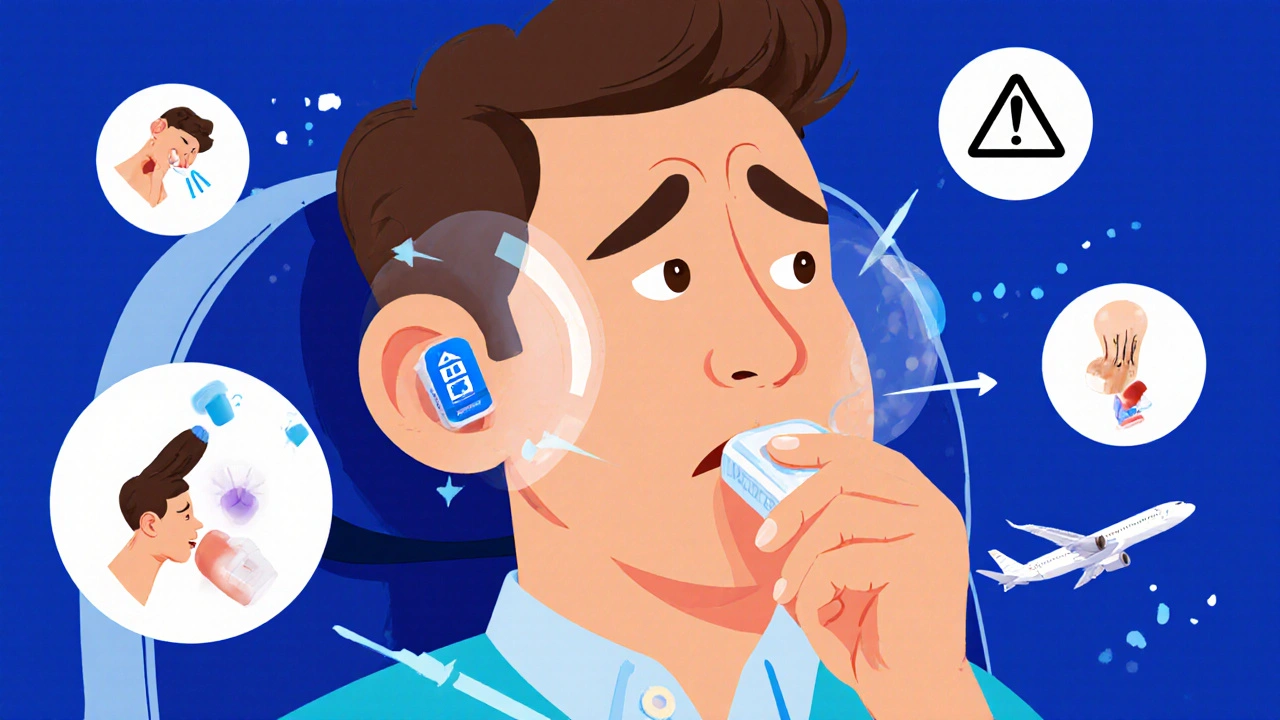
When you feel that painful popping or fullness in your ears during takeoff or landing, you’re experiencing airplane ear, a discomfort caused by unequal pressure between the middle ear and the environment during altitude changes. Also known as barotrauma, it’s not a disease—it’s a physical response your body has when the Eustachian tube, a small passage connecting the middle ear to the back of the throat can’t equalize pressure fast enough.
Airplane ear happens because air pressure drops as the plane climbs and rises as it descends. Your middle ear is a sealed space, and if the Eustachian tube doesn’t open to let air in or out, pressure builds up and pushes on your eardrum. This isn’t just annoying—it can cause sharp pain, muffled hearing, or even temporary hearing loss. People with colds, allergies, or sinus infections are more likely to get it because swelling blocks the tube. Kids are also at higher risk since their tubes are smaller and less developed. But even healthy adults can get it, especially on fast descents or if they sleep through landing.
Thankfully, you don’t have to suffer. Simple actions like swallowing, chewing gum, or yawning can open the Eustachian tube and relieve pressure. The Valsalva maneuver—gently blowing while pinching your nose—works too, but don’t blow too hard. If you’re flying with a cold, using a decongestant spray 30 minutes before descent can help keep the tube clear. For frequent flyers or those with chronic issues, special earplugs designed to slow pressure changes can make a real difference.
While airplane ear is usually harmless and goes away quickly, repeated episodes or severe pain could signal something deeper, like a ruptured eardrum or chronic Eustachian tube dysfunction. If you often feel ear pain after flying, or if your hearing doesn’t return within a day or two, it’s worth checking with a doctor. Most people never think twice about it—but understanding how it works gives you control. You don’t need to avoid flying. You just need to know how to protect your ears.
The posts below cover real-world strategies for managing ear pressure, drug interactions that affect ear health, and how common medications like antihistamines and decongestants can either help or hurt when you’re flying. Whether you’re a frequent traveler, a parent flying with kids, or someone who’s had a bad experience before, you’ll find practical, no-nonsense advice here.
Learn how to prevent and manage airplane ear during flights with proven techniques, safe products, and expert tips for adults and children. Reduce pain and avoid injury with simple, science-backed strategies.