
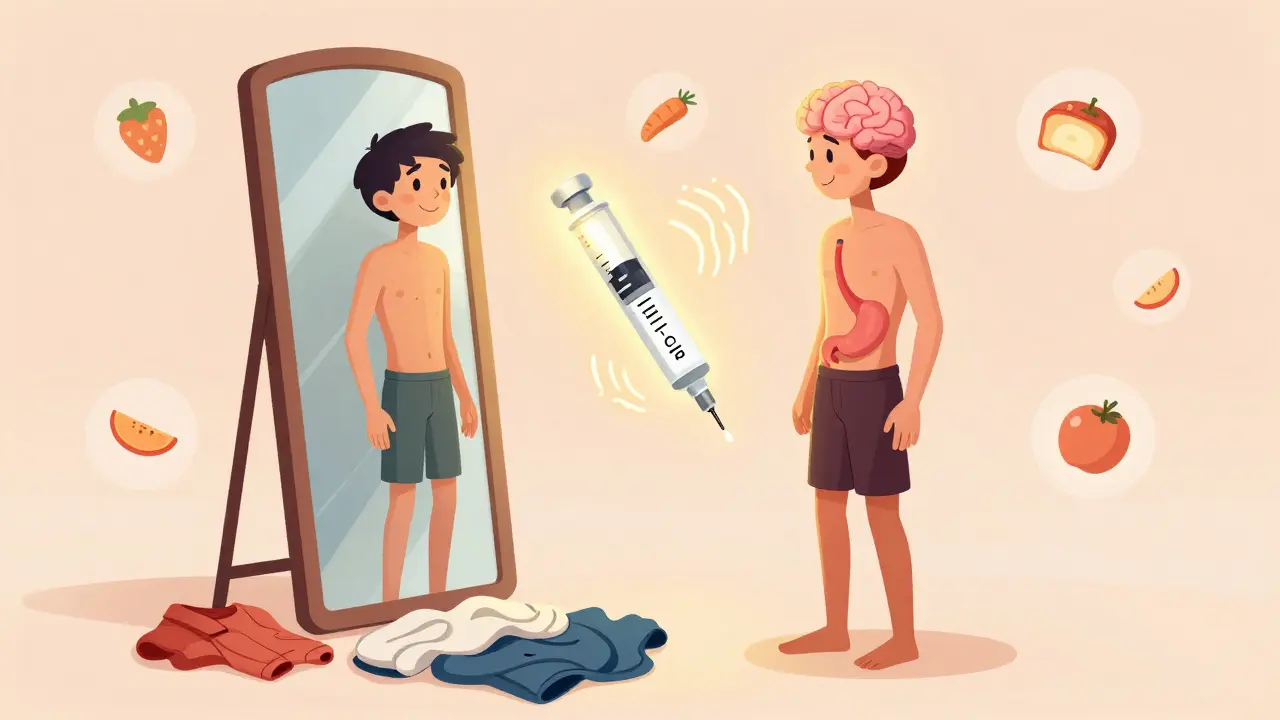
When you hear about GLP-1 agonists, you might think of diabetes. But today, these drugs are more famous for helping people lose weight-sometimes more than 20% of their body weight. That’s not a small number. It’s the kind of loss that changes how clothes fit, how energy feels, and even how you see yourself. But behind the hype are real risks, high costs, and side effects that can make or break the experience. This isn’t magic. It’s science-with trade-offs.
How GLP-1 Agonists Actually Work
GLP-1 agonists mimic a hormone your body already makes after eating. That hormone, called glucagon-like peptide-1, tells your brain you’re full. It slows down how fast your stomach empties. It helps your pancreas release insulin when blood sugar rises. In people with obesity or type 2 diabetes, this system doesn’t work well. GLP-1 agonists fix that.
Drugs like semaglutide (Wegovy, Ozempic) and tirzepatide (Zepbound, Mounjaro) activate GLP-1 receptors in the brain and gut. The result? You feel less hungry. You eat less. You don’t crave snacks between meals. In clinical trials, people lost 10% to 20.9% of their body weight over a year. That’s not just “a few pounds.” That’s moving from obesity into overweight-or even normal weight-for many.
Unlike older weight-loss pills that just suppress appetite, GLP-1 agonists change how your body responds to food. You’re not fighting cravings-you’re just not feeling them as strongly. That’s why so many users say, “I finally stopped overeating without feeling deprived.”
Weight Loss Results You Can Expect
Not all GLP-1 agonists are the same. The numbers matter:
- Semaglutide (Wegovy): 15.8% average weight loss over 68 weeks
- Tirzepatide (Zepbound): 20.9% average weight loss at the 15 mg dose
- Liraglutide (Saxenda): 6.4% average weight loss
- Placebo: 2.4% average weight loss
That difference between semaglutide and liraglutide isn’t small-it’s nearly double. And tirzepatide? It’s the new leader. It works by targeting two receptors: GLP-1 and GIP. That dual action gives it an edge.
Real-world results match the trials. On Reddit’s r/Ozempic, users report losing 50 to 100 pounds over 8 to 12 months. One person lost 78 pounds in 10 months. Another said they went from eating full meals to feeling satisfied with half. That’s not willpower. That’s biology changing.
The Side Effects: Not Just “Mild Nausea”
Let’s be clear: the side effects are common. And they’re not always easy.
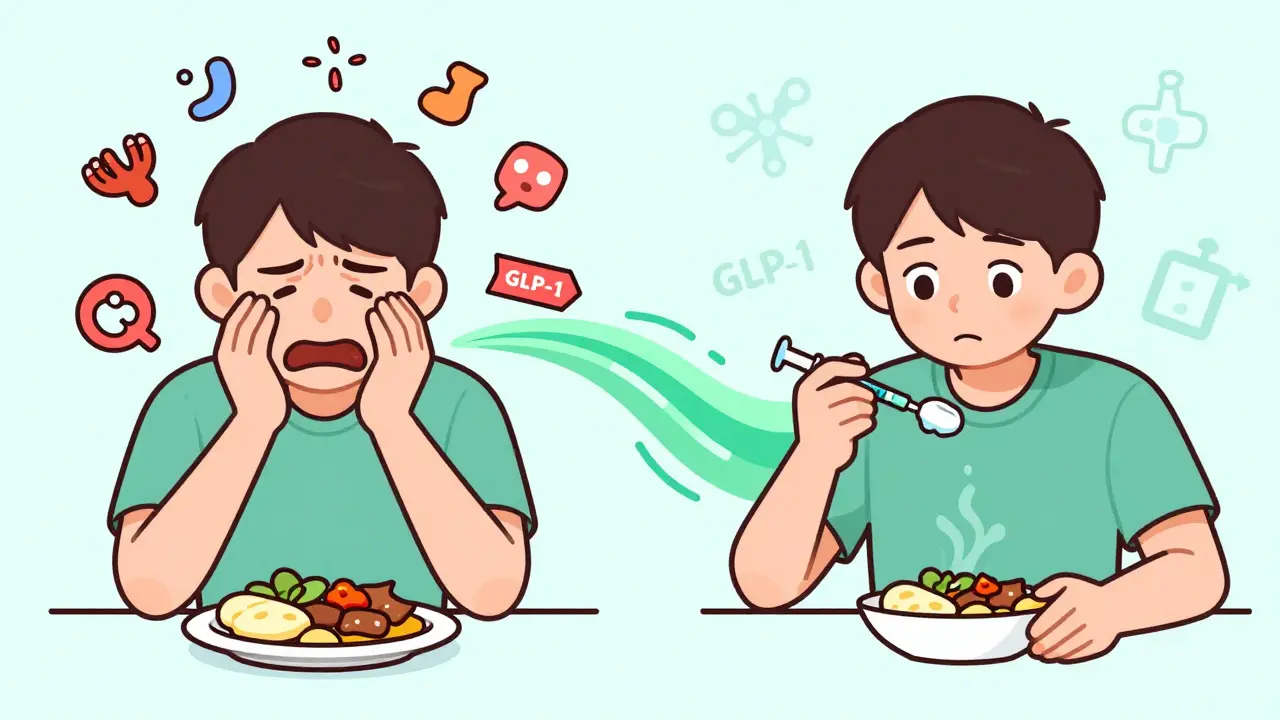
- Nausea: 70-80% of users experience it, especially in the first 4 weeks. For many, it peaks at moderate to severe levels.
- Diarrhea: 50-60% report it.
- Vomiting: 40-50%.
- Abdominal pain: 30-40%.
These aren’t rare. They’re expected. Most people say the nausea fades after 8 to 12 weeks. But that’s a long time to feel sick if you’re trying to start a new routine. Some users quit because they couldn’t tolerate the first few weeks.
What helps? Slow titration. Starting at 0.25 mg weekly and increasing every 4 weeks gives your body time to adjust. Eating smaller, low-fat meals helps. Staying hydrated helps. Some doctors prescribe ondansetron (Zofran) for the worst nausea.
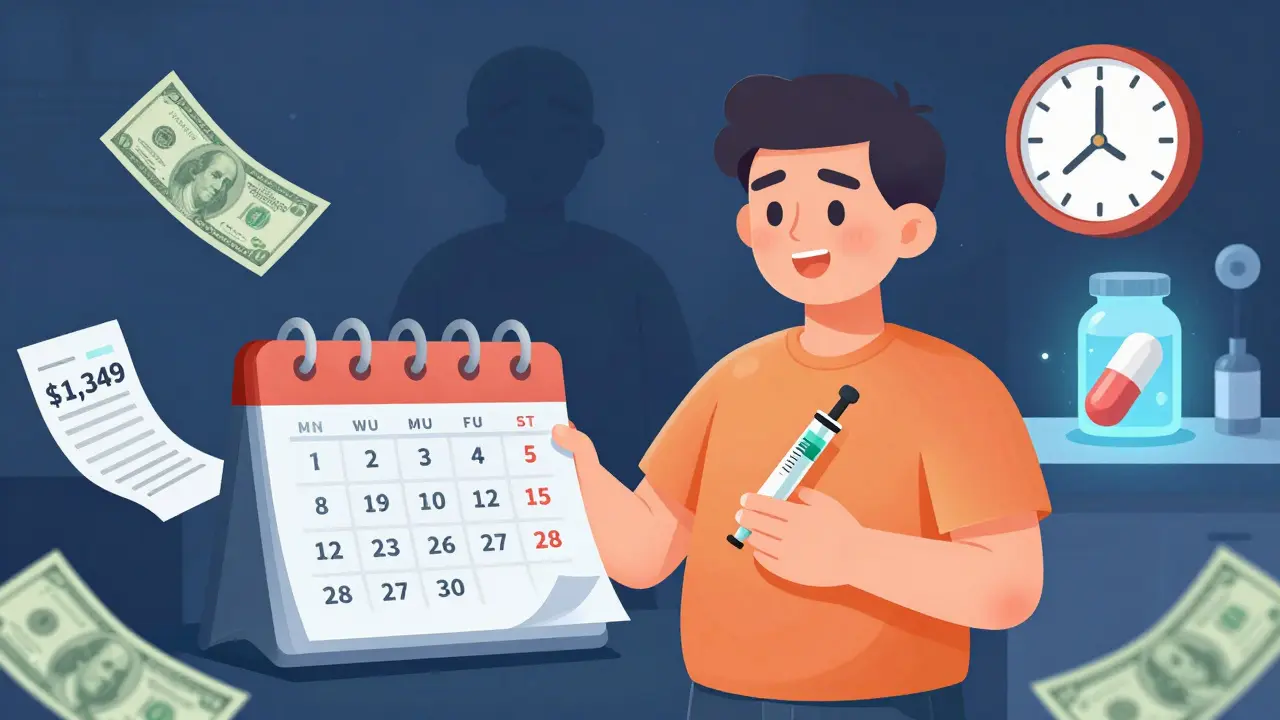
And then there’s the cost. Wegovy runs about $1,349 a month without insurance. Ozempic (same drug, lower dose) is cheaper at $936, but insurance often won’t cover it for weight loss. Only 37% of commercial plans cover Wegovy for obesity. Many people are denied-even with a BMI over 38.
How GLP-1 Agonists Compare to Other Weight Loss Drugs
There are other options. But most fall short.
| Medication | Average Weight Loss | Administration | Key Side Effects | Cost (Monthly, USD) |
|---|---|---|---|---|
| GLP-1 Agonists (Semaglutide) | 15.8% | Weekly injection | Nausea, diarrhea, vomiting | $1,349 |
| GLP-1 Agonists (Tirzepatide) | 20.9% | Weekly injection | Nausea, diarrhea, fatigue | $1,349+ |
| Liraglutide (Saxenda) | 6.4% | Daily injection | Nausea, constipation | $1,200 |
| Phentermine-Topiramate (Qsymia) | 7-10% | Oral pill | Cognitive fog, tingling, birth defects | $150 |
| Orlistat (Xenical) | 5-10% | Oral pill | Oily stools, frequent bowel movements | $100 |
Orlistat makes you leak oil. Phentermine-topiramate can fog your brain. GLP-1 agonists? They make you feel full. They also reduce heart risks. Semaglutide cut major heart events by 26% in a large trial. That’s not just weight loss-it’s life protection.
Who Should Avoid These Drugs
Not everyone can take them. There are hard rules:
- Thyroid cancer history: If you or a family member had medullary thyroid cancer or MEN2 syndrome, don’t use them. The FDA requires a black box warning because these drugs caused thyroid tumors in rats. Human risk? Unknown-but we don’t take chances.
- Pregnancy: These drugs aren’t safe during pregnancy. Women of childbearing age need a pregnancy test before starting.
- Severe GI disease: If you have gastroparesis or severe IBS, slowing digestion could make things worse.
Doctors also screen for depression, eating disorders, and history of pancreatitis. It’s not just about weight-it’s about safety.
What Happens When You Stop
This is the part no one talks about enough.
Studies show that when people stop taking GLP-1 agonists, they regain 50% to 70% of the weight they lost within a year. That’s not failure. That’s biology. The drug was doing the work. Your body went back to its old habits.
That’s why experts say these aren’t “cures.” They’re long-term tools. Like blood pressure meds or insulin, you may need to stay on them to keep the results. Some people do. Others can’t afford it. Others can’t tolerate the side effects.
Dr. John Morton from Yale says it plainly: “These drugs don’t replace lifestyle changes. They make them easier.”
How to Use Them Right
If you’re considering one, here’s what actually works:
- Start low. Don’t jump to the full dose. Slow titration cuts nausea by half.
- Combine with modest calorie reduction. A 500-calorie deficit helps. Not starvation-just mindful eating.
- Track your progress. Weigh weekly. Note energy levels, hunger, and side effects.
- Get injections right. Inject in the abdomen, thigh, or upper arm. Most people master it after one demo.
- Plan for the long term. This isn’t a 6-month fix. It’s a chronic disease treatment.
Follow-up every 3 months. Your doctor may adjust your dose. You might need to switch from Ozempic to Wegovy if you’re using the diabetes version off-label.
The Future: What’s Coming Next
There’s a lot on the horizon.
Oral GLP-1s are in development. Pfizer’s danuglipron is in phase 3 trials. If it works, you could swallow a pill instead of injecting weekly. That could change everything.
Insurance coverage is slowly improving. Medicare now covers Wegovy for some patients. More plans are starting to follow. But right now, 63% of people pay out of pocket.
The market is exploding. It’s expected to hit $100 billion by 2030. Novo Nordisk and Eli Lilly are racing to make more supply. But right now, backorders last 18 months. You can’t get it if they’re out of stock.
And research keeps growing. Trials are now testing GLP-1 agonists for heart failure, fatty liver disease, and even Alzheimer’s. The potential is huge.
Final Thoughts: Is It Worth It?
GLP-1 agonists aren’t for everyone. But for people with obesity who’ve tried everything else, they’re the most powerful tool we’ve had in decades.
They’re not a quick fix. They’re not a miracle. They’re a medical treatment-with real side effects, high cost, and long-term commitment. But they also offer something rare: real, lasting weight loss. And with it, better blood sugar, lower blood pressure, and reduced heart risk.
If you’re considering one, talk to a doctor who knows obesity medicine-not just your primary care provider. Ask about titration. Ask about insurance. Ask what happens if you stop. And don’t believe the hype. Believe the data.






anggit marga
Why are we treating obesity like it's a bug to be patched with fancy injections? In Nigeria we eat real food and move our bodies. This is capitalism selling sickness as a solution. You think your body needs a drug to stop eating? That's not science that's surrender.
Joy Nickles
Okay soooooo I started Ozempic last month and OMG like I literally cried the first week because I was so nauseous??? Like I thought I was dying?? But now?? I'm down 22lbs and my jeans fit?? Like I can't even believe it?? Also my blood sugar is normal?? Like I didn't even know it was high??
Emma Hooper
Let me tell you something sweetie - this isn't just about weight loss, it's about reclaiming your dignity. I went from hiding in baggy sweatpants to wearing dresses again. The nausea? Yeah, it sucked. I took Zofran like candy. But the freedom? The energy? The way my kids look at me now? Priceless. And no, I'm not 'giving up' on willpower - I'm using science to fix a broken biology. Your body isn't lazy, it's just been betrayed by modern food.
And yes, the cost is insane. I sold my second car. But I'd do it again tomorrow.
Robb Rice
While the clinical data on GLP-1 agonists is compelling, particularly regarding cardiovascular risk reduction, the long-term implications of chronic pharmacological appetite suppression remain under-studied. The 50-70% weight regain post-discontinuation suggests a physiological rebound effect, not merely behavioral relapse. Furthermore, the disparity in insurance coverage reflects systemic inequities in obesity care, where metabolic disease is treated as a lifestyle failure rather than a chronic condition. Access should not be contingent on income.
Jenny Salmingo
I've been on semaglutide for 8 months. Lost 40 lbs. Still get nauseous sometimes but I just eat small meals and drink ginger tea. It's not magic but it helped me start moving again. My mom said I look like myself from college. That means more than the number on the scale.
linda permata sari
OMG I just saw someone on the subway with a Wegovy pen and I screamed internally. Like I know that feeling. That moment when you realize your body is finally listening to you. I used to cry in the grocery store because everything looked so delicious and I couldn't eat it. Now? I just… don't care. Like my brain just turned off the craving switch. It's not about willpower. It's about rewiring. I'm not broken. I was just missing the key.
Brandon Boyd
You got this. I know the nausea feels like hell. I was there. But stick with it. Slow titration. Eat protein first. Drink water before meals. You're not failing - your body is just learning. And that weight you're losing? It's not just fat. It's your future. Keep going. One week at a time.
Frank SSS
So let me get this straight - we're paying over a grand a month to feel like crap for three months so we can go back to being obese when we stop? This is a band-aid on a bullet wound. The real problem is processed food, corporate greed, and our broken food system. We're turning people into drug-dependent zombies instead of fixing the damn system. And don't even get me started on the black box warning. We're all just guinea pigs for Big Pharma.
Paul Huppert
Has anyone tried switching from Ozempic to Wegovy? I'm on the diabetes dose and wondering if bumping up helps with weight. Also, how long did it take for the nausea to really settle? Just curious if others had the same experience.
Hanna Spittel
ALERT 🚨 This is a government mind control plot. GLP-1 drugs are laced with microchips to make you docile. Look at the patents - Novo Nordisk owns 12% of the CDC. Also, why do all the ads show skinny white women? They're targeting people who look like me. 👁️👄👁️
Brady K.
Let's deconstruct the neoliberal fantasy here: we've outsourced self-regulation to pharmacology because our culture has normalized chronic dysregulation. GLP-1 agonists aren't a breakthrough - they're a symptom. We've created an environment where biological satiety signals are drowned out by hyperpalatable food, stress, sleep deprivation, and economic precarity. The drug doesn't fix the system. It just lets you survive it. And that's tragic.
Also, the fact that tirzepatide outperforms semaglutide isn't surprising - dual agonism is the future. But the real innovation? When we stop treating obesity as a moral failing and start treating it like hypertension.
Kayla Kliphardt
I'm curious - do people on these drugs still have food-related anxiety? Like, do you still stress about eating too much even when you're not hungry? Or does the drug actually quiet that mental noise too?
John Chapman
YES YES YES. I lost 60 lbs and I'm not even done yet. I used to hate my reflection. Now I take selfies. I go to the beach. I wear shorts. It's not perfect but it's real. And if I have to pay $1300 a month to feel like me again? Worth it. 💪❤️
Urvi Patel
How can you be so naive? In India we have centuries of Ayurveda and yoga. We don't need Western pharmaceuticals to fix what is essentially a lack of discipline. This is cultural imperialism disguised as medicine. People in the West have forgotten how to live. They are addicted to convenience. A pill won't fix that.