
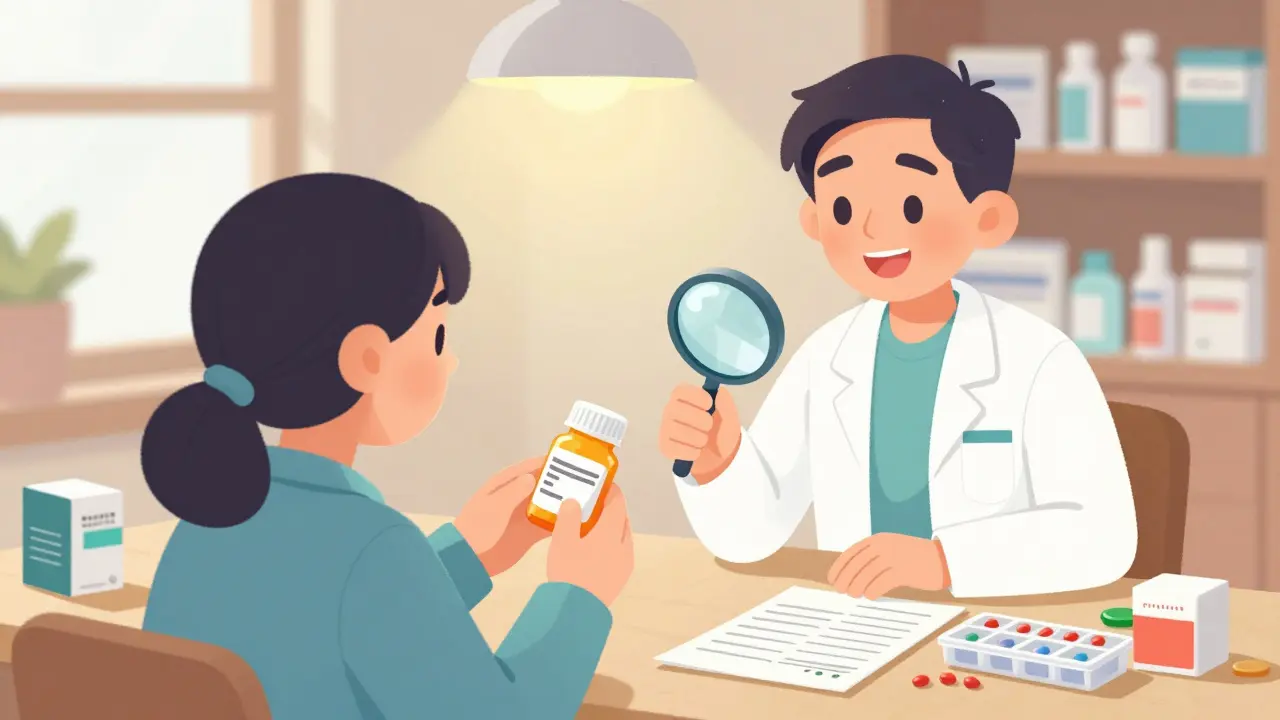
Starting a new medication can feel overwhelming. You’ve got prescriptions, labels with tiny print, dosing schedules, and warnings you don’t fully understand. And if you’ve never taken medication regularly before, you’re not alone - 42% of first-time users struggle with basic dosing rules in the first month. The good news? Most medication errors are preventable. With the right habits, you can avoid dangerous side effects, hospital visits, and even life-threatening mistakes.
Why Medication Safety Matters More Than You Think
Every year in the U.S., over 1.3 million people end up in the emergency room because of bad reactions to medications. About 350,000 of those cases need hospital stays. And it’s not just about taking too much - it’s also about taking the wrong thing, at the wrong time, or storing it incorrectly. The FDA estimates that 18% of medication errors happen because someone used an expired pill or liquid. Another 12% come from unlabeled or mislabeled drugs. These aren’t rare mistakes. They’re common - and avoidable.The goal of medication safety isn’t to scare you. It’s to help you get the full benefit from your treatment. If you take your meds exactly as prescribed, your chances of success go up dramatically. For chronic conditions like high blood pressure or diabetes, non-adherence causes half of all treatment failures. That means if you skip doses or change your schedule without asking, your medication might not work at all.
The Six Rights of Taking Medication Correctly
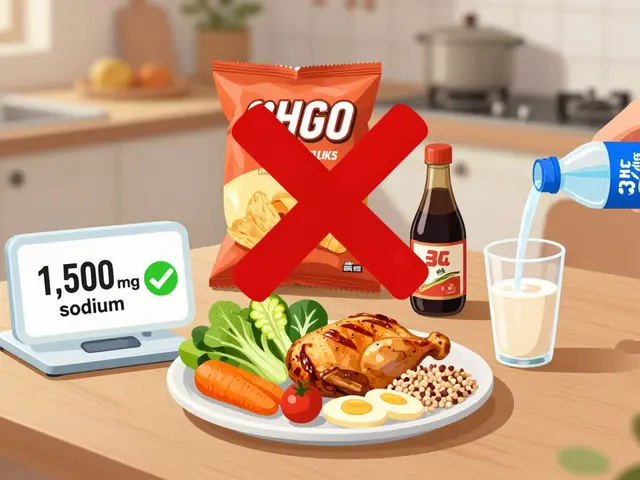
Healthcare providers use a simple checklist called the Six Rights to avoid errors. You can use it too - it’s your best defense against mistakes.- Right patient: Make sure the name on the bottle matches yours. Double-check your date of birth if you’re picking up meds in person.
- Right medication: Compare the pill or liquid to your prescription. If it looks different from your last refill, ask your pharmacist why. Generic versions are safe, but they often change color or shape.
- Right indication: Know why you’re taking it. Don’t assume it’s for the same reason as a past prescription. Ask: “What condition is this meant to treat?”
- Right dose: Never use kitchen spoons. Use the measuring cup, syringe, or dosing spoon that came with the medicine. Household spoons can be off by 25-50%.
- Right route: Is it meant to be swallowed, placed under your tongue, sprayed in your nose, or injected? Taking a pill orally when it’s supposed to be a patch can be dangerous.
- Right time: Some meds need to be taken with food. Others must be taken on an empty stomach. Some work better in the morning; others at night. Ask your pharmacist when to take it based on your daily routine.
Keep a Complete Medication List
Most people don’t realize how many substances they’re taking. It’s not just prescriptions. It’s over-the-counter painkillers, vitamins, herbal supplements, and even antacids. A 2022 study found that patients who kept a full, updated list had 27% fewer medication errors.Here’s what to include on your list:
- Brand and generic names
- Dose (e.g., 10 mg, 5 mL)
- How often (e.g., once daily, every 6 hours)
- Why you’re taking it (e.g., “for high blood pressure”)
- When you started
- Any side effects you’ve noticed
Keep this list in your wallet, phone notes, or a printed copy. Bring it to every doctor’s visit, even if you think nothing changed. When you’re discharged from the hospital, make sure your list matches what you’re being sent home with. 22% of medication errors happen during care transitions - like leaving the hospital or switching doctors.
Storage Matters More Than You Realize
You wouldn’t leave milk out on the counter. But many people do the same with their meds. Heat, moisture, and light can break down drugs - especially liquids, insulin, and antibiotics.Here’s what you need to know:
- Insulin: Must be refrigerated (36-46°F) until first use. After opening, it can stay at room temperature (below 86°F) for 28-30 days.
- Most pills: Store in a cool, dry place. Avoid bathrooms - humidity ruins them.
- Liquids and eye drops: Check expiration dates. They often expire sooner than pills.
- Controlled substances (like opioids): Keep locked up, out of reach of kids or visitors.
Expired meds don’t just lose strength - they can become harmful. A 2023 Merck report found that 18% of medication errors involve expired drugs. If you’re unsure, ask your pharmacist. Don’t flush or throw them in the trash - use a drug take-back program.
Read Labels Like a Pro
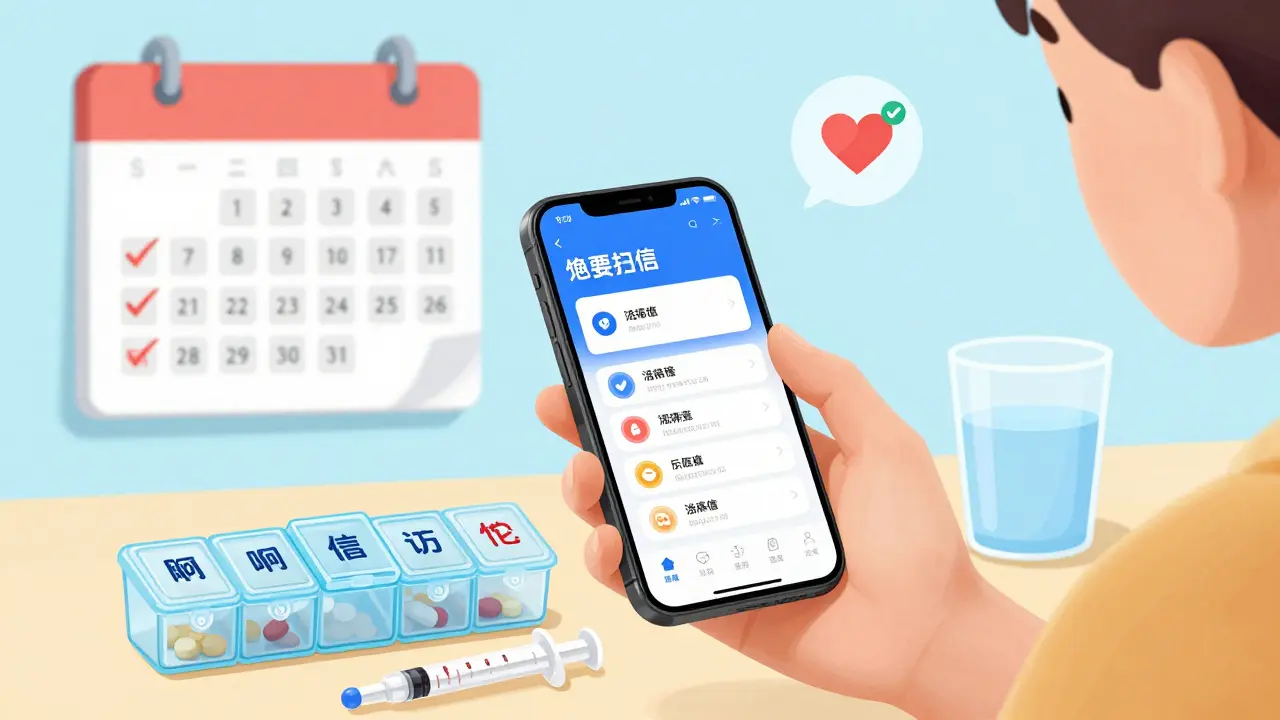
Pharmacy labels are packed with info - but they’re not always easy to read. Low lighting, small fonts, and confusing terms can lead to mistakes. The FDA says 15% of errors come from misreading labels.Here’s how to read them properly:
- Turn on bright lights. Don’t take meds in the dark.
- Use a magnifying glass if needed.
- Look for: Drug name, strength, directions, warnings, and expiration date.
- Check for “Take with food” or “Avoid alcohol” - these are critical.
- If you can’t read it, call the pharmacy. Don’t guess.
Also, never take a pill if it looks different from your last refill. Generic versions are safe, but they change appearance. Ask your pharmacist: “Is this the same medicine I had before?”
Ask Questions - Don’t Assume
Most patients don’t ask enough questions. Only 22% ask what to do if they miss a dose. Only 65% of pharmacy consultations cover side effects. That’s dangerous.Here are three questions you must ask every time you get a new medication:
- What should I do if I miss a dose? Some meds you skip. Others you take as soon as you remember. Some you double up. It varies.
- How should I store this? Not all meds are the same. Insulin, liquid antibiotics, and nitroglycerin all need special care.
- What side effects should I watch for? Know the red flags. For example, if you’re on blood thinners, watch for unusual bruising or bleeding. If you’re on statins, report muscle pain.
Studies show that patients who ask three or more questions have 34% fewer adverse events in the first month. Pharmacists are trained to help you - but they can’t read your mind.
Never Share Medications - Even With Family
It’s tempting. Your mom had headaches and her pill worked. Why not try it? Don’t. The FDA says 8% of emergency visits from bad drug reactions come from sharing prescriptions. What works for one person can be deadly for another. Allergies, weight, liver function, and other meds you’re taking all change how a drug affects you.Also, never take someone else’s leftover antibiotics. They might not be the right kind for your infection - and taking the wrong one can make bacteria stronger.
Use Tools to Stay on Track
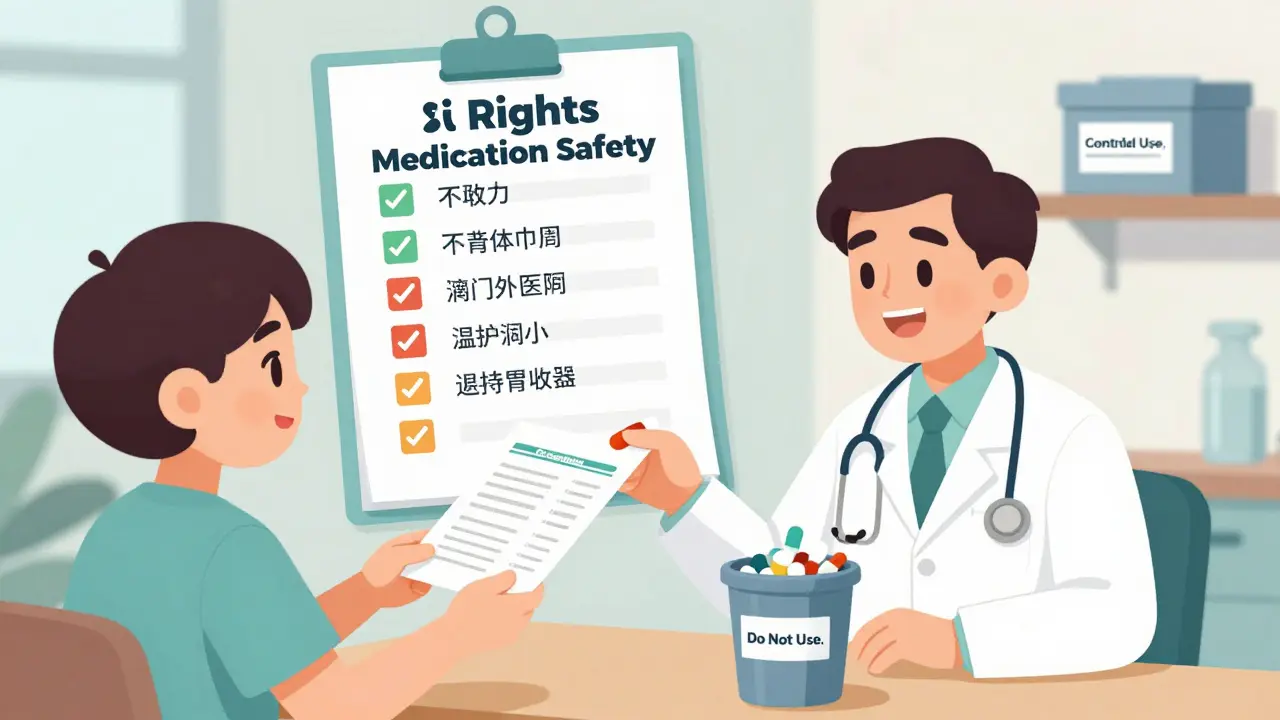
Memory fails. Life gets busy. That’s why tools help.- Medication reminder apps like Medisafe or MyMeds can send alerts, track doses, and even scan barcodes to confirm you’re taking the right pill. Users who use these apps improve adherence by 28%.
- Pill organizers with AM/PM or daily compartments help if you take multiple pills. Buy one with a lock if you have kids around.
- Phone alarms work too. Set two: one for the dose, one as a backup 30 minutes later.
Don’t rely on your memory. The average person needs 2-3 weeks to build a solid routine. Use tools until it becomes automatic.
What to Do If Something Feels Wrong
Sometimes, you’ll feel off after starting a new med. That’s not always an emergency - but it’s not nothing.Here’s how to respond:
- Mild side effect (headache, nausea, drowsiness)? Wait 3-5 days. Your body might adjust. If it doesn’t improve, call your doctor.
- Severe reaction (rash, swelling, trouble breathing, chest pain, fainting)? Go to the ER or call 911 immediately.
- Unusual behavior (confusion, hallucinations, extreme mood swings)? These can happen with certain antidepressants or seizure meds. Don’t ignore them.
Keep a journal: Write down what you took, when, and how you felt. Bring it to your next appointment. It helps your provider spot patterns.
Final Tip: You’re Not Alone
Medication safety isn’t about being perfect. It’s about being aware. Most people make mistakes at first. The key is learning quickly.Use your pharmacist as your ally. They’re not just filling prescriptions - they’re your safety net. If you’re unsure, call them. If you’re nervous, bring someone with you to appointments. Ask for written instructions. Take notes. Use apps. Keep your list updated.
Medication safety isn’t complicated. It’s just consistent. Do these things every day, and you’ll avoid 90% of the risks. Your health depends on it - not just today, but for months and years ahead.
What should I do if I accidentally take two doses of my medication?
Don’t panic, but act quickly. Call your pharmacist or doctor immediately. Some medications are safe if you take a little extra once, but others - like blood thinners, insulin, or heart meds - can be dangerous. Never try to “make up” for it by skipping the next dose. Always get professional advice before adjusting.
Can I crush my pills if I have trouble swallowing them?
Only if your pharmacist or doctor says it’s okay. Many pills are designed to release slowly - crushing them can cause too much medicine to enter your system at once. Extended-release pills, capsules, and coated tablets should never be crushed. Ask for a liquid version instead if swallowing is hard.
Why does my medication look different this time?
Most likely, your pharmacy switched to a different generic manufacturer. Generics are required to work the same way, but they can change color, shape, or size. Always check the name and dose on the label. If you’re unsure, ask the pharmacist to confirm it’s the same medication.
Is it safe to take vitamins and supplements with my prescriptions?
Not always. Some supplements can interfere with meds. For example, St. John’s Wort can make birth control, antidepressants, and blood thinners less effective. Calcium and iron can block absorption of thyroid meds. Always tell your pharmacist and doctor about everything you take - even if you think it’s “just a vitamin.”
How do I know if my medication has expired?
Check the expiration date printed on the bottle or box. For liquids, eye drops, or insulin, the date is especially important - they break down faster. If the pill is cracked, discolored, or smells odd, throw it out. When in doubt, ask your pharmacist. Never take expired antibiotics - they can become ineffective or even toxic.
Can I drink alcohol while taking my medication?
It depends. Many meds - including painkillers, sleep aids, antidepressants, and antibiotics - can react badly with alcohol. It can increase drowsiness, raise blood pressure, or damage your liver. Always read the label for warnings. If it doesn’t say, ask your pharmacist. When in doubt, avoid alcohol.

Mike Rengifo
Been taking blood pressure meds for 3 years now. The pill organizer with the lock? Game changer. My grandma used to mix up her pills until we got her one with AM/PM compartments. Now she’s got zero errors. Just don’t forget to refill it.
Meenakshi Jaiswal
As a nurse who’s seen too many ER visits from medication mix-ups, I can’t stress this enough: write everything down. Even if you think you’ll remember. I had a patient last week who took her diabetes med with coffee instead of water because she ‘always does it that way.’ Didn’t realize the caffeine was spiking her glucose. Simple fix. Just write it. Keep the list. You’ll thank yourself later.
Isabel Rábago
People still take meds from last year’s prescription like it’s candy. I swear, if I see one more person pop a leftover antibiotic because their cousin had a sore throat, I’m gonna lose it. This isn’t a game. You don’t get to be a DIY pharmacist because you watched a YouTube video. You’re not helping. You’re endangering people.
Anna Sedervay
One must consider the epistemological framework of pharmaceutical compliance. The hegemony of the pharmacological-industrial complex has systematically obfuscated patient agency through obfuscatory labeling conventions and epistemic asymmetry. The FDA’s 18% error statistic is statistically insignificant when contextualized within the neoliberal commodification of health outcomes. One must question: who truly benefits from this paradigm of ‘medication safety’? Is it the patient… or the patent holder?
Matt Davies
Man, I used to be the guy who’d just wing it with meds-until I got dizzy and ended up in urgent care. Now I’ve got a whole system: phone alarms, a little notebook, and I even label my pillbox with sticky notes that say ‘DO NOT EAT WITH GRAPEFRUIT’ in giant letters. Life’s too short for dumb mistakes. This guide? Gold. Print it. Tape it to your fridge.
Ashley Bliss
I remember when I started my antidepressants. I was terrified. I thought I was going to turn into a zombie, or worse-become someone I didn’t recognize. I cried every night for a week. But then I started writing down how I felt each day. Not just ‘good’ or ‘bad’-but details. ‘Felt lighter after lunch.’ ‘Didn’t cry when I heard my mom’s voice.’ That journal saved me. Not the meds alone. The awareness. The attention. You’re not just taking a pill. You’re rebuilding your relationship with your own body. And that’s sacred.
Dev Sawner
According to the WHO, non-adherence to pharmacological regimens results in an annual economic burden of $500 billion globally. The primary cause is not ignorance but behavioral inertia. Furthermore, the prevalence of generic substitution without patient education correlates strongly with increased adverse events in low-literacy populations. A structured intervention protocol, including pharmacist-led counseling and digital reminders, reduces non-adherence by 41% within 30 days. Recommend implementation.
Moses Odumbe
Just took my first blood thinner. 🤯
Used the app they recommended. Set 3 alarms. Took a pic of the pill before I swallowed it. 😎
Also told my roommate I’m on blood thinners so he doesn’t accidentally give me Advil. 🙏
Y’all need to stop winging it. This ain’t TikTok.
Emily P
Does anyone know if it’s safe to take melatonin with my thyroid med? I’ve been having trouble sleeping since I started it, but I don’t want to mess anything up.
Vicki Belcher
This is so important! 💖 I’m 72 and started 5 new meds last year. My daughter printed this out for me and we went over it together. Now I keep it next to my pillbox. I even color-coded the days. 🌈 Thank you for writing this with so much care. You made me feel less alone.
Jedidiah Massey
The Six Rights framework is fundamentally inadequate. It fails to account for pharmacokinetic variability across polymorphic CYP450 enzyme expressors. Furthermore, the reliance on patient self-reporting introduces significant recall bias. A more robust model would integrate pharmacogenomic screening and real-time adherence telemetry via smart blister packs. Until then, we’re merely managing symptoms of systemic neglect.
Lynsey Tyson
I used to think I was too busy to keep track of meds. Then my dad had a bad reaction because he didn’t tell his doctor about his fish oil. We all assumed it was ‘just a supplement.’ Turns out it thinned his blood too much. I’m not judging anyone. I’m just saying… maybe write it down. Even if it’s just a sticky note. It doesn’t have to be perfect. Just honest.
Sarah McQuillan
Why are we letting corporations control our health? They make pills look different on purpose so you’ll keep buying them. And the ‘expiration dates’? Total scam. I’ve taken pills 5 years past their date and felt fine. The FDA is just protecting Big Pharma profits. You’re being manipulated.
Laura Hamill
They say ‘don’t share meds’ but what if your grandma gave you her blood pressure pill because you were dizzy and she said ‘it helped me’? 🤔
It’s not like it’s cocaine. I took one. Felt better. Now they’re saying I’m a criminal? 😭
My mom says I’m lucky I didn’t die. But I didn’t even know I was doing something wrong. 😭😭😭
Alana Koerts
42% struggle? That’s low. More like 80%. Everyone forgets. Everyone skips. Everyone guesses. This guide is just feel-good fluff. Real people are just trying to survive. You think they’re gonna read labels after a 12-hour shift? Wake up.