
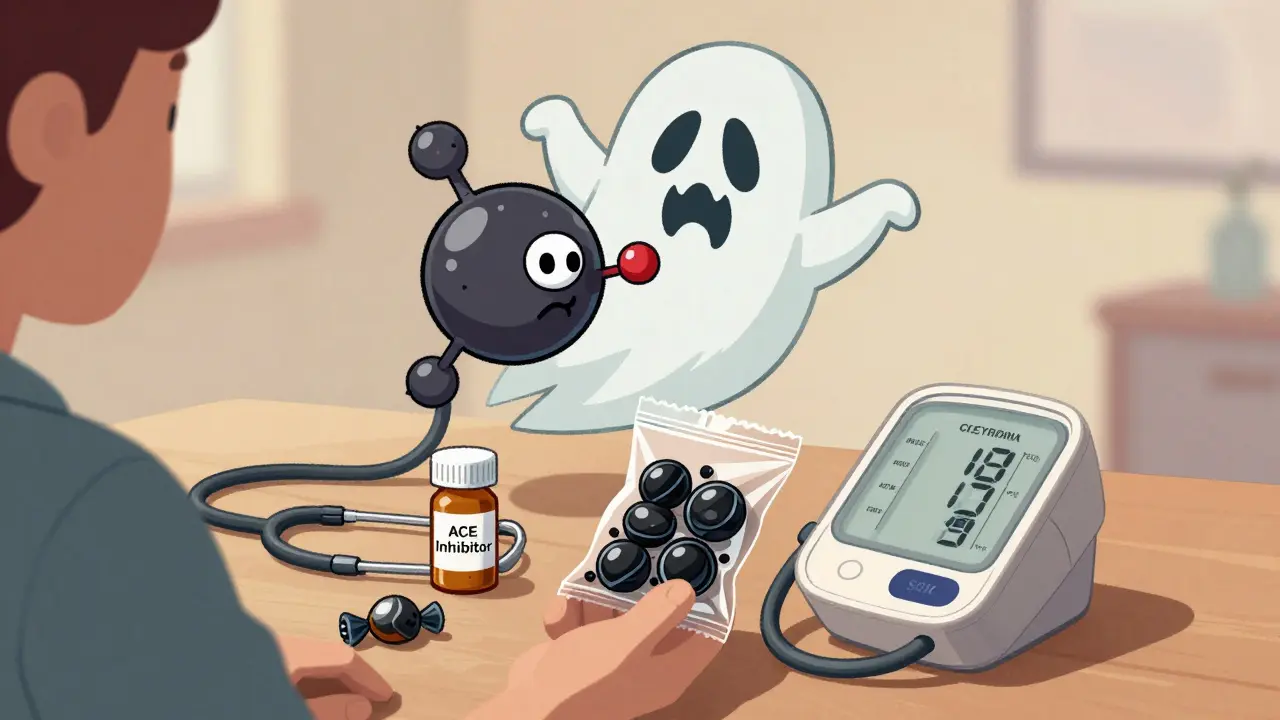
Many people enjoy licorice candy, herbal teas, or supplements without realizing they might be sabotaging their blood pressure treatment. If you're taking medication to control high blood pressure, consuming licorice - especially traditional black licorice - can make your meds less effective, raise your blood pressure, and even cause dangerous drops in potassium. This isn't a myth or a vague warning. It's a well-documented, clinically proven interaction that has been studied for decades.
How Licorice Affects Your Blood Pressure
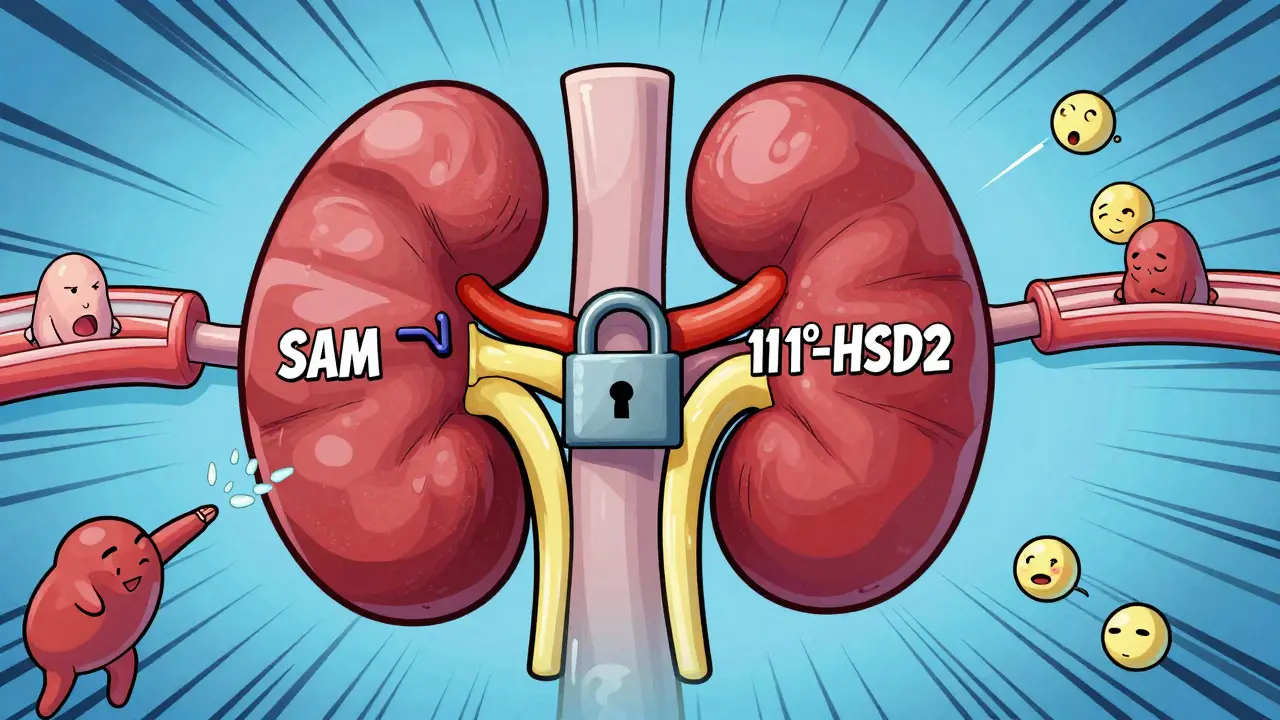
The active ingredient in licorice root is glycyrrhizin. When you eat or drink it, your body breaks glycyrrhizin down into glycyrrhetic acid. This compound blocks a key enzyme in your kidneys called 11β-HSD2. Normally, this enzyme protects your body from being overstimulated by cortisol, a hormone that acts like aldosterone - the hormone that tells your kidneys to hold onto salt and water and flush out potassium.
When 11β-HSD2 is blocked, cortisol starts acting like aldosterone. The result? Your body holds onto extra sodium and water, which increases blood volume. At the same time, you lose potassium. Both effects raise blood pressure. This condition is called pseudoaldosteronism, and it mimics the symptoms of a rare hormonal disorder. Studies show that people who consume more than 100 mg of glycyrrhizin daily for a few weeks can see their systolic blood pressure rise by over 5 mmHg - enough to undo the work of your medication.
Which Blood Pressure Medications Are Affected?
Almost all blood pressure medications can be undermined by licorice, but some interactions are especially dangerous.
- Diuretics (like hydrochlorothiazide or furosemide): These drugs help lower blood pressure by making you pee out extra fluid and salt. But they also make you lose potassium. Licorice does the same thing - and worse. Together, they can drop your potassium levels dangerously low, increasing the risk of irregular heartbeats or muscle weakness.
- ACE inhibitors (like lisinopril or captopril): These drugs relax blood vessels and reduce fluid buildup. Licorice does the opposite - it increases fluid. The result? Your blood pressure doesn’t drop like it should.
- Digoxin (Lanoxin): This heart medication is one of the most dangerous combinations with licorice. Low potassium lets digoxin bind too tightly to heart cells, which can trigger toxicity. Symptoms include nausea, confusion, vision changes, and even heart failure. There are documented cases of patients ending up in the hospital after using herbal laxatives containing licorice.
- Potassium-sparing diuretics (like spironolactone or eplerenone): These are meant to keep potassium in. Licorice forces it out. The two cancel each other out, making the medication useless.
Even if you’re not on a diuretic, licorice still raises blood pressure directly. It doesn’t matter if you’re on beta-blockers, calcium channel blockers, or ARBs - the salt and water retention from licorice will work against them.
How Much Licorice Is Too Much?
Not all licorice is the same. Many red or flavored candies use anise or artificial flavoring and contain no glycyrrhizin. But traditional black licorice, licorice root tea, and herbal supplements often do.
Health authorities agree: 100 mg of glycyrrhizin per day is the threshold where risks start climbing. That’s about:
- 60-70 grams of traditional black licorice candy (roughly 2-2.5 ounces)
- 1-2 cups of licorice root tea brewed from loose root
- One standard herbal supplement capsule (check labels - many contain 100-200 mg per serving)
For some people, even less can cause problems. Older adults, women, and those with existing high blood pressure or heart disease are more sensitive. One study found that people over 60 showed blood pressure spikes after just 50 mg of glycyrrhizin daily.
Warning Signs You’re Having a Reaction
If you’ve been eating licorice regularly and are on blood pressure meds, watch for these symptoms:
- Unexplained rise in blood pressure readings
- Muscle cramps, weakness, or twitching (especially in legs)
- Feeling unusually tired or sluggish
- Swelling in ankles or feet (edema)
- Heart palpitations or irregular heartbeat
- Low potassium levels confirmed by a blood test (below 3.5 mmol/L)
These aren’t just inconveniences. Low potassium can trigger life-threatening arrhythmias. Swelling and high blood pressure can worsen heart failure. If you notice any of these, stop licorice immediately and talk to your doctor.
What to Look For on Labels
There’s no legal requirement in New Zealand, the U.S., or most countries to list glycyrrhizin content on supplements or candy. That means you have to read carefully.
- Check ingredient lists for “licorice root,” “Glycyrrhiza glabra,” or “licorice extract.”
- Be wary of herbal teas labeled “for digestion” or “natural remedy” - many include licorice root.
- Supplements claiming “natural blood pressure support” or “adrenal support” often contain licorice. Avoid them.
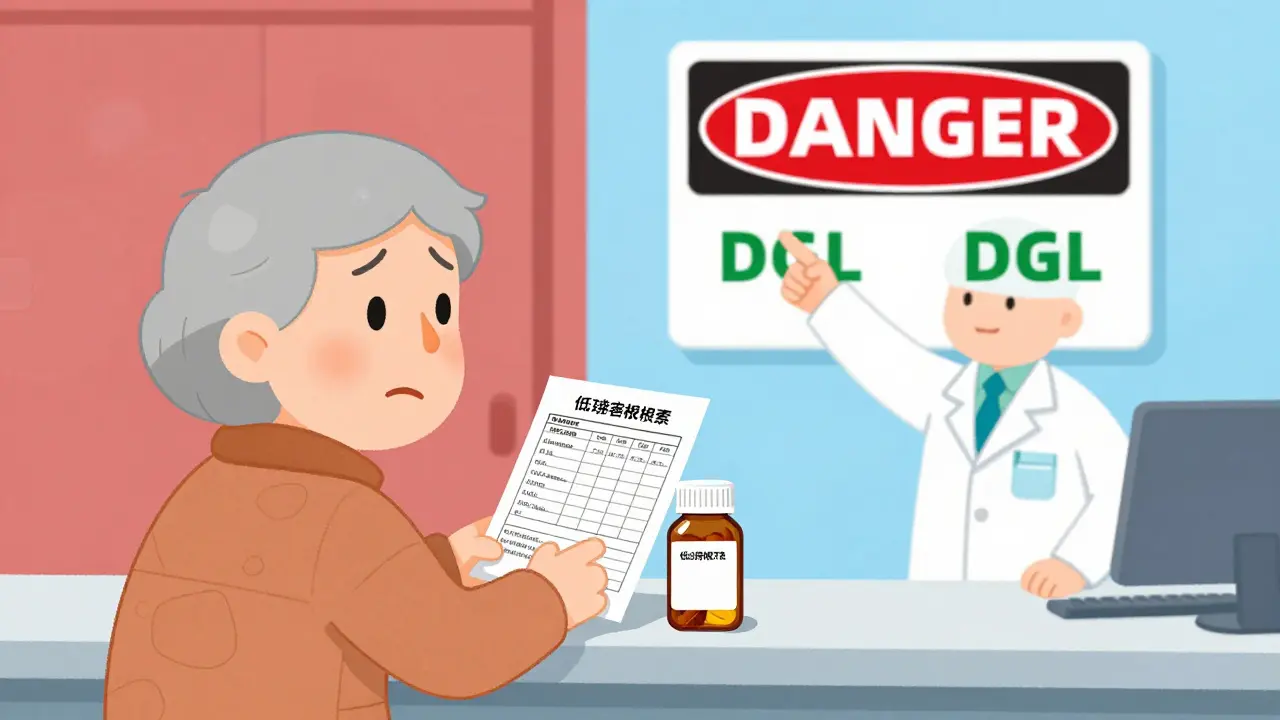
- Look for “deglycyrrhizinated licorice” (DGL) on labels. This version has had the glycyrrhizin removed and is generally safe.
Just because a product says “natural” doesn’t mean it’s safe with your meds. Always assume licorice root = risk unless proven otherwise.
What to Do If You’ve Been Consuming Licorice
If you’ve been eating licorice regularly and are on blood pressure medication:
- Stop all licorice products immediately - including teas, candies, and supplements.
- Monitor your blood pressure daily for the next 2-4 weeks. You should see a gradual drop as your body clears the glycyrrhizin.
- Ask your doctor for a blood test to check your potassium levels. If they’re low, you may need supplements or a change in medication.
- Don’t restart licorice without talking to your doctor. Even small amounts can be risky long-term.
Some people recover quickly. Others take weeks for their potassium and blood pressure to normalize. If you’re over 60, have heart disease, or take digoxin, you should avoid licorice entirely - even occasional use isn’t worth the risk.
Final Advice
There’s no safe level of licorice for someone on blood pressure medication. The 100 mg/day threshold isn’t a “safe” limit - it’s the point where studies start seeing measurable harm. For most people on these drugs, the best choice is zero.
Don’t assume herbal means harmless. Licorice is one of the most dangerous food-drug interactions in clinical practice. It’s not rare. It’s not theoretical. It’s happening right now in homes, pharmacies, and emergency rooms.
If you’re unsure whether a product contains licorice, skip it. Talk to your pharmacist. Ask your doctor. Better safe than sorry - especially when your blood pressure is on the line.
Can I still eat licorice candy if I’m on blood pressure medication?
No, if you’re on blood pressure medication, you should avoid traditional black licorice candy entirely. It contains glycyrrhizin, which can raise your blood pressure and lower potassium, making your meds less effective. Even small amounts over time can cause problems. Look for "deglycyrrhizinated licorice" (DGL) if you want a safer alternative - but most flavored candies use anise, not licorice root, and are generally fine.
How long does it take for licorice to affect blood pressure?
Effects can show up in as little as a few days with high intake, but clinically significant changes usually occur after 2-4 weeks of daily consumption. The rise in blood pressure is dose-dependent - the more you eat, the faster and stronger the effect. If you stop eating licorice, your blood pressure and potassium levels can return to normal within 1-3 weeks, depending on how long and how much you consumed.
Is licorice root tea safer than candy?
No. Licorice root tea can be even more dangerous because it’s often brewed from concentrated root, delivering higher doses of glycyrrhizin than candy. A single cup can contain 50-100 mg of glycyrrhizin. If you drink it daily, you’re likely crossing the 100 mg safety threshold. Herbal teas labeled as "digestive" or "laxative" often contain licorice root - read the ingredients carefully.
Can licorice interact with other medications besides blood pressure drugs?
Yes. Licorice can reduce the effectiveness of warfarin (a blood thinner), increase side effects of corticosteroids like prednisone, and interfere with certain chemotherapy drugs like paclitaxel. It can also worsen conditions like kidney disease, liver cirrhosis, and heart failure. Always tell your doctor or pharmacist about any herbal supplements you’re taking - even if you think they’re "natural."
Are there any benefits to licorice that outweigh the risks?
Some studies suggest glycyrrhizin may have anti-inflammatory or liver-protective effects, but these benefits are not proven in humans at safe doses, and they don’t outweigh the risks for people on blood pressure medication. The safest form, DGL (deglycyrrhizinated licorice), is sometimes used for stomach ulcers, but even then, it should be used under medical supervision. For anyone with hypertension or on heart meds, the risks far exceed any possible benefit.





Sean Callahan
I had no idea licorice could mess with my blood pressure meds. I’ve been eating that black candy like it’s candy corn every Halloween for years. Just checked my pantry-got a whole bag of ‘licorice root’ stuff. Guess I’m throwing it out tomorrow. 😅
phyllis bourassa
Honestly? This is why I hate ‘natural’ supplements. People think if it comes from a plant, it’s harmless. Nope. Licorice root is basically a sneaky sodium bomb. I had a cousin on lisinopril who ended up in the ER with a potassium level of 2.8 because she drank ‘digestive tea’ daily. She’s lucky she didn’t have a stroke. 🤦♀️
Ferdinand Aton
Wait, so if I eat red licorice, I’m fine? Because I thought all licorice was the same. I’ve been eating Twizzlers for 20 years and my BP is perfect. Is this just fearmongering?
William Minks
I’m a pharmacist and I can confirm: DGL (deglycyrrhizinated licorice) is safe. But regular licorice? No. I’ve had three patients this year alone with arrhythmias tied to licorice tea. One guy thought ‘herbal remedy’ meant ‘no side effects.’ 😅 Don’t be that guy. Check labels. Your heart will thank you.
Jeff Mirisola
This post is a lifesaver. Seriously. I’ve been on spironolactone for years and had no clue my daily licorice root tea was fighting my meds. I stopped last week, and my BP dropped 12 points in 10 days. Also, my leg cramps? Gone. If you’re on meds and love licorice-stop. Just stop. 💯
Susan Purney Mark
I’m so glad someone finally wrote this. My mom’s on three different BP meds and she swears by her ‘herbal calming tea.’ I’ve been trying to get her to stop for months. Now I’ve got proof. I’m printing this out and putting it next to her tea box. ❤️
Ian Kiplagat
Aye. Licorice root in teas is a silent killer. Saw it in a GP clinic in Manchester. Patient, 72, on ramipril, drank 2 cups daily. BP went from 130/80 to 165/95 in 3 weeks. K+ dropped to 3.0. Simple fix: stop the tea. Took 10 days to recover. Don’t overcomplicate it.
Amina Aminkhuslen
I call this the ‘natural’ trap. People think if it’s in a teapot or labeled ‘ancient remedy,’ it’s not a drug. Newsflash: licorice root is a pharmacologically active substance. It’s not a snack. It’s a hormone disruptor. And if you’re on meds? You’re playing Russian roulette with your kidneys. Stop. Just stop.
amber carrillo
I stopped eating licorice after reading this. My BP has stabilized. I feel better. I’m grateful for the clarity. Thank you.