
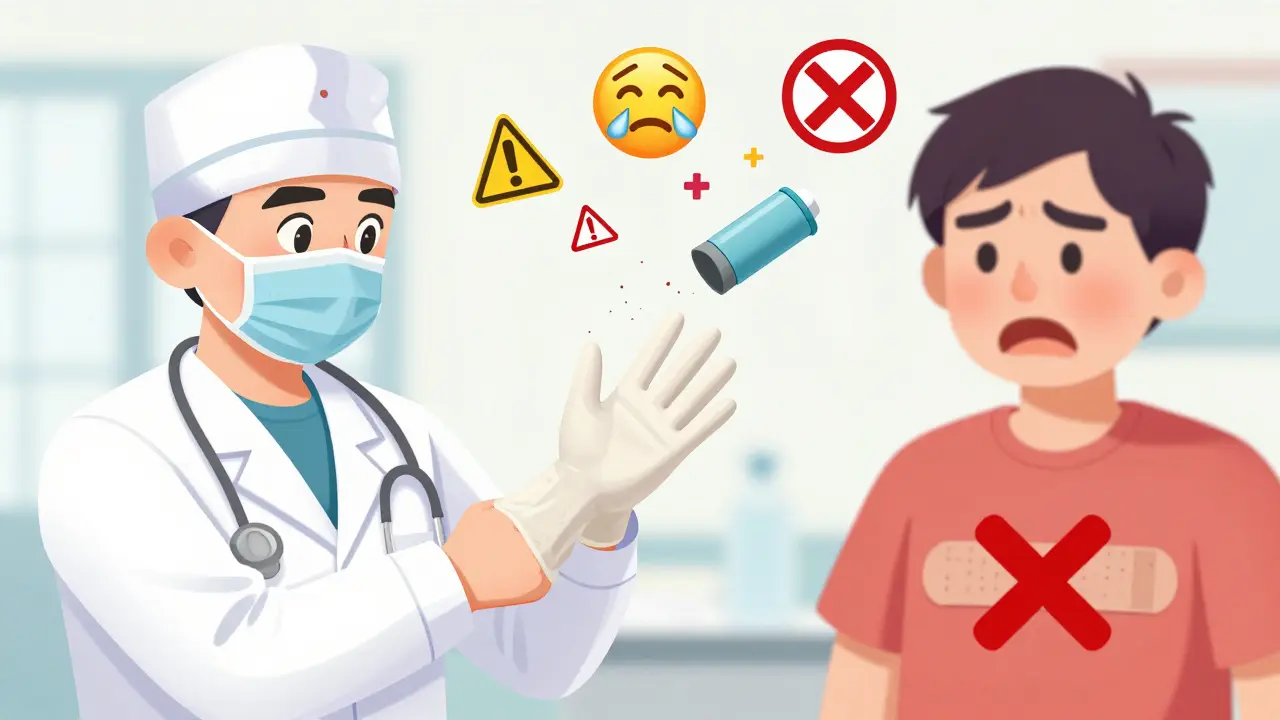
Latex allergy isn’t just a nuisance-it can be life-threatening. For some people, touching a simple medical glove triggers swelling, trouble breathing, or even cardiac arrest. This isn’t rare. In high-risk groups like people with spina bifida, up to 67% develop a latex allergy after just a few surgeries. Healthcare workers aren’t safe either-up to 12% of them are sensitized, mostly from years of exposure to powdered latex gloves. The good news? This allergy is preventable. The bad news? Once you have it, you can’t outgrow it. Avoidance is the only cure.
What Exactly Is Latex Allergy?
Latex allergy is an immune system overreaction to proteins in natural rubber latex, the milky sap from the Hevea brasiliensis tree. It’s not a chemical irritation-it’s a true IgE-mediated allergy, the same kind that causes peanut or bee sting reactions. When someone with this allergy comes into contact with latex, their body sees it as a threat and releases histamine and other chemicals. That’s what causes hives, swelling, wheezing, or worse.
There are two main types of reactions. The first is Type I: immediate and dangerous. Symptoms show up within minutes-itchy skin, runny nose, swelling of the lips or throat, chest tightness, and in severe cases, anaphylaxis. The second is Type IV: delayed. This shows up as a dry, itchy, cracked rash 24 to 48 hours after contact. It’s often mistaken for simple irritation, but it’s still an allergic response. Both types need attention.
Who’s at Risk?
Not everyone is equally vulnerable. The highest risk group is people with spina bifida. Because they often need multiple surgeries from birth, their mucous membranes are repeatedly exposed to latex. Studies show that as few as five procedures can trigger sensitization. Their risk of anaphylaxis during surgery is 500 times higher than the general population.
Healthcare workers come next. Nurses, surgeons, lab techs, and dialysis staff who handle latex gloves daily are three times more likely to develop latex allergy than the average person. The problem isn’t just gloves-it’s the powder. Powdered latex gloves release latex proteins into the air. When you inhale them, your lungs react. That’s how many workers develop asthma, rhinitis, or conjunctivitis. One study found that 8-12% of healthcare workers in high-exposure areas were sensitized.
Other at-risk groups include people with a history of multiple surgeries, those with certain congenital conditions, and workers in industries that use latex-like hair salons (latex gloves), food service (latex gloves), and janitorial services (latex cleaning gloves).
Cross-Reactivity: The Hidden Food Danger
Here’s what many people don’t realize: if you’re allergic to latex, you might also react to certain foods. This is called cross-reactivity. The proteins in latex are structurally similar to proteins in some fruits, vegetables, and nuts. Your immune system gets confused and attacks both.
Common culprits include bananas, avocados, kiwis, chestnuts, and papayas. Less common but still reported are apples, carrots, celery, potatoes, and tomatoes. If you’ve ever had an itchy mouth or swollen lips after eating a banana and you’re latex-allergic, that’s not a coincidence. It’s a warning sign.
Not everyone with latex allergy will react to these foods-but the risk is real. The CDC confirms cross-reactivity exists, though exact food lists vary by person. If you’ve had a latex reaction, talk to an allergist about testing. Don’t assume you’re safe just because you’ve eaten kiwi before. Sensitivity can develop over time.

Workplace Management: Making It Safe
Latex allergy is one of the most preventable occupational illnesses. And it’s been proven: when countries banned powdered latex gloves, allergy rates dropped fast. In Germany, after the ban in the late 1990s, healthcare worker sensitization fell by 80%. Finland saw similar results.
So what does a safe workplace look like?
- Replace powdered latex gloves with non-powdered, low-protein alternatives or synthetic gloves (nitrile, neoprene, polyurethane). Nitrile is now the gold standard-it’s durable, elastic, and latex-free.
- Eliminate latex from the environment. That means no latex bandages, no latex tubing, no latex-cuffed blood pressure sleeves. Even the seals on IV bags and syringes can contain latex.
- Train everyone. Staff need to know the signs of latex allergy and how to respond. If someone goes into anaphylaxis, seconds matter. Epinephrine must be available and staff must know how to use it.
- Create latex-safe zones. Designate areas-like operating rooms or dental clinics-as latex-free. Use only non-latex products there.
- Label everything. If you must use latex gloves elsewhere, clearly label containers. Never mix latex and non-latex gloves in the same drawer.
Some hospitals now have Latex Advisory Committees made up of nurses, doctors, occupational health staff, and even patients. They review every product before purchase. This isn’t bureaucracy-it’s survival.
What Workers With Latex Allergy Must Do
If you’re diagnosed with latex allergy, your first step is to stop all exposure. That means no latex gloves-even if they’re powdered or low-protein. Use nitrile or vinyl instead. Your coworkers should also avoid powdered latex if they’re in the same room. Airborne particles can still trigger your symptoms.
Carry an epinephrine auto-injector at all times. If you’ve ever had a severe reaction, your doctor should have given you an Anaphylaxis Action Plan. Keep it with you. Wear a medical alert bracelet. It could save your life if you’re unconscious in an emergency.
Don’t rely on others to know your allergy. Tell your employer, your dentist, your pharmacist, your flight attendant, your gym staff. Even your close friends. Latex is in unexpected places: balloons, rubber bands, condoms, shoe soles, and some toys. You can’t control everything-but you can control the conversation.

Managing Mild Reactions and Skin Care
If your reaction is only skin-deep-redness, itching, flaking-don’t ignore it. That’s your body’s early warning. Use 1% hydrocortisone cream for a few days. Take an antihistamine like cetirizine or loratadine. But more importantly, figure out what caused it. Was it a new pair of gloves? A latex-cuffed glove liner? A cleaning product?
Hand hygiene is critical. Frequent handwashing with harsh soaps and drying can damage your skin barrier, making it easier for latex proteins to penetrate. Use fragrance-free, gentle cleansers. Moisturize often with a thick cream. Dry, cracked skin is a direct path for allergens.
What’s Changed Since the 1990s?
Back then, hospitals used powdered latex gloves by the millions. They were cheap and easy to put on. But the powder carried latex proteins into the air. Workers inhaled them. Patients were exposed during surgery. Sensitization rates soared.
Manufacturers responded. Today, most latex gloves are chlorinated-a process that reduces allergen content by up to 90%. Powder has been mostly eliminated. Synthetic gloves have improved dramatically. Nitrile gloves now match latex in durability and feel. Many are even thicker and more puncture-resistant.
But the real change? Awareness. Hospitals now screen patients for latex allergy before surgery. Emergency rooms have latex-free kits. Schools and food service workers are switching to non-latex gloves. It’s not perfect-but progress is real.
What’s Next?
Researchers are working on better diagnostic tools. Right now, we rely on skin tests and blood tests for IgE antibodies. But these aren’t always accurate. New recombinant allergens-lab-made versions of the key latex proteins-could make testing more precise.
Immunotherapy (allergy shots) for latex is being studied, but it’s still experimental. No one should try it outside a clinical trial. For now, strict avoidance is the only proven method.
The message is clear: latex allergy is serious, but manageable. It’s preventable. And with the right policies, workplaces can be safe for everyone.
Can you outgrow a latex allergy?
No. Once you develop a true IgE-mediated latex allergy, it’s lifelong. Avoidance is the only way to prevent reactions. Even small exposures can trigger symptoms, and repeated exposure can make reactions worse over time.
Are all gloves safe if they’re labeled "latex-free"?
Not always. Some products labeled "latex-free" may still contain trace amounts due to cross-contamination during manufacturing. Look for products certified by independent labs as truly latex-free. Nitrile, neoprene, and vinyl are the safest alternatives. Avoid natural rubber latex at all costs.
What should I do if I have a reaction to latex?
For mild skin reactions, wash the area, apply hydrocortisone cream, and take an antihistamine. For any breathing difficulty, swelling of the throat, dizziness, or rapid heartbeat-use your epinephrine auto-injector immediately. Call emergency services even if you feel better after the injection. Symptoms can return.
Is latex allergy common in the general population?
Yes, but not widespread. About 1-2% of the general population has a latex allergy. But in high-risk groups like healthcare workers or people with spina bifida, rates jump to 8-67%. The risk increases with repeated exposure.
Can I use silicone or rubber bands instead of latex?
Silicone is safe. But "rubber" can be misleading. Natural rubber is latex. Synthetic rubber like neoprene or nitrile is safe. Always check the label. If it says "natural rubber" or "rubber band," avoid it. Look for "synthetic rubber," "silicone," or "latex-free" on packaging.
Do dental offices still use latex gloves?
Many have switched to nitrile. But some still use latex, especially in private practices. Always ask your dentist before your appointment. If you’re allergic, request non-latex gloves and ask them to use latex-free materials for fillings, dams, and impression trays. Most offices will accommodate you.






Randolph Rickman
Just had a coworker go into anaphylaxis last month because someone brought in a latex balloon for a birthday. No one even thought to check the room. We switched to nitrile gloves after that-no more excuses. If you work in healthcare and still use powdered latex, you’re playing Russian roulette with people’s lives.
Josias Ariel Mahlangu
People treat this like it’s a trendy allergy. It’s not. It’s a silent killer hiding in plain sight. I’ve seen nurses with chronic rashes dismissed as ‘just sensitive skin.’ Then they end up in ICU. Stop normalizing ignorance. The science is clear-eliminate latex, period.
Andrew Sychev
Let me tell you about the time I went to a dentist and they handed me a latex glove. I didn’t say anything because I didn’t want to be ‘that guy.’ Then my throat swelled shut. I had to be revived with an EpiPen in the parking lot. Now I bring my own gloves. And I post videos of every dentist who tries to use latex. Don’t be that person who dies because someone was too lazy to switch.
Dan Padgett
You know, life’s funny-how something so simple, like a tree’s sap, can turn into a shadow that follows you everywhere. I used to eat bananas without thinking. Now I stare at them like they’re plotting against me. It’s not just gloves, you know. It’s the world around you, whispering danger in the form of rubber bands, shoe soles, even the seal on your medicine bottle. You learn to live with ghosts. But you never stop being afraid.
Hadi Santoso
Big shoutout to the hospital in Austin that went 100% latex-free in 2021. They even replaced the latex grips on their wheelchairs. I work in logistics and had no idea how many things had latex until I started checking labels. Now I’m the guy who asks ‘is this nitrile?’ at every supply room. It’s awkward, but worth it. If you’re reading this and you’re in a job that uses gloves-ask your boss. It’s not a hassle, it’s a human right.
Arun ana
My sister has spina bifida and had 12 surgeries before she turned 10. She’s 24 now and still carries two EpiPens. I used to think latex was just for gloves. Now I check every condom, every yoga mat, every balloon. 🙏 We’re not being paranoid-we’re being smart. If you know someone with this allergy, just ask. It’s not weird. It’s love.
Kayleigh Campbell
So I went to a yoga studio last week and they handed me a rubber mat. I said, ‘is this latex?’ The instructor laughed and said, ‘oh honey, it’s just rubber.’ I left. Didn’t even ask for a refund. If you can’t tell the difference between rubber and latex, maybe you shouldn’t be in charge of my safety. 🤷♀️
Kim Hines
I used to think cross-reactivity was made up. Then I ate a kiwi after a surgery and my tongue felt like it was full of needles. Took me three years to connect the dots. Now I avoid bananas, avocados, chestnuts-just in case. It’s not a diet. It’s a survival checklist.