
Statin-Grapefruit Interaction Checker
Check Your Statin Risk
This tool helps you determine if your statin medication interacts dangerously with grapefruit based on FDA guidelines and medical research.
Millions of people take statins to lower cholesterol and protect their hearts. But if you love grapefruit - whether it’s fresh, juiced, or in a smoothie - you might be putting yourself at risk without even knowing it. This isn’t just a myth or a vague warning. The science behind why grapefruit and statins don’t mix is solid, serious, and backed by decades of research. And the consequences? They can be life-threatening.
How Grapefruit Disrupts Your Body’s Drug Processing
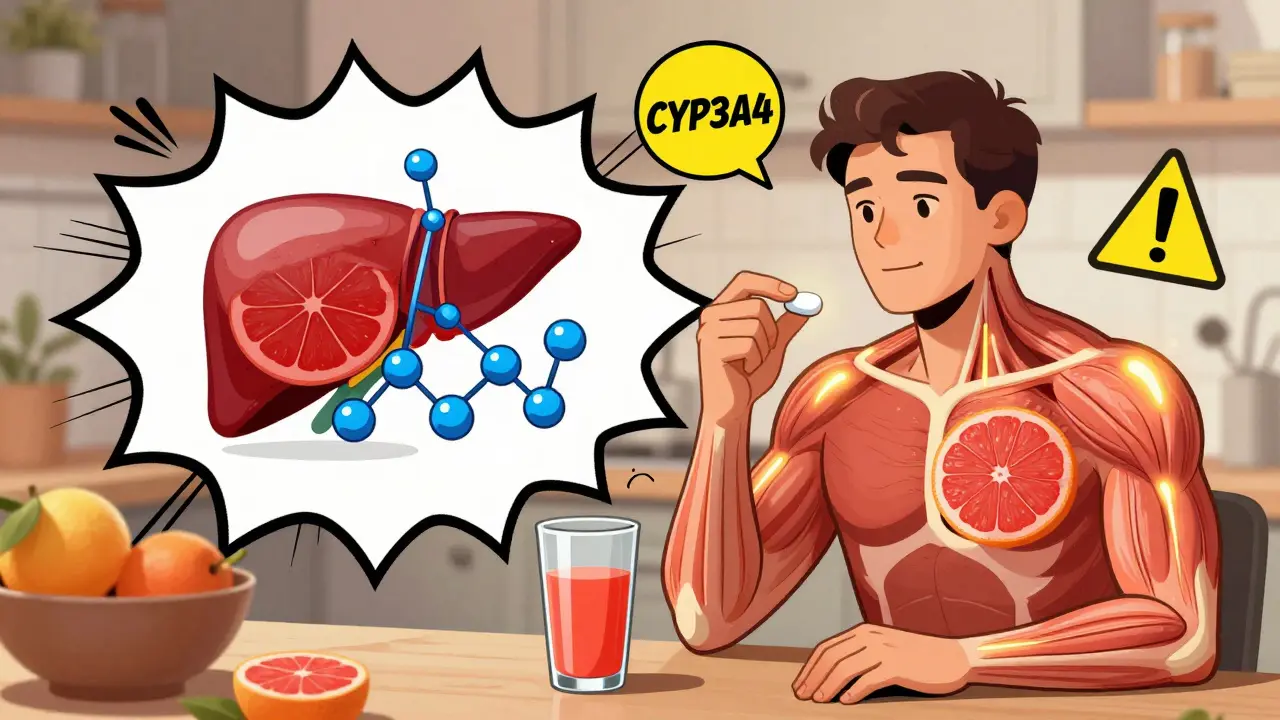
Statins like simvastatin, lovastatin, and atorvastatin work by blocking an enzyme your liver needs to make cholesterol. But before they even reach your liver, they pass through your small intestine. That’s where things get risky.
Grapefruit contains chemicals called furanocoumarins. These aren’t just natural flavors - they’re powerful inhibitors of an enzyme called CYP3A4. This enzyme is your body’s main way of breaking down many drugs, including some statins. When furanocoumarins hit the CYP3A4 enzyme in your gut, they bind to it permanently. It’s like pouring glue into a lock - the enzyme can’t do its job anymore.
Because of this, instead of being broken down before entering your bloodstream, the statin passes through largely unchanged. That means your body ends up with way more of the drug than it should. A single glass of grapefruit juice can boost statin levels by 3 to 5 times. And here’s the kicker: this effect lasts up to 72 hours. So even if you take your statin in the morning and drink grapefruit juice at night, you’re still at risk.
Not All Statins Are Created Equal
Here’s where it gets practical: not every statin reacts the same way with grapefruit. The risk depends entirely on how your body processes the drug.
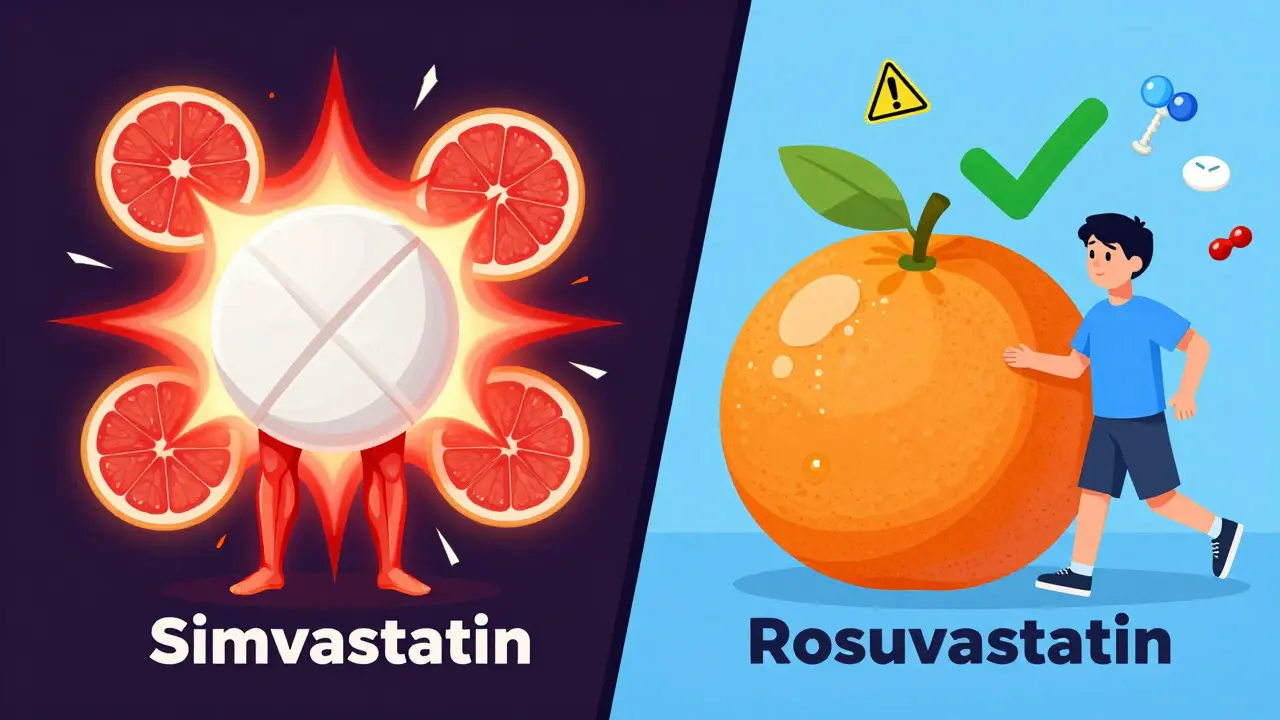
- High risk: Simvastatin, lovastatin, and atorvastatin are all broken down by CYP3A4. Simvastatin has the strongest reaction - studies show grapefruit juice can increase its concentration by over 300%. Lovastatin is nearly as bad. Atorvastatin is a bit less sensitive, but still risky.
- Low to no risk: Fluvastatin, pravastatin, rosuvastatin, and pitavastatin don’t rely on CYP3A4. They’re processed by other enzymes or pass through the body mostly unchanged. If you’re on one of these, grapefruit is generally safe in normal amounts.
That’s why switching statins can be a simple fix. If you love grapefruit and are on simvastatin, asking your doctor about rosuvastatin or pravastatin might eliminate the risk entirely - without changing how well your cholesterol is controlled.
What Happens When Statin Levels Spike
Higher statin levels don’t just mean “stronger” effects. They mean more side effects - and some of them are dangerous.
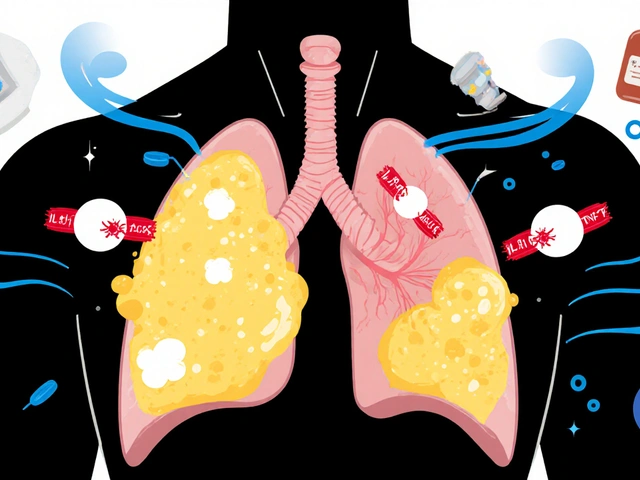
The most common problem is muscle pain. About 1 in 10 people on statins feel mild aches. But with grapefruit in the mix, that number jumps. You might notice soreness in your thighs, shoulders, or lower back. It’s not just “getting older.” It’s your muscles under stress.
Worse, there’s a rare but deadly condition called rhabdomyolysis. This happens when muscle tissue breaks down so badly that it floods your bloodstream with a protein called myoglobin. Your kidneys can’t handle it. That can lead to kidney failure. Between 1987 and 2019, researchers found only 42 confirmed cases of rhabdomyolysis caused by grapefruit-statin combos. That sounds rare - and it is. But consider this: over 39 million Americans take statins. Even a tiny percentage of that group having a reaction adds up.
Signs of rhabdomyolysis include:
- Severe muscle pain or weakness
- Dark, tea-colored urine
- Swelling in limbs
- Feeling unusually tired or nauseous
If you’re on a high-risk statin and notice these symptoms after drinking grapefruit juice, get medical help immediately.
What the Experts Actually Say
Some doctors downplay the risk. Others urge total avoidance. The truth? It’s complicated.
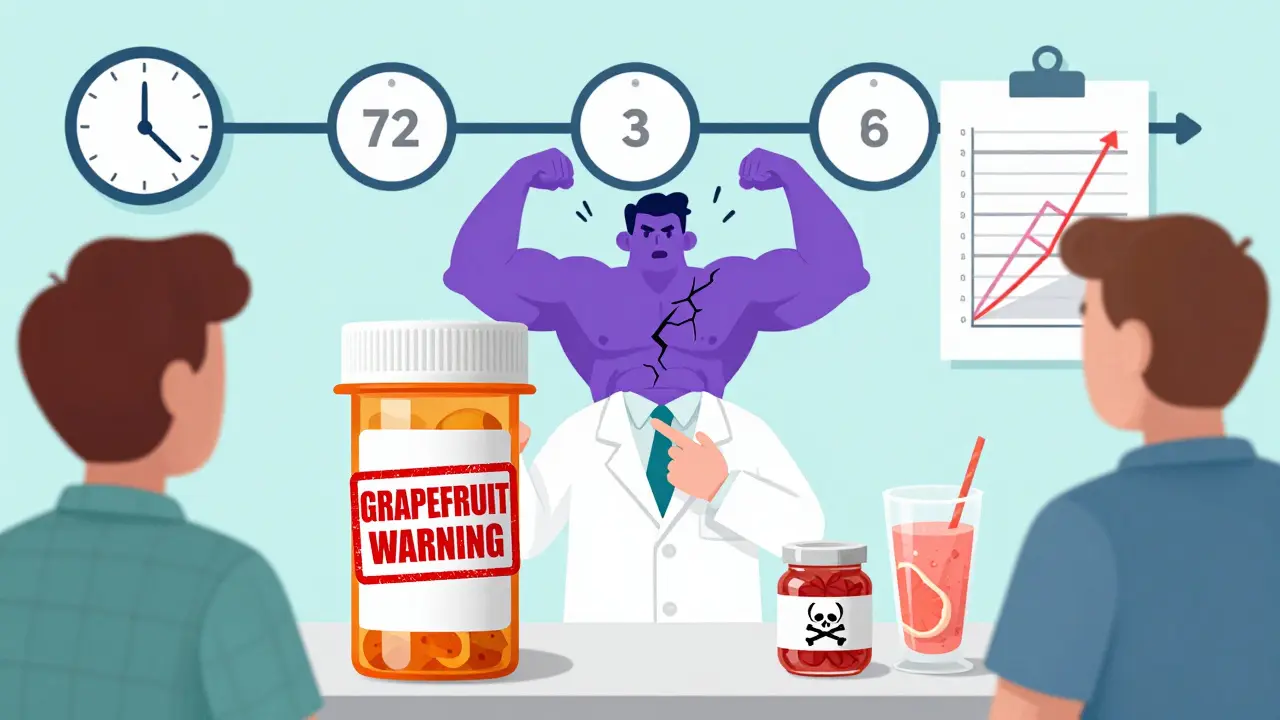
The FDA updated its guidance in 2021: if you’re on simvastatin, avoid grapefruit juice completely. If you’re on atorvastatin, limit yourself to one small glass (200 mL) per day - no more. That’s not a suggestion. It’s a safety cutoff.
Dr. David Bailey, who helped discover this interaction in 1989, says the effect lasts three days. So timing doesn’t help. You can’t just space out your grapefruit and your pill. The enzyme is knocked out for days. One glass on Monday can still affect a statin taken on Wednesday.
Meanwhile, the European Medicines Agency takes the strictest stance: no grapefruit for anyone on simvastatin or lovastatin. The American Heart Association, while acknowledging the danger, also reminds people: don’t stop your statin. The risk of heart attack or stroke from skipping your medication is far greater than the risk from grapefruit.
What You Should Do Right Now
Here’s what actually works:
- Check your statin name. Look at your prescription bottle. Is it simvastatin? Lovastatin? Atorvastatin? If yes, grapefruit is a problem.
- Read the label. All statin packaging now includes a grapefruit warning. If yours doesn’t, ask your pharmacist.
- Don’t assume “a little” is safe. One glass a week? Still risky for simvastatin. Even a single serving can cause a spike.
- Ask about alternatives. If you love grapefruit, talk to your doctor about switching to pravastatin or rosuvastatin. Both are just as effective at lowering cholesterol - and they don’t care about grapefruit.
- Watch for hidden sources. Grapefruit isn’t just in juice. It’s in jams, marmalades, salad dressings, and even some supplements. Read ingredient lists.
And if you’re unsure? Skip it. There are plenty of other fruits - oranges, berries, apples - that won’t interfere with your meds.
Why So Many People Don’t Know This
Here’s the scary part: only 38% of statin users know about the grapefruit warning, even though 67% of medication labels mention it. Pharmacists are often the ones who catch it. But if you don’t ask, you might never hear it.
Doctors don’t always bring it up. Patients assume “if it’s natural, it’s safe.” But grapefruit isn’t a health food in this context - it’s a drug interaction waiting to happen.
The good news? This is one of the easiest risks to avoid. You don’t need to change your entire diet. You don’t need to stop taking a life-saving medication. You just need to know which statin you’re on - and whether grapefruit belongs on your plate.
Can I still eat grapefruit if I take a low dose of simvastatin?
No. Even low doses of simvastatin (like 5 mg or 10 mg) can still lead to dangerous levels of the drug when combined with grapefruit. The interaction isn’t about the dose - it’s about how the enzyme is blocked. There’s no safe threshold. If you’re on simvastatin, avoid grapefruit entirely.
What if I only drink grapefruit juice once a week?
For simvastatin and lovastatin, even once a week is risky. The enzyme inhibition lasts up to 72 hours, so your body never fully recovers between doses. For atorvastatin, the FDA says one small glass (200 mL) per day is acceptable - but weekly consumption still carries some risk. If you’re unsure, skip it.
Is grapefruit seed extract safe?
No. Grapefruit seed extract contains the same furanocoumarins as the fruit and juice - sometimes in even higher concentrations. It’s not a safer alternative. Avoid it completely if you’re on a CYP3A4-metabolized statin.
Do other citrus fruits cause the same problem?
Seville oranges (used in marmalade) and pomelos have similar compounds and should be avoided. Regular oranges, tangerines, and lemons do not. They’re safe to eat with statins.
I’ve been drinking grapefruit juice with my statin for years. Should I be worried?
If you’ve had no muscle pain or dark urine, you may have been lucky. But that doesn’t mean you’re safe. Rhabdomyolysis can happen suddenly, even after years of use. The best move is to talk to your doctor about switching statins or cutting grapefruit out - don’t wait for symptoms.





Stephanie Paluch
My mom’s on simvastatin and drinks grapefruit juice every morning 😬 I told her this article and she said ‘but it’s so good!’ So I made her a list of safe fruits. She’s now obsessed with pomegranate smoothies. No more juice. 🍑🍓
tynece roberts
so like i’ve been drinking grapefruit juice with my atorvastatin for 5 years and i swear i’ve never had muscle pain but now im paranoid lmao also why is everyone acting like grapefruit is the devil when it’s literally just a fruit??
Hugh Breen
THIS IS SO IMPORTANT. I work in a pharmacy and I’ve seen too many people come in with rhabdo symptoms because they thought ‘natural = safe.’ Grapefruit isn’t evil-it’s a silent killer in disguise. 🚨 If you’re on simvastatin, just swap it. Rosuvastatin works just as well. Your muscles will thank you. And yes, even one glass. Even once a week. The enzyme doesn’t forget. 💪
Byron Boror
Why are we letting a fruit dictate our health choices? This is why America’s getting weaker. Take your statin. Eat your grapefruit. If you get sick, it’s your fault. Stop being so scared of everything.
Lorna Brown
It’s fascinating how a single biochemical interaction can reveal so much about our relationship with medicine. We treat drugs like magic bullets, but our bodies are ecosystems. The CYP3A4 enzyme isn’t just a ‘gatekeeper’-it’s a guardian of balance. When we disrupt it, we’re not just altering drug levels-we’re destabilizing a system evolved over millennia. Is the taste of grapefruit worth that risk? Or are we just addicted to convenience?
Rex Regum
Oh great, another ‘don’t eat fruit because science’ fear-mongering post. Next they’ll ban coffee because caffeine ‘interferes’ with your thyroid meds. Wake up. If your doctor didn’t warn you, then they’re incompetent. I’ve been eating grapefruit with my statin since 2010. Still alive. Still strong. Still not scared of Big Pharma’s marketing.
Kelsey Vonk
I switched from simvastatin to pravastatin last year after reading this. Honestly? Life changed. No more muscle aches. No more guilt when I eat my morning grapefruit. I used to feel like I had to choose between health and happiness. Turns out, I didn’t. 🙏
Emma Nicolls
i just found out i was on simvastatin and i drink grapefruit juice every day omg i feel so dumb but my dr never said anything so im gonna call them tomorrow and ask about rosuvastatin i heard its good
Richard Harris
Interesting read. I’ve been on rosuvastatin for years and still enjoy grapefruit occasionally. Never had an issue. I think the key is knowing your medication. Not all statins are equal. And yes, the 72-hour window is wild. I’ll admit-I didn’t know that. Thanks for the clarity.
Kandace Bennett
Wow. Just wow. You’d think after 30 years of public health warnings, people would know this. 🤦♀️ And yet here we are. People eating grapefruit with simvastatin like it’s a lifestyle choice. Honey, this isn’t ‘natural wellness’-it’s a pharmacological grenade. If you’re on high-risk statins and still eating grapefruit? You’re not ‘vibrant,’ you’re playing Russian roulette with your kidneys. 🍊💥
Tim Schulz
Oh wow. So the ‘health food’ industry is just quietly poisoning people while selling them ‘superfoods.’ Brilliant. 🙄 Next up: ‘Avocado blocks your blood thinner!’ No, wait-it already does. But nobody cares because it’s Instagrammable. Grapefruit is just the latest victim of our collective denial. Enjoy your ‘detox juice’ while your muscles melt.
Jinesh Jain
I am from India and we rarely use grapefruit here. But I have a friend in the US who took simvastatin and drank juice daily. He got muscle pain and was hospitalized. This article explains everything. Thank you for writing this clearly.
douglas martinez
As a healthcare professional, I cannot stress enough the importance of medication adherence and awareness. This interaction is well-documented and preventable. Patients who are unaware are not negligent-they are uninformed. It is our duty as providers to ensure clear communication. If you are on simvastatin, lovastatin, or atorvastatin, consult your pharmacist. They are your best ally in medication safety.
Stephanie Paluch
Replying to @tynece roberts: I know right?? I used to think the same. Then my aunt had rhabdo. She was on simvastatin. Ate grapefruit every day. Ended up in ICU for 10 days. Now she’s on pravastatin. And she eats oranges. And she’s fine. 🍊