

Antidepressants aren’t magic pills, but for millions of people, they’re the difference between barely getting through the day and actually living again. About 1 in 8 U.S. adults takes one. That’s over 40 million people. But knowing which type you’re taking - and what it might do to your body - isn’t something most doctors take time to explain. If you’re on an antidepressant, or thinking about starting one, here’s what you really need to know: how they work, what the real risks are, and how to spot when something’s off.
How Antidepressants Actually Work
Depression isn’t just sadness. It’s a biological shift - your brain’s chemical messengers, like serotonin, norepinephrine, and dopamine, get out of balance. Antidepressants don’t make you "happy." They help your brain use what it already has more efficiently. Think of them like traffic controllers: they clear the backlog so signals can move properly again.
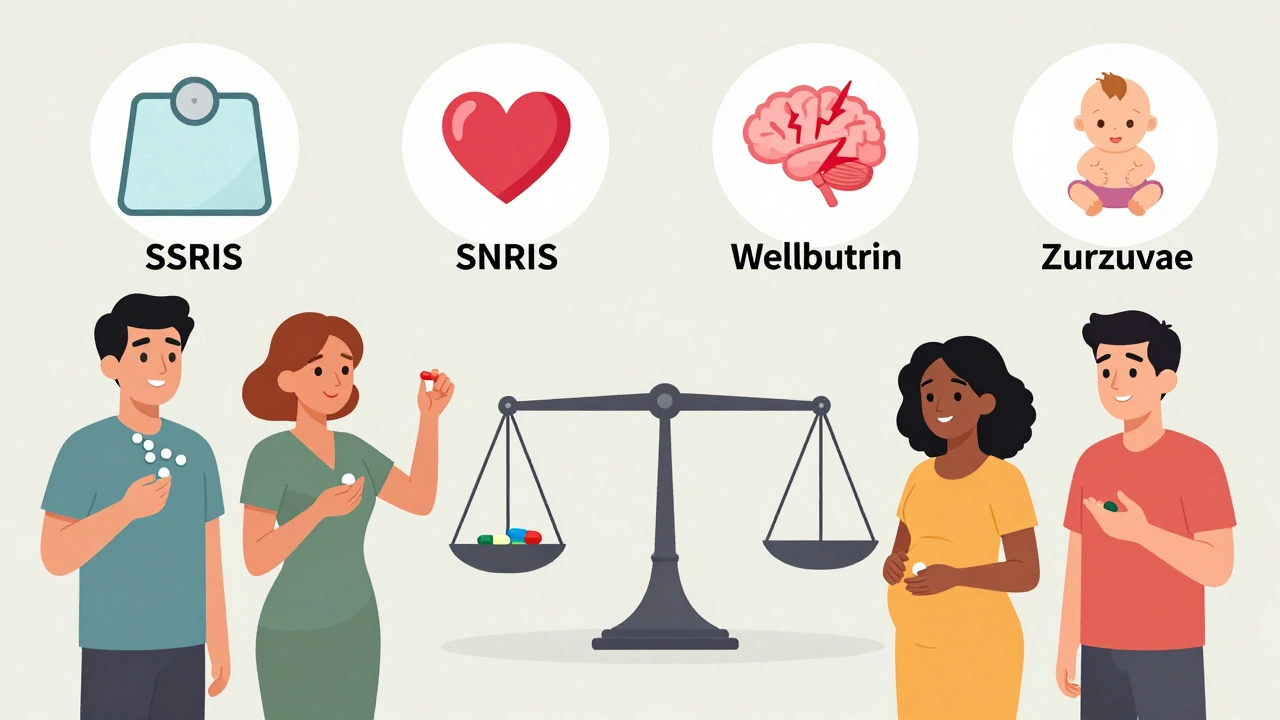
The most common types today are SSRIs - selective serotonin reuptake inhibitors. These include fluoxetine (Prozac), sertraline (Zoloft), and escitalopram (Lexapro). They block serotonin from being reabsorbed too fast, leaving more of it available in the brain. SNRIs like venlafaxine (Effexor) and duloxetine (Cymbalta) do the same but for both serotonin and norepinephrine. Then there’s bupropion (Wellbutrin), which mostly targets dopamine and norepinephrine - often chosen when weight gain or sexual side effects are a concern.
Older drugs like tricyclics (amitriptyline) and MAOIs (phenelzine) still exist, but they’re rarely first choices. They’re effective, yes, but they come with more side effects and strict dietary rules (especially MAOIs - no aged cheese, cured meats, or red wine). Most doctors start with SSRIs or SNRIs because they’re safer and easier to tolerate.
What to Expect When You Start
One of the biggest mistakes people make? Stopping after a week because they don’t feel better. Antidepressants don’t work like painkillers. It takes 4 to 6 weeks for most people to notice any change. Full effects can take up to 12 weeks. That’s not a flaw - it’s biology. Your brain needs time to adapt.
Early side effects are common. Nausea, headaches, dizziness, or trouble sleeping? These usually fade within a few days to two weeks. Taking the pill at night can help with drowsiness. Dry mouth? Chew sugar-free gum. If you’re on an SSRI and feel emotionally flat - like you’re watching life through glass - that’s also a known side effect. It’s not weakness. It’s chemistry.
Studies show about 50-60% of people get at least half their symptoms better on antidepressants. That’s better than placebo. But it’s not a guarantee. About 1 in 3 people don’t respond to the first one they try. That’s why doctors often suggest switching - not quitting - if you don’t see improvement after 8 weeks.
The Real Safety Risks - Not the Hype
Let’s talk about the scary stuff, honestly.
Suicidal thoughts are the most serious concern - especially for people under 25. The FDA requires a black box warning for this. It’s rare, but real. Risk is highest in the first few weeks after starting or changing doses. If you or someone you know feels worse, more anxious, or has new thoughts of self-harm, call your doctor immediately. Don’t wait.
Sexual side effects are far more common than most admit. Up to 56% of people on SSRIs or SNRIs report reduced libido, trouble reaching orgasm, or erectile dysfunction. It’s not just "in your head." It’s a direct effect on neurotransmitters. Some people switch to bupropion, which doesn’t cause this. Others add low-dose bupropion to their current med - a common trick doctors use.
Weight gain affects about half of long-term users. Not all antidepressants do this equally. Paroxetine and mirtazapine are more likely to cause it. Sertraline and bupropion are less likely. If weight gain becomes a problem, talk to your doctor. It’s not a failure - it’s a side effect that can be managed.
Withdrawal symptoms are often misunderstood. If you stop abruptly - even after months - you can get dizziness, electric-shock sensations (called "brain zaps"), nausea, anxiety, or flu-like symptoms. About 50-70% of people experience this. The risk is highest with drugs that leave your system fast, like paroxetine. Fluoxetine sticks around longer, so withdrawal is milder. Never quit cold turkey. Taper slowly, under medical supervision.
Pregnancy adds another layer. Antidepressants used in the third trimester can cause temporary issues in newborns: jitteriness, trouble feeding, breathing problems. But for many women, untreated depression is riskier. The American College of Obstetricians and Gynecologists says the benefits often outweigh the risks. Work with your OB and psychiatrist - don’t decide alone.
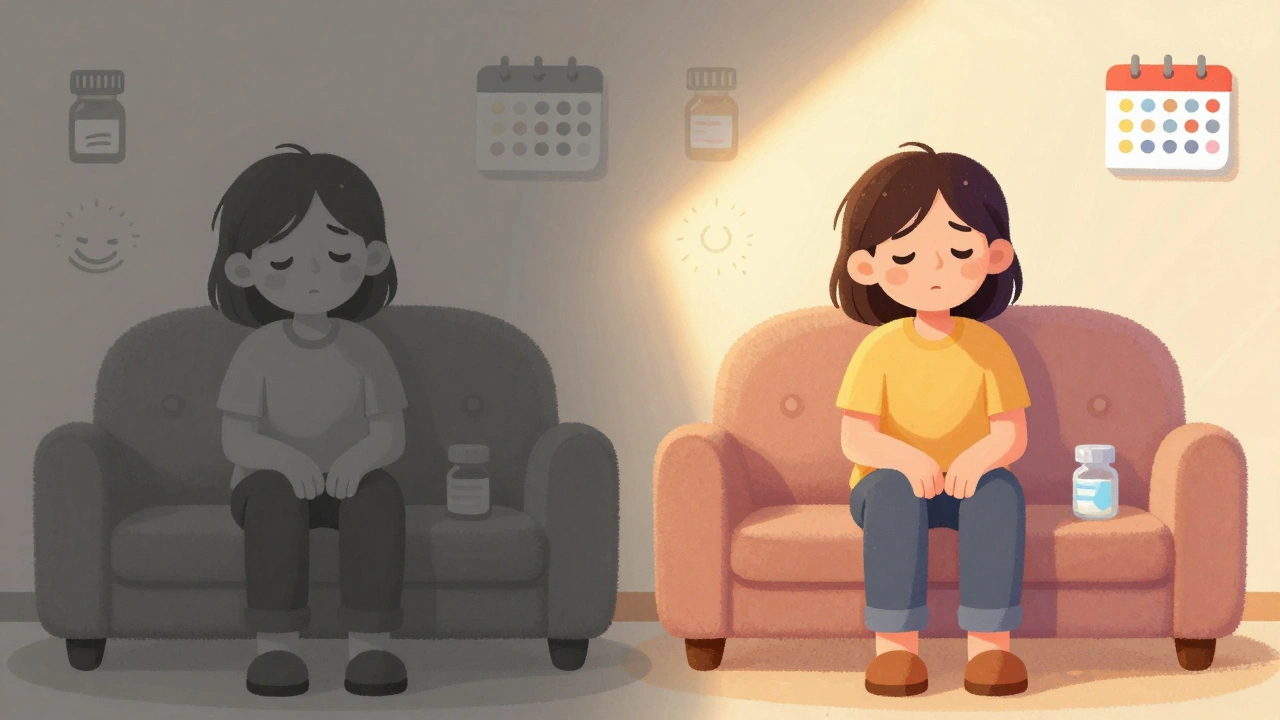
Long-Term Use: Help or Harm?
People worry about being "on antidepressants for life." But here’s the truth: stopping too soon is what leads to relapse. Studies show that if you stop after 6 months of feeling better, you have a 50-60% chance of getting depressed again. If you stay on for 6-9 months after remission, that drops to 20-30%.
Long-term use isn’t risk-free. Research links prolonged antidepressant use to slightly higher risks of osteoporosis, low sodium levels (hyponatremia), and bleeding issues - especially if you’re also on NSAIDs like ibuprofen. But for someone with recurrent depression, the benefit of staying well usually outweighs these small risks.
There’s also emotional blunting - feeling numb, less joyful, less angry. It’s not universal, but it’s real. Some people describe it as losing their edge. Others say it’s the first time they’ve felt calm in years. It’s personal. If it feels like you’ve lost yourself, talk to your doctor. There are other options.
What Works Best - And For Whom
Not all antidepressants are created equal. A 2018 analysis of 522 studies found that escitalopram, sertraline, and agomelatine were among the most effective and best tolerated. Sertraline is the most prescribed in the U.S. for a reason: it works for depression, anxiety, and OCD, with fewer side effects than others.
Bupropion is often chosen for people who:
- Struggle with weight gain
- Have sexual side effects from other meds
- Feel sluggish or sleepy
SNRIs like venlafaxine may be better for people with chronic pain (like fibromyalgia) alongside depression. Duloxetine is FDA-approved for both.
For treatment-resistant depression, newer options like esketamine (Spravato) - a nasal spray - can kick in within hours. It’s not for everyone. It’s expensive, requires clinic visits, and carries risks of dissociation. But for those who’ve tried everything else, it’s a breakthrough.
And now, zuranolone (Zurzuvae), approved in 2023, is the first oral pill for postpartum depression that works in days, not weeks. It’s a game-changer for new moms.
What Patients Really Say
Online forums like Reddit’s r/antidepressants have over 150,000 members. Common stories:
- "Sertraline gave me back my life after 3 years of numbness. But I gained 20 pounds."
- "Lexapro made me nauseous for a month. I almost quit. Then it clicked. I haven’t cried in 8 months."
- "I tried 4 meds. Each one had a different side effect. Finally found one that didn’t wreck my sex life or make me sleepy."
- "I stopped cold turkey after 6 months. Got brain zaps for weeks. Never again."
One thing almost everyone agrees on: therapy helps. People who combine medication with cognitive behavioral therapy (CBT) are less likely to relapse. Medication fixes the chemistry. Therapy fixes the patterns.
How to Navigate This Wisely
Here’s what to do if you’re starting or already on an antidepressant:
- Don’t rush. Wait at least 6 weeks before deciding if it’s working.
- Track your symptoms. Use a simple app or notebook. Note mood, sleep, energy, side effects.
- Never stop abruptly. Always taper with your doctor’s help.
- Ask about alternatives. If side effects are unbearable, there’s another option. You’re not stuck.
- Combine with therapy. Even 8 sessions of CBT can make a big difference.
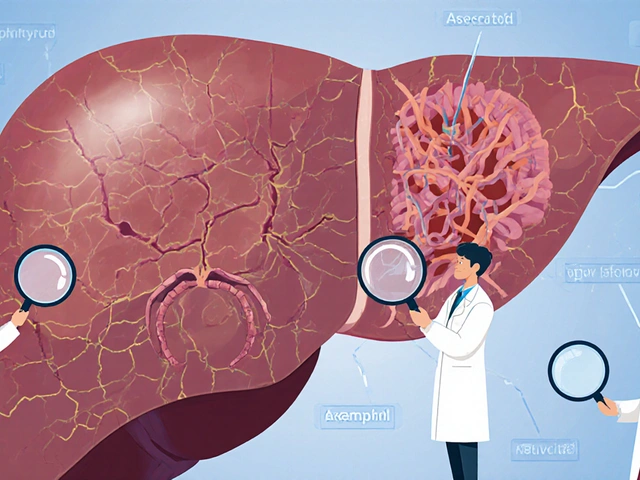
- Get blood tests if needed. Long-term users should check sodium levels and liver function occasionally.
Cost is a real barrier. Generic sertraline costs as little as $4 a month with insurance. Brand-name drugs like vortioxetine can hit $500. Ask your pharmacist about coupons or patient assistance programs. You don’t have to pay more than you need to.
Final Thoughts
Antidepressants aren’t perfect. They’re not for everyone. But for people with moderate to severe depression, they’re one of the most effective tools we have. The goal isn’t to feel euphoric. It’s to feel like yourself again - to get out of bed, to talk to your kids, to enjoy coffee in the morning without dread.
If you’re struggling, you’re not broken. You’re not weak. You’re just out of balance - and that’s something medicine can help fix. But only if you’re informed. Ask questions. Push for answers. Your mental health is worth it.
How long does it take for antidepressants to start working?
Most people start noticing small improvements after 4 to 6 weeks. Full benefits often take 8 to 12 weeks. Don’t stop if you don’t feel better right away - it’s not working yet, not that it won’t work.
Can antidepressants make you more anxious at first?
Yes. Especially in the first 1-2 weeks, some people feel more anxious, restless, or even agitated. This is temporary for most, but if it’s severe or includes thoughts of self-harm, contact your doctor immediately. This risk is higher in people under 25.
Do all antidepressants cause weight gain?
No. About half of long-term users gain weight, but it varies by drug. Paroxetine and mirtazapine are more likely to cause weight gain. Sertraline and bupropion are less likely. If weight becomes an issue, talk to your doctor - switching meds is often possible.
Is it safe to take antidepressants during pregnancy?
It’s complex. Some antidepressants can cause temporary issues in newborns if taken late in pregnancy - like jitteriness or breathing trouble. But untreated depression also carries risks, including preterm birth and low birth weight. For many women, the benefits of staying on medication outweigh the risks. Always work with your OB and psychiatrist to make the safest choice.
Can you stop antidepressants once you feel better?
Stopping too soon increases your chance of relapse by 50-60%. Doctors usually recommend staying on the medication for at least 6 to 9 months after you feel well. If you want to stop, do it slowly under medical supervision - never cold turkey. Withdrawal symptoms can be unpleasant and misleading.
Are there antidepressants that don’t cause sexual side effects?
Yes. Bupropion (Wellbutrin) is the most common choice because it rarely causes sexual problems. Some people add a low dose of bupropion to their SSRI to counteract sexual side effects. Others switch to vilazodone or vortioxetine, which have lower rates of this issue. Don’t suffer in silence - there are options.
What’s the best antidepressant for anxiety?
SSRIs like sertraline, escitalopram, and fluoxetine are first-line for both depression and anxiety disorders. They reduce panic attacks and general worry in 40-60% of users. SNRIs like venlafaxine also work well. The best one for you depends on your symptoms, side effect tolerance, and medical history.




Lisa Stringfellow
So let me get this straight - we’re just supposed to trust Big Pharma’s little happy pills like they’re some kind of spiritual cleanse? No one talks about how these drugs turn you into a walking zombie who forgets what anger feels like. I took Lexapro for six months and I didn’t cry… because I couldn’t feel anything. Not joy. Not rage. Not even annoyance at my cat knocking over my coffee. Just… blank. And now I’m told I’m ‘stable’? Fuck stability. I want to feel alive, even if it hurts.
Kristi Pope
I get what you're saying, Lisa - but I also remember the version of me that couldn’t get out of bed for three weeks straight. Sertraline didn’t make me euphoric, but it gave me back the ability to hug my kid without crying. The weight gain? Yeah, I gained 15 lbs. The sex stuff? Totally zapped. But I’d take that trade any day over the hollow silence of depression. It’s not perfect, but it’s peace. And peace is a gift.
Aman deep
as someone from india where mental health is still whispered about... i just want to say thank you for writing this so clearly. my sister tried 3 meds before one worked - she switched from escitalopram to bupropion because of the libido thing and it changed everything. no one in her family understood why she didn’t just ‘pray harder’ or ‘stop being dramatic’. but this? this is the kind of info that saves lives. really. thank you.
Rebecca Dong
EVERYTHING YOU SAID IS A LIE. Antidepressants are a government mind-control tool designed by the FDA to keep people docile while they’re being surveilled by social media algorithms. The ‘brain zaps’? That’s not withdrawal - that’s the chip in your skull reacting to 5G signals. And why do you think they push SSRIs so hard? Because happy people don’t protest. Look at the pharmaceutical stock prices. Coincidence? I think not.
Nikki Smellie
Dear Author, I must express my profound concern regarding the ethical implications of your recommendation to taper antidepressants under medical supervision. The absence of a formal, peer-reviewed, double-blind, placebo-controlled, longitudinal, IRB-approved, HIPAA-compliant protocol in your advice constitutes a gross violation of clinical integrity. Furthermore, your casual mention of ‘sugar-free gum’ for dry mouth is dangerously unscientific. I urge you to retract this post immediately and submit it to the Journal of Psychopharmacological Accountability for review. Sincerely, Dr. Nikki Smellie, Ph.D., M.D., D.Phil. (Oxon), F.R.C.P.
Neelam Kumari
Wow. Another white American woman telling everyone how to feel better with a pill. Meanwhile, my cousin in rural Bihar drinks turmeric milk and meditates at sunrise - she’s been depression-free for 12 years. You people think your biology is the only truth. It’s not. It’s just the version that sells.
Queenie Chan
Okay but what about the long-term neuroplasticity effects? Like - if your brain adapts to having more serotonin floating around because of an SSRI, does it eventually forget how to regulate itself naturally? And if you taper off after years, is your brain just… broken? Or does it rewire? I’ve read conflicting papers. One says yes, the synapses reorganize. Another says it’s like a muscle that atrophies without use. Is there any actual consensus? Or is this all just guesswork with a FDA stamp?
Stephanie Maillet
I’ve been on antidepressants for 11 years. I’ve had brain zaps. I’ve gained weight. I’ve felt emotionally muted. I’ve also held my daughter when she was scared. I’ve laughed at bad TV. I’ve paid my taxes on time. I’ve shown up. And yes - I’ve cried, too. But not because I was broken. Because I was human. These drugs didn’t take away my soul. They gave me back the space to have one. I don’t know if that’s science or magic - but I’ll take the magic. And I’m grateful. Not for the pill. For the person I became after I stopped fighting it.