
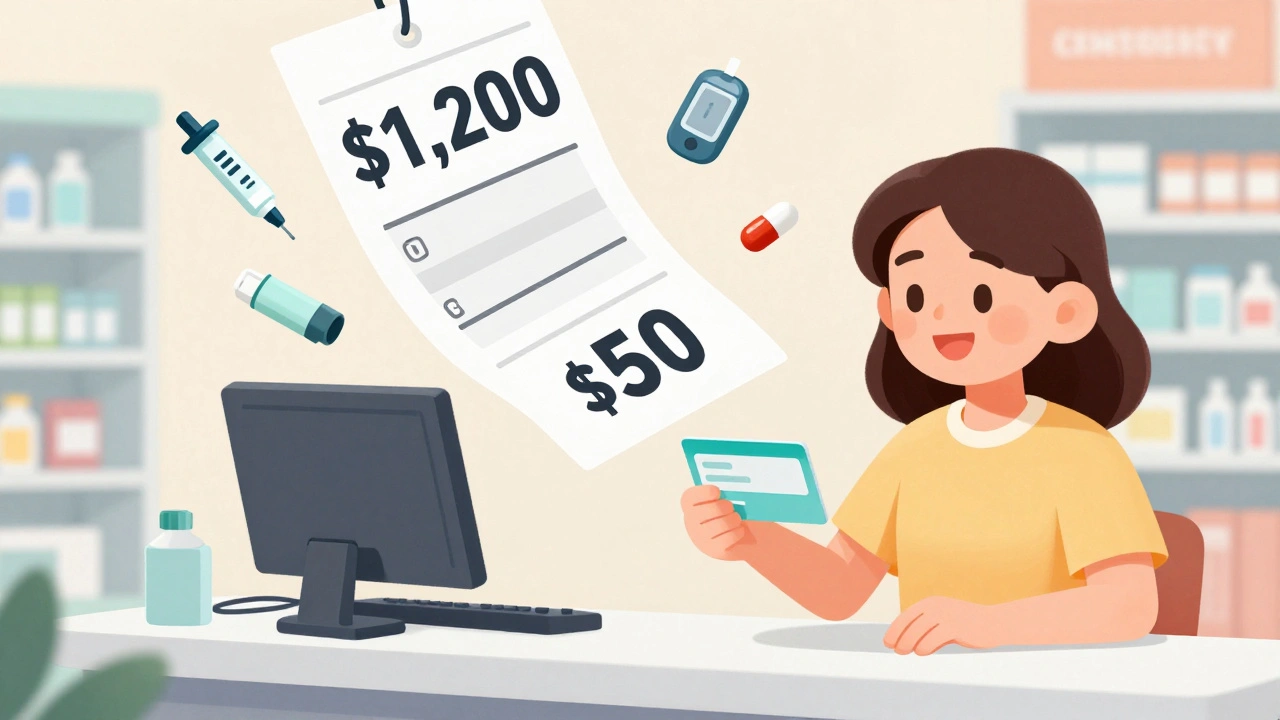
Brand-name drugs can cost hundreds or even over a thousand dollars a month. If you’re insured but still struggling to afford your medication, you’re not alone. Millions of Americans rely on manufacturer savings programs to bring those prices down-sometimes by 85% or more. But these programs aren’t simple coupons you can just print and use. There are rules, traps, and hidden limits that can leave you paying full price if you don’t know what you’re doing.
What Are Manufacturer Savings Programs?
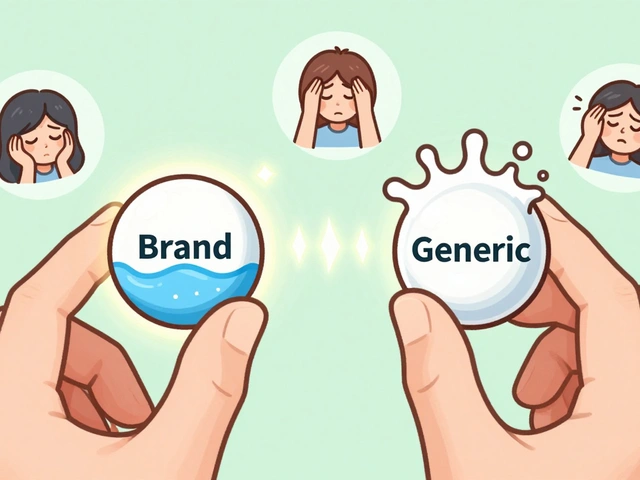
These are financial help tools created by drug companies to lower your out-of-pocket cost for brand-name prescriptions. They come in two main forms: copay cards and patient assistance programs (PAPs). Copay cards are the most common. You get them online, show them at the pharmacy, and your cost drops immediately. PAPs are usually for people with very low income, but some are open to anyone with commercial insurance who can’t afford their meds. These programs started becoming widespread in the early 2000s as insurance plans began shifting more costs to patients. By 2023, nearly one in five prescriptions for privately insured patients used a manufacturer savings card. The total value? Over $23 billion a year. That’s not charity-it’s a business strategy. Drugmakers use these programs to keep patients on expensive brand drugs instead of switching to cheaper generics.Who Can Use These Programs?
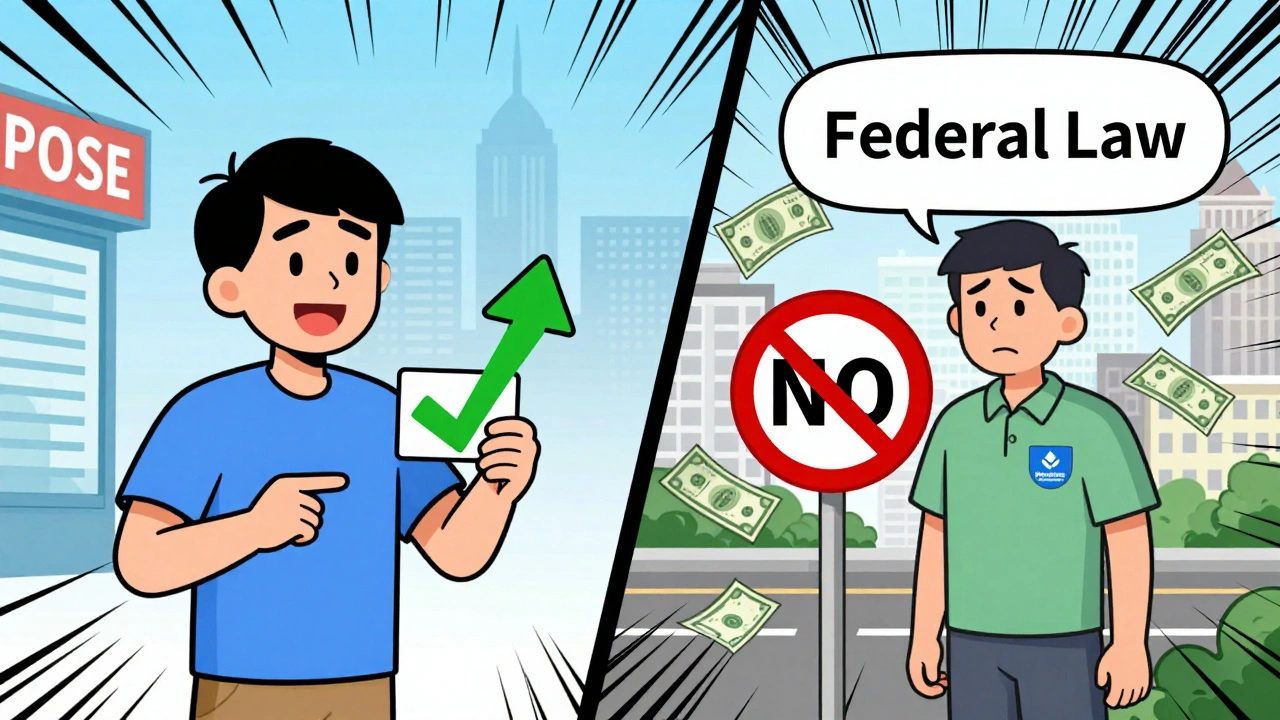
This is the first thing you need to check: you must have private insurance. If you’re on Medicare, Medicaid, or any other federal health program, you’re not eligible. Federal law bans drug companies from giving discounts to people on these programs because it could push them toward pricier drugs. Even if you have private insurance, not every plan works with every program. Some insurance companies use something called an accumulator adjustment program. That means the money from your copay card doesn’t count toward your deductible or out-of-pocket maximum. So you might pay $50 a month thanks to the card, but your deductible stays at $0. That could cost you thousands later if you need surgery or hospital care. You’ll also need to be prescribed a brand-name drug that has a savings program. Most major drugs do-insulin, asthma inhalers, diabetes pills, blood thinners, and autoimmune treatments are almost always covered. But if you’re on a generic, these programs won’t help you.How to Find the Right Program
Start with the drug’s manufacturer. Go to their official website and search for “patient assistance” or “savings program.” For example, if you take Jardiance for diabetes, go to the Boehringer Ingelheim website. If you take Humira for arthritis, go to AbbVie’s site. You can also use free tools like GoodRx, NeedyMeds, or RxAssist. These sites list programs for hundreds of drugs and even show you how much you’ll save. A 2022 Medical News Today review found that 73% of top drugmakers have dedicated savings portals. Don’t trust third-party sites that aren’t linked from the manufacturer’s official page-some are scams or redirect you to paid services. Once you find the right program, click “Apply Now.” You’ll need:- Your full name and contact info
- Your insurance details (plan name, member ID)
- Your doctor’s name and prescription info
- Proof of income (sometimes, if applying for PAPs)
How It Works at the Pharmacy
When you go to pick up your prescription, hand the pharmacist your savings card or code. They’ll scan it and the system automatically applies the discount. The pharmacy doesn’t pay the difference-the drugmaker does, through a third-party administrator like ConnectiveRx or Prime Therapeutics. The discount is instant. You’ll see your cost drop from $562 to $100, or from $1,200 to $50. That’s not a rumor-it’s real. A 2022 study in the Journal of Managed Care & Pharmacy confirmed that copay cards cut patient costs by nearly 85% on average. But here’s the catch: not all pharmacies are in the network. Some programs only work with CVS, Walgreens, or specific chains. Before you go, check the program’s website for a list of participating pharmacies. If you go to the wrong one, you’ll pay full price and won’t be able to get the discount retroactively.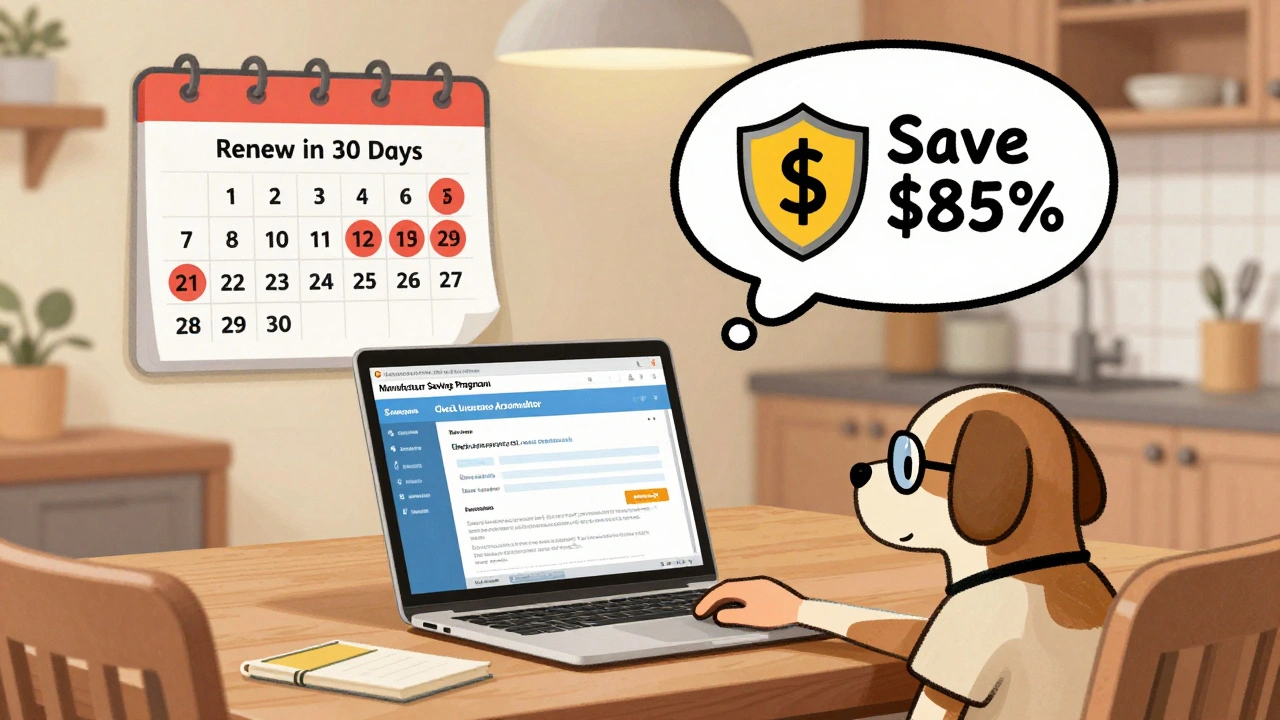
What You Can’t Do
These programs have strict limits:- Annual cap: Most programs stop helping after you’ve saved $5,000 to $15,000 in a year. That’s a lot, but for expensive drugs like cancer meds, you could hit it fast.
- Time limits: Many cards expire after 12 or 24 months. You have to reapply. Some companies auto-renew, but others don’t. Set a reminder.
- No stacking: You can’t combine a manufacturer card with a GoodRx coupon. The system won’t let you. Pick the better deal.
- No Medicare/Medicaid: Again, federal law blocks this. Even if you think you’re “just a little over the income limit,” it’s not allowed.
- Accumulator programs: If your insurance uses these, your card savings won’t count toward your deductible. You might think you’re saving money now, but you’re not getting closer to hitting your out-of-pocket max. Ask your insurer if they use accumulators.
Manufacturer Cards vs. GoodRx
Many people confuse these two. They’re not the same. Manufacturer cards only work for brand-name drugs and give you deeper discounts-often 70-85% off. But they’re tied to that specific drug and can disappear overnight. For example, when Humira’s coupon program ended in 2022, some patients went from paying $100 to $1,200 a month overnight. GoodRx and similar discount cards work for both brand and generic drugs. They’re not tied to the manufacturer, so they’re more stable. Savings are smaller-usually 30-60% off-but they’re available to everyone, including Medicare patients. You don’t need to register. Just show the coupon at the pharmacy. Bottom line: Use manufacturer cards if you qualify and the drug is expensive. Use GoodRx if you’re on Medicare, want a backup, or are taking a generic.Real Stories, Real Costs
People using these programs report huge savings:- A diabetes patient on Jardiance cut their monthly cost from $562.50 to $100 using the manufacturer coupon.
- A patient on Enbrel for rheumatoid arthritis went from $3,200/month to $50/month.
- A family paying $900/month for an asthma inhaler dropped it to $60 after enrolling.
What to Watch Out For
These programs are helpful, but they’re not foolproof. Here’s what you need to do:- Check eligibility before you start. Confirm you have private insurance and aren’t on Medicare or Medicaid.
- Ask your insurer about accumulators. If they use them, ask if you can switch plans. Some employers are dropping these programs.
- Call the pharmacy before you go. Make sure they accept the card. Don’t assume.
- Set calendar reminders. Most cards expire. Don’t wait until you’re out of meds to renew.
- Keep a copy of your approval letter. If the program stops, you might need proof to appeal or find another option.
- Don’t rely on it long-term. Programs can be pulled. Have a backup plan, like switching to a generic if it’s available and safe.
Is This Fair?
There’s a big debate. Critics say these programs hurt the system. They let drugmakers keep prices high because patients don’t feel the real cost. A 2016 study found that when copay cards are available, brand drug sales go up by 60% or more-while generic sales drop. That means everyone else pays more in premiums. Supporters say patients need help. For many, these programs mean they can afford to take their meds. Without them, some would skip doses or stop entirely. The government is starting to act. The Inflation Reduction Act capped insulin at $35 for Medicare users. Some states now ban accumulator programs. Congress is considering bills that would force manufacturers to count their discounts toward deductibles. For now, these programs are legal and available. If you qualify, use them. But don’t assume they’ll last forever.Next Steps
1. Write down the name of your brand-name drug. 2. Go to the manufacturer’s website and search for “savings program.” 3. Check if you have private insurance (not Medicare/Medicaid). 4. Call your insurance company and ask: “Do you use accumulator adjustment programs?” 5. If yes, ask if you can switch to a plan that doesn’t. 6. Apply for the program and save your confirmation. 7. Confirm your pharmacy accepts the card. 8. Set a reminder to renew it 30 days before it expires. If you’re not eligible, use GoodRx or ask your doctor about a generic alternative. You might be surprised how many brand drugs now have cheaper generics that work just as well.Frequently Asked Questions
Can I use a manufacturer savings card if I have Medicare?
No. Federal law prohibits drug manufacturers from offering discounts to people on Medicare, Medicaid, or other government health programs. This is to prevent financial incentives that could push patients toward more expensive drugs. If you’re on Medicare, use GoodRx or ask your doctor about generic options.
Why did my copay card stop working?
There are a few reasons. The card may have expired after 12-24 months. Your insurance might have changed plans and now uses an accumulator program that blocks the discount. Or the manufacturer discontinued the program entirely-this happens, especially when generics enter the market. Always check your eligibility status online and set renewal reminders.
Do these programs count toward my deductible?
Usually not. Many insurance plans use “accumulator adjustment programs,” which means the money from your copay card doesn’t count toward your deductible or out-of-pocket maximum. You pay less now, but you’re not getting closer to hitting your cap. Ask your insurer directly if they use accumulators. If they do, you may want to switch plans during open enrollment.
Can I use a GoodRx coupon with a manufacturer card?
No. Pharmacy systems are set up to accept only one discount at a time. The manufacturer card usually gives a bigger discount, so it’s the better choice-if you qualify. If you don’t qualify for the manufacturer card, GoodRx is your best bet, especially for generics.
What if my drug doesn’t have a savings program?
Some drugs, especially newer ones, don’t offer assistance yet. In that case, check NeedyMeds or Patient Advocate Foundation for other options. You can also ask your doctor for samples, switch to a generic if available, or apply for a patient assistance program through a nonprofit. Some manufacturers offer hardship programs even if you don’t qualify for the standard card.
Are manufacturer savings programs going away?
They’re under pressure. The 2022 Inflation Reduction Act capped insulin costs for Medicare users, reducing the need for coupons there. Several states now ban accumulator programs. Federal bills are being proposed to force manufacturers to count their discounts toward deductibles. While they’re still widely available now, their long-term future is uncertain. Don’t rely on them as a permanent solution.






Victoria Graci
This whole system feels like a magic trick where the magician never shows you the trapdoor. Drug companies profit from high prices, then offer ‘help’ that keeps you hooked on expensive brands while your insurance laughs all the way to the bank with accumulator programs. It’s not charity-it’s behavioral economics with a smiley face on the coupon.
I’ve seen people cry because their $100/month card vanished overnight and they couldn’t afford the $1,200 price tag. No one talks about how these programs create dependency. We’re not fixing the system-we’re just gluing Band-Aids on a hemorrhage.
And yet… I still use them. Because what’s the alternative? Starve your body of medicine? That’s not ethics, that’s survival. The system is broken. We’re just playing the hand we’re dealt.
Still, I wish we had the guts to demand real reform instead of just teaching people how to dance on the edge of a cliff.
Saravanan Sathyanandha
In India, we call this ‘pharma capitalism’-where the rich get discounts and the poor get nothing. The irony is thick here: a system designed to help Americans can’t even be accessed by those who need it most globally.
My cousin in Delhi pays $3 for a generic insulin vial. In the U.S., someone with the same condition pays $100-even with a coupon. The moral dissonance is staggering. These programs aren’t about care; they’re about market control.
But I won’t judge anyone using them. If you’re drowning, you grab any lifebuoy. Still, I hope one day we build systems where no one has to gamble with their health just to afford a pill.
alaa ismail
bro i just use goodrx and call it a day. no paperwork, no expiration dates, no ‘oops your card got revoked’ drama. if it’s cheaper than the coupon, i use that. if not, i use goodrx. done. why make it so complicated?
also, pharmacies are weird about these cards. one time i went to rite aid and they had no clue what i was talking about. had to call the manufacturer. 20 minutes later, they fixed it. i was just trying to buy my anxiety meds, not solve world peace.
ruiqing Jane
If you’re on a plan with an accumulator program, you are being financially manipulated. This isn’t a loophole-it’s a trapdoor disguised as a discount. You think you’re saving $500 a month, but you’re actually paying $5,000 more in deductible costs later. That’s not patient support. That’s predatory design.
Call your insurer. Demand to know if they use accumulators. If they say ‘no,’ ask for documentation. If they say ‘yes,’ start looking at other plans. Your health is not a bargaining chip.
And if you’re an employer offering health plans-drop these programs. Your employees are not stupid. They know when they’re being played.
Fern Marder
OMG YES. I used the Humira card for 2 years and then POOF-gone. My bill went from $50 to $3,200. I cried in the pharmacy. Like, full ugly sobbing. 🥲
Turns out my insurance switched to an accumulator plan and I didn’t even know. I thought I was ‘saving’ money. Nope. I was just getting emotionally and financially wrecked.
Now I set 3 reminders: 60, 30, and 7 days before renewal. Also, I keep a printed copy of my approval letter in my wallet. I’m not taking any chances. 💪
Carolyn Woodard
One must interrogate the epistemological foundations of pharmaceutical access in late-stage capitalism. The manufacturer savings program, while ostensibly benevolent, functions as a hegemonic apparatus that reifies the commodification of therapeutic necessity.
By decoupling cost from patient responsibility, these programs obscure the structural violence inherent in drug pricing. The patient, rendered passive through the interface of the digital copay card, becomes a subject of corporate biopolitics.
Further, the accumulation of savings outside the deductible framework constitutes a form of actuarial alienation-where the patient’s financial progress toward catastrophic coverage is systematically negated by contractual design.
One must therefore ask: Is this assistance-or is it a sophisticated mechanism of behavioral conditioning? The answer, I suspect, lies not in individual utility, but in systemic complicity.
Allan maniero
It’s interesting how these programs have become such a central part of American healthcare life, isn’t it? In the UK, we don’t have this mess-prescriptions are either free or £9.95, no matter the drug. No cards, no applications, no ‘is your pharmacy in-network?’
But I get it. The U.S. system is a Rube Goldberg machine of insurance, middlemen, and corporate lobbying. These savings cards are like duct tape holding the whole thing together.
I’ve seen friends go through the whole process-applying, getting approved, switching pharmacies, setting calendar alerts. It’s exhausting. And it shouldn’t be this hard to get medicine. But then again, nothing in American healthcare is simple, is it?
Still, if it helps someone breathe or sleep or not go bankrupt? I’m glad it exists. Just wish it wasn’t so fragile.
Anthony Breakspear
Man, I wish I knew about this 5 years ago. I was paying $900 a month for my RA meds until a friend told me about the AbbVie card. Now I pay $40. I literally almost cried when I saw the receipt.
But yeah, the whole ‘your card might disappear’ thing is terrifying. I’ve got a folder on my phone called ‘Medicine Safety Net’ with every card, expiration date, and pharmacy contact.
Also-never assume your pharmacy knows what they’re doing. I once went to a CVS that didn’t even have the program in their system. Had to call the manufacturer’s help line while standing there. They fixed it in 12 minutes. I still owe them coffee.
Bottom line: Do the work. It’s worth it.
Zoe Bray
It is imperative to acknowledge the structural inefficiencies inherent in the current pharmaceutical reimbursement paradigm. The proliferation of manufacturer-sponsored copay assistance programs, while temporally mitigating out-of-pocket expenditures, concurrently undermines the actuarial integrity of private insurance contracts.
Furthermore, the institutionalized use of accumulator adjustment programs represents a deliberate regulatory arbitrage, wherein the financial burden is externalized from the manufacturer to the insured via deferred cost-shifting mechanisms.
As such, the ethical imperative lies not in the utilization of these tools, but in the collective advocacy for legislative reform that mandates the inclusion of manufacturer discounts in deductible calculations, thereby restoring fiscal transparency and equity to the patient-provider-insurer triad.
Girish Padia
People whining about $100 a month for medicine? Get a job. I grew up in a village with no running water and I paid $2 for my meds. You think you’re suffering? This is America, not a welfare state. Stop crying and learn to budget.
Also, generics exist. If your doctor won’t prescribe them, find a new one. You’re not special. The system isn’t broken-you’re just lazy.