
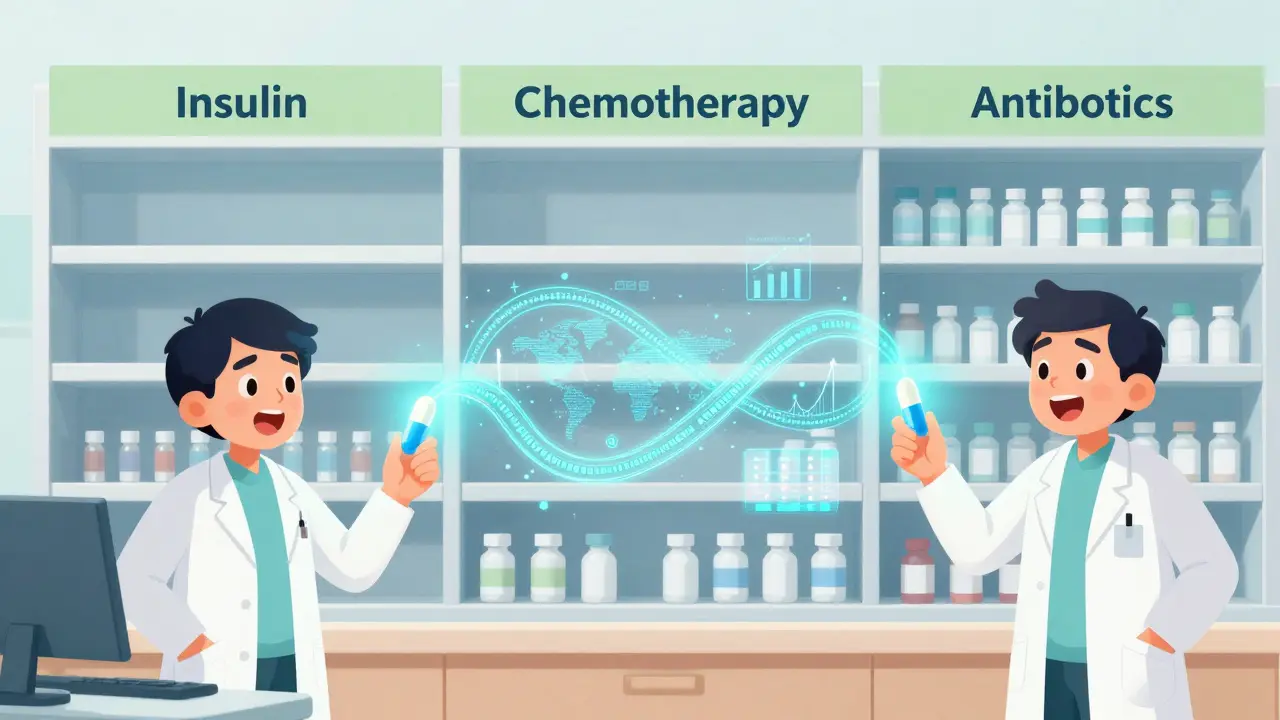
Drug shortages aren’t just a headline anymore-they’re a daily reality in hospitals, clinics, and pharmacies across the world. In 2025, the U.S. Food and Drug Administration reported over 300 active drug shortages, with critical medications like insulin, chemotherapy agents, and antibiotics still in short supply. It’s not a matter of one factory shutting down or a raw material delay. It’s a broken system. But health systems aren’t sitting still. They’re adapting, innovating, and sometimes even rewriting the rules to keep patients covered.
How drug shortages actually hit patients
When a drug runs out, it’s not just about switching to another pill. A shortage of IV saline? That delays emergency room treatments. A lack of generic antibiotics? Patients get sent home with untreated infections. And when hospitals scramble for substitutes, they often pay double-or triple-the price. In 2024, the average cost of a substituted drug rose by 41% compared to its original price, according to the Institute for Safe Medication Practices. That doesn’t just hurt budgets. It hurts trust.
One hospital in Wisconsin reported that 22% of patients on chemotherapy had to delay treatment because their standard drug wasn’t available. Another in Texas had to ration epinephrine auto-injectors during a pediatric allergy surge. These aren’t rare cases. They’re the new normal. And the ripple effect? Delayed surgeries, longer ER waits, and more readmissions-all because one supplier couldn’t keep up.
Building smarter inventory systems
Old-school inventory tracking-relying on manual counts and monthly orders-isn’t cutting it anymore. Leading health systems are now using real-time analytics to predict shortages before they happen. By connecting data from pharmacies, electronic health records, and supplier alerts, some hospitals can now forecast demand within 72 hours of a potential disruption.
For example, Kaiser Permanente’s supply chain team uses machine learning models trained on 12 years of usage patterns. When a supplier in India reported a manufacturing delay for metformin, the system flagged it three weeks before the shortage hit U.S. shelves. They moved inventory from underutilized clinics to high-demand areas and pre-ordered alternative formulations. Result? Zero patient delays.
Other systems are using blockchain to track drug batches from manufacturer to bedside. This isn’t just about transparency-it’s about traceability. If a batch is recalled, they know exactly who got it. If a shipment is delayed, they can reroute it fast. The Cleveland Clinic now tracks over 80% of its high-risk medications this way, cutting response time by 65%.
Drug substitution and compounding
Not every shortage means a patient goes without. Many health systems now have formal drug substitution protocols approved by pharmacy and therapeutics committees. These aren’t random swaps. They’re science-backed alternatives with proven bioequivalence.
When the supply of levothyroxine dropped 30% in late 2024, the University of Michigan Health System switched 78% of stable patients to a different manufacturer’s formulation-after testing serum levels in 200 patients over six weeks. No adverse events. No complaints. Just a smoother transition.
Compounding pharmacies are also stepping up. In 2025, 43% of U.S. hospitals partnered with accredited compounding labs to create custom doses of high-demand drugs. One hospital in Atlanta started making its own IV potassium chloride when commercial supplies ran out. They trained pharmacists, got FDA clearance for the process, and now produce 80% of their monthly need in-house. It’s not cheap-but it’s cheaper than losing a patient to a preventable complication.

Strategic stockpiling and supplier diversification
Health systems used to rely on one or two suppliers for key drugs. Now, they’re building redundancy into their supply chains. The Veterans Health Administration now requires all critical drugs to have at least two approved manufacturers. If one fails, the second kicks in automatically.
Some are going further. The Mayo Clinic has signed long-term contracts with suppliers in Canada, Germany, and Mexico for essential medications. These aren’t backup plans-they’re primary sources. By diversifying geographically, they avoid being hit by a single country’s regulatory delays or natural disasters.
Stockpiling is back, too. In 2024, 61% of large health systems built emergency drug reserves for at least 90 days of usage. These aren’t dusty shelves in a basement. They’re climate-controlled, digitally tracked, and rotated every 60 days. The system at Johns Hopkins includes over 200 high-priority drugs, from insulin to morphine, with expiration dates monitored by AI alerts.
Collaboration over competition
Health systems used to compete for every last vial. Now, they’re sharing. In 2025, 14 regional health networks launched shared drug inventory platforms. If a hospital in Chicago runs out of vancomycin, they can see what’s available in Milwaukee, Madison, or Des Moines-and request a transfer within hours.
The New England Drug Safety Consortium, which includes 37 hospitals, now uses a cloud-based dashboard to monitor real-time inventory across the region. In one month, they redistributed 1,200 doses of critical antibiotics, preventing 17 potential treatment delays. No one had to pay extra. No one had to wait.
Even competitors are sharing data. When a shortage hit a common antiviral used in transplant patients, five rival health systems pooled their usage data and jointly negotiated with manufacturers. Result? A 30% increase in production and a 45% drop in price.
Technology is changing the game
AI isn’t just predicting shortages-it’s preventing them. Generative AI tools now analyze global supply chain news, weather patterns, labor strikes, and even social media chatter to spot early warning signs. One system in California flagged a potential shortage of fentanyl by detecting a surge in posts from Mexican suppliers about border delays-three weeks before the FDA was notified.
Robotic process automation (RPA) is streamlining orders. Instead of pharmacists manually calling suppliers, bots now auto-submit requests when inventory dips below threshold levels. At Intermountain Healthcare, this cut order errors by 89% and reduced lead time from 72 hours to under 18.
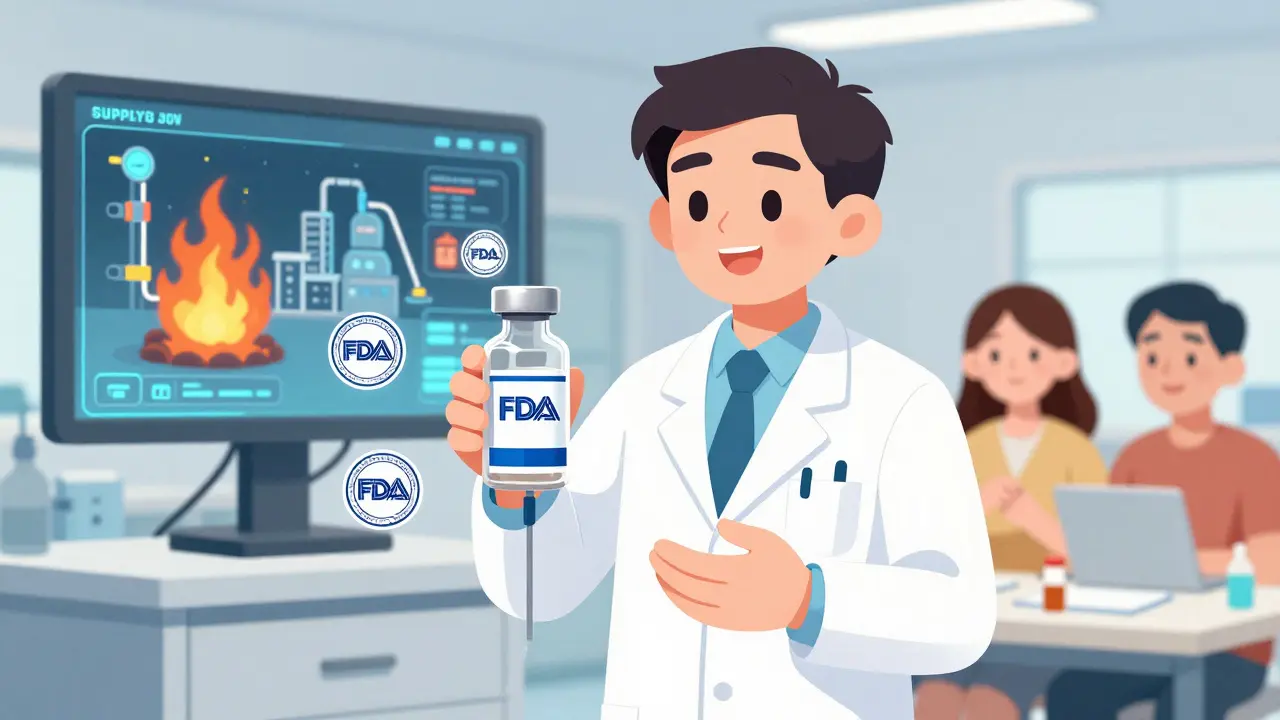
And then there’s digital twin technology. Hospitals are creating virtual replicas of their entire drug supply chain. They simulate disruptions-like a factory fire or shipping delay-and test responses before they happen. The result? Better decisions, faster action.
The human factor: training and empowering staff
Technology helps, but people make the difference. Health systems are investing heavily in training pharmacists and nurses to manage shortages on the front lines.
At the University of Washington Medical Center, all clinical staff now complete a 90-minute module on drug substitution protocols every quarter. They learn how to identify alternatives, check for interactions, and communicate clearly with patients. Since launching the program, medication errors during shortages have dropped by 52%.
Pharmacists are also being given more authority. In 2024, 38% of hospitals allowed pharmacists to initiate substitutions without physician approval for non-critical drugs. This isn’t reckless-it’s practical. One study showed that when pharmacists could act immediately, patients received their medication 11 hours faster on average.
What’s still broken
Despite all this progress, big gaps remain. Small rural hospitals still lack the tech, staff, and budget to implement these strategies. In 2025, 68% of clinics in rural areas had no formal shortage plan. And while big systems can afford AI tools and global suppliers, smaller ones still rely on luck.
Regulatory delays are another problem. The FDA takes an average of 180 days to approve a new supplier for a generic drug. By then, the shortage is already deep. Some systems are lobbying for fast-track approvals for critical drugs-like they do for vaccines.
And let’s not forget the cost. Substituting drugs, building stockpiles, and hiring tech teams all cost money. In 2024, the average health system spent $4.2 million more on managing shortages than in 2022. Without better reimbursement models, these efforts won’t scale.
The path forward
There’s no single fix. But the most successful health systems are doing three things: predicting shortages before they happen, diversifying where they get drugs, and empowering frontline staff to act. They’re not waiting for Congress to fix it. They’re fixing it themselves.
The future won’t be about hoarding drugs. It’ll be about smart networks-connected hospitals, shared data, and automated responses. And for patients? That means fewer delays. Fewer risks. And more certainty when they need it most.
What causes drug shortages in the first place?
Drug shortages happen for several reasons: manufacturing delays, raw material shortages, regulatory hold-ups, low profit margins on generic drugs, and consolidation among suppliers. Often, a single factory produces most of a drug’s global supply-so if that plant shuts down, the entire market feels it. In 2024, 71% of shortages traced back to just five manufacturers.
Are there safe alternatives when a drug is unavailable?
Yes, but they must be scientifically validated. Many health systems now have approved substitution lists based on bioequivalence studies. For example, switching between different brands of levothyroxine or insulin is common and safe when monitored. Pharmacists check blood levels, patient history, and drug interactions before making changes. Never substitute without professional guidance.
Can patients request a specific drug brand during a shortage?
Patients can ask, but providers may not be able to honor it. If the requested drug is unavailable, the pharmacy must find an alternative that meets safety standards. In some cases, like with insulin or epilepsy medications, brand consistency matters. Providers will work with patients to find the closest match and monitor closely for side effects.
How do hospitals decide which drugs to stockpile?
Hospitals prioritize drugs that are critical, have no alternatives, and are used frequently in emergencies. Think insulin, epinephrine, chemotherapy agents, and antibiotics. They use historical usage data, patient volume, and risk assessments to determine how much to keep on hand. Most aim for 60-90 days of supply, with automated alerts when stock drops below that level.
Is compounding drugs a reliable solution during shortages?
When done by accredited labs under strict guidelines, yes. Compounding allows hospitals to create custom doses when commercial supplies fail. But it’s not a long-term fix-it’s a stopgap. Quality control is critical. Only use compounding pharmacies that are accredited by the PCAB or USP standards. Never use unregulated or online sources.




Kyle Young
It’s fascinating how much of this comes down to systemic fragility rather than individual failure. We’ve optimized for efficiency at the cost of resilience, and now we’re paying for it in real time-patients delayed, lives at risk. The real question isn’t whether these solutions work, but why it took a crisis this deep to force innovation. We built a machine that runs on just-in-time logic, and when one gear slips, the whole thing grinds to a halt. Maybe what we need isn’t better inventory systems, but a fundamental rethinking of how we value healthcare infrastructure.
Kendrick Heyward
This is why we need to stop trusting corporations to make life-saving drugs. 😔 They only care about profit. If they made enough money, they’d never let shortages happen. But they don’t. So we’re left with hospitals scrambling like it’s a zombie apocalypse. Someone’s gotta pay for this mess. 💔
lawanna major
I’ve always believed that the most resilient systems aren’t the ones with the most resources, but the ones that adapt with grace. What’s happening in places like Kaiser and Cleveland Clinic isn’t just smart logistics-it’s a quiet revolution in care. They’re not waiting for permission. They’re not waiting for Congress. They’re doing the work, with science, with humility, and with a deep commitment to the person on the other side of the IV line. That’s the standard we should all be holding ourselves to.
Ryan Voeltner
The shift from competition to collaboration is perhaps the most significant development here. When systems stop viewing each other as rivals and start seeing each other as partners in survival the entire ecosystem benefits. This is not merely operational improvement it is a philosophical evolution in public health
Linda Olsson
Let’s be real-none of this would be happening if Big Pharma hadn’t consolidated into five monopolies. The FDA’s 180-day approval process? That’s not bureaucracy-it’s bribery by design. These ‘solutions’ are just band-aids on a hemorrhaging artery. They’re letting you think you’re fixing it while the same people who caused it are still in charge. Wake up.
Manish Singh
From India, I’ve seen how raw material shortages ripple globally. One factory in Gujarat can halt insulin production for half the world. What’s impressive here is how U.S. hospitals are building redundancy-but I wonder if this model can scale to places with less tech access. Maybe the real innovation is sharing these tools openly, not just using them privately.
Nilesh Khedekar
ai predicting shortages? lol. they just read the news and say 'oh no more drugs' lol. i bet the real reason is the feds are letting big pharma control everything. they want us to pay more. its all a scam. 🤡
Gaurav Kumar
Why are we even talking about compounding and AI when the real issue is that America outsourced its pharmaceutical manufacturing? We used to make 80% of our own drugs. Now? We’re dependent on China and India. No amount of blockchain or bots fixes that. This isn’t a logistics problem-it’s a national security failure. And nobody wants to admit it.
David Robinson
I read this whole thing and I’m still not convinced any of this actually helps the average person. Hospitals can have all the fancy dashboards they want, but if you’re in rural Nebraska and your insulin is gone? You’re screwed. This reads like a PR brochure for big hospital systems. Meanwhile, real people are rationing pills. Just saying.
Jeremy Van Veelen
Let me tell you something-this isn’t just about drugs. This is about the slow death of trust in medicine. When you have to beg for a basic antibiotic because some CEO decided to cut costs? That’s not a supply chain issue. That’s a moral collapse. I’ve seen patients cry because they couldn’t get their chemo. No algorithm fixes that. No blockchain. No stockpile. Just humanity. And we’re losing it.
Laura Gabel
all this tech is cool but lets be real no one cares until it happens to them. i had a friend who missed chemo for 3 weeks cause they ran out. no one was punished. no one even apologized. just moved on. typical
Andrew Mamone
Really glad to see pharmacists getting more autonomy. 🙌 That’s the kind of change that saves lives on the ground. When a nurse has to wait 12 hours for a doctor to approve a switch? That’s 12 hours too long. Empowering trained professionals isn’t risky-it’s responsible. And honestly? It’s about time.
MALYN RICABLANCA
Oh, so now we’re turning hospitals into tech startups? AI-driven drug prediction? Blockchain for insulin? Please. This is the same group that thought EHRs would 'streamline care.' Instead, they gave us 14 different logins, 200 pages of documentation per patient, and zero actual time to heal. Now they’re selling us another shiny toy while the real problem-the profit motive-is still running the show. 🤡📉
gemeika hernandez
My grandma had to switch insulin brands last year. She got sick. They didn’t test her. They just said 'it’s the same.' It wasn’t. She almost died. None of this 'science-backed' stuff feels real when you’re the one living it.
Nicole Blain
So… we’re finally doing something right? 🤔 That’s actually kinda hopeful. Even if it’s patchy, it’s a start. And hey-if it helps even one person get their meds on time? That’s worth it. 🌱❤️