
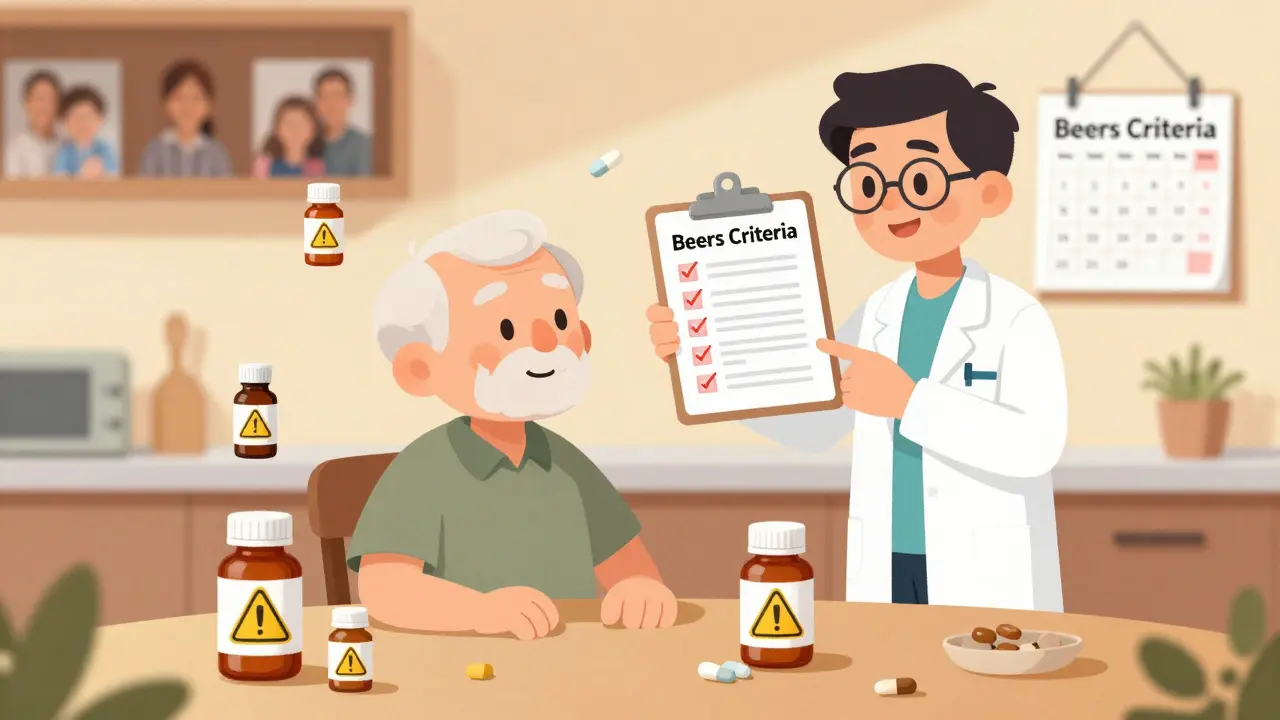
Every year, thousands of older adults end up in the hospital not because of a fall or infection, but because of a medication they were told was safe. It’s not always the dose. It’s not always the combination. Sometimes, it’s the drug itself - a pill that’s fine for a 40-year-old but risky for someone over 65. That’s where the Beers Criteria comes in. It’s not a suggestion. It’s a lifeline for doctors, pharmacists, and families trying to keep seniors safe from harm hidden in plain sight.
What Exactly Is the Beers Criteria?
The Beers Criteria is a living list of medications that doctors should avoid prescribing to adults aged 65 and older. Developed by Dr. Mark Beers in 1991 and officially adopted by the American Geriatrics Society (AGS) in 2011, it’s updated every three years. The latest version, released in May 2023, is based on a review of over 7,300 high-quality studies - more than 20% higher than the previous update. This isn’t just a checklist. It’s a roadmap to safer prescribing.Why does this matter? Seniors make up just 13.5% of the U.S. population, but they take 34% of all prescription drugs. That’s a lot of pills. And with multiple doctors, multiple conditions, and multiple pharmacies, the risk of harm climbs fast. About 23% of older adults living at home are taking at least one medication flagged by the Beers Criteria. And those drugs are linked to 15% of all hospital admissions in this age group.
The Five Rules of the Beers Criteria
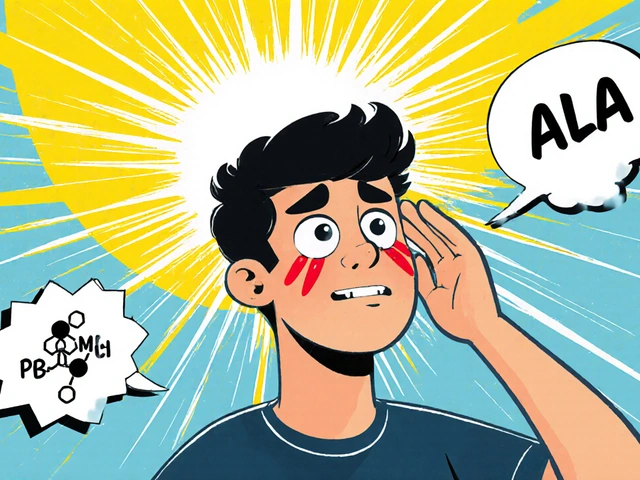
The 2023 version breaks down risky medications into five clear categories. Each one helps clinicians think beyond just the drug name.- Medications to avoid entirely - These are drugs with no safe use in older adults. First-generation antihistamines like diphenhydramine (Benadryl) and hydroxyzine fall here. They’re often used for sleep or allergies, but they block acetylcholine - a brain chemical needed for memory and focus. The result? Confusion, dry mouth, constipation, and even falls. Studies show these drugs can mimic dementia in seniors, and the damage isn’t always reversible.
- Medications dangerous with certain conditions - Some drugs are fine for healthy seniors but risky if you have heart failure, kidney disease, or glaucoma. NSAIDs like ibuprofen and naproxen are a big one. They may ease arthritis pain, but they can cause fluid retention, raise blood pressure, and make heart failure worse. For someone with congestive heart failure, even a few days of NSAIDs can land them in the ER.
- Medications to use with caution - These aren’t banned, but they need extra care. Dabigatran (Pradaxa), a blood thinner, is a good example. It’s easier to use than warfarin, but for seniors over 75 or with kidney function below 30 mL/min, the risk of stomach bleeding jumps. The same goes for benzodiazepines like lorazepam. They help with anxiety or insomnia, but they slow reaction time, increase fall risk, and can cause memory loss. Even short-term use can be dangerous.
- Dangerous drug combinations - Sometimes, two safe drugs become risky together. Mixing an anticholinergic (like oxybutynin for overactive bladder) with an opioid (like oxycodone for pain) can cause severe constipation, urinary retention, and confusion. These interactions are often missed because each drug is prescribed for a different reason.
- Medications needing kidney adjustments - As we age, kidneys slow down. Many drugs are cleared by the kidneys, so the same dose that’s fine at 50 can be toxic at 75. Gabapentin, used for nerve pain, is a classic case. If kidney function drops below 60 mL/min, the dose must be cut in half. Many doctors still prescribe the standard dose, leading to dizziness, falls, and hospitalization.
The 2023 update lists 134 medications or classes across these categories. Thirty-two new ones were added - including certain antidepressants and antipsychotics - while 18 were removed after new data showed they were safer than previously thought.
How It Compares to Other Tools
There are other tools out there, like STOPP/START, used more often in Europe. But in the U.S., the Beers Criteria dominates. Why? Because it’s built for American healthcare. Medicare Part D requires pharmacies and care teams to screen beneficiaries taking eight or more medications against the Beers list. Nearly 87% of U.S. electronic health records now have Beers alerts built in. That’s far higher than the 42% adoption rate for STOPP/START in Europe.But it’s not perfect. STOPP/START looks at the whole picture - the condition, the symptoms, the goals of care. Beers looks at the drug. That means sometimes it flags a medication that’s actually needed. For example, antipsychotics like risperidone are flagged for dementia-related agitation. But for a patient with severe aggression and no other options, they might be the only thing preventing harm. The Beers Criteria doesn’t say never use it - it says, “Use with extreme caution, and only if nothing else works.”
What Happens When It’s Used Right
When clinics and hospitals actually use the Beers Criteria, results are clear. One study showed a 28% drop in adverse drug events after implementing Beers alerts in their EHR. At a large senior care center in Minnesota, benzodiazepine prescriptions for insomnia dropped by 43% after their system started flagging them for patients over 75. That’s not just a number - it’s fewer falls, fewer fractures, fewer hospital stays.Pharmacists are the unsung heroes here. In a medication review, a pharmacist can spot a risky combination a doctor might miss. One study found 89% of pharmacists said the Beers Criteria improved their ability to catch dangerous prescriptions during comprehensive reviews. That’s why many successful programs assign a pharmacist to lead medication safety teams.
The Challenges - Alerts, Costs, and Gaps
But it’s not smooth sailing. Many doctors complain about “alert fatigue.” One primary care physician reported getting 12 Beers alerts per patient visit. If every alert is the same level of urgency, you start ignoring them. The key is smart alerting - only flagging high-risk items, not every possible interaction.Another big issue? Cost. The Beers Criteria doesn’t tell you what to do when the safe alternative is too expensive. A senior might need a safer sleep aid instead of diphenhydramine - but the alternative costs $80 a month. If they’re on Medicare Part D and hit the coverage gap, they’ll skip it. Dr. Jerry Avorn from Harvard points out this gap: 25% of seniors skip meds because of cost. The Beers Criteria doesn’t solve that. It just says, “Don’t use this.”
And then there’s the communication gap. Only 39% of seniors know their meds are being reviewed against the Beers list. Most have no idea why their doctor switched their sleep aid or stopped their pain pill. That lack of explanation leads to confusion - and sometimes, patients go back to their old meds, buying them over the counter.
What’s New in 2025 - And What’s Coming
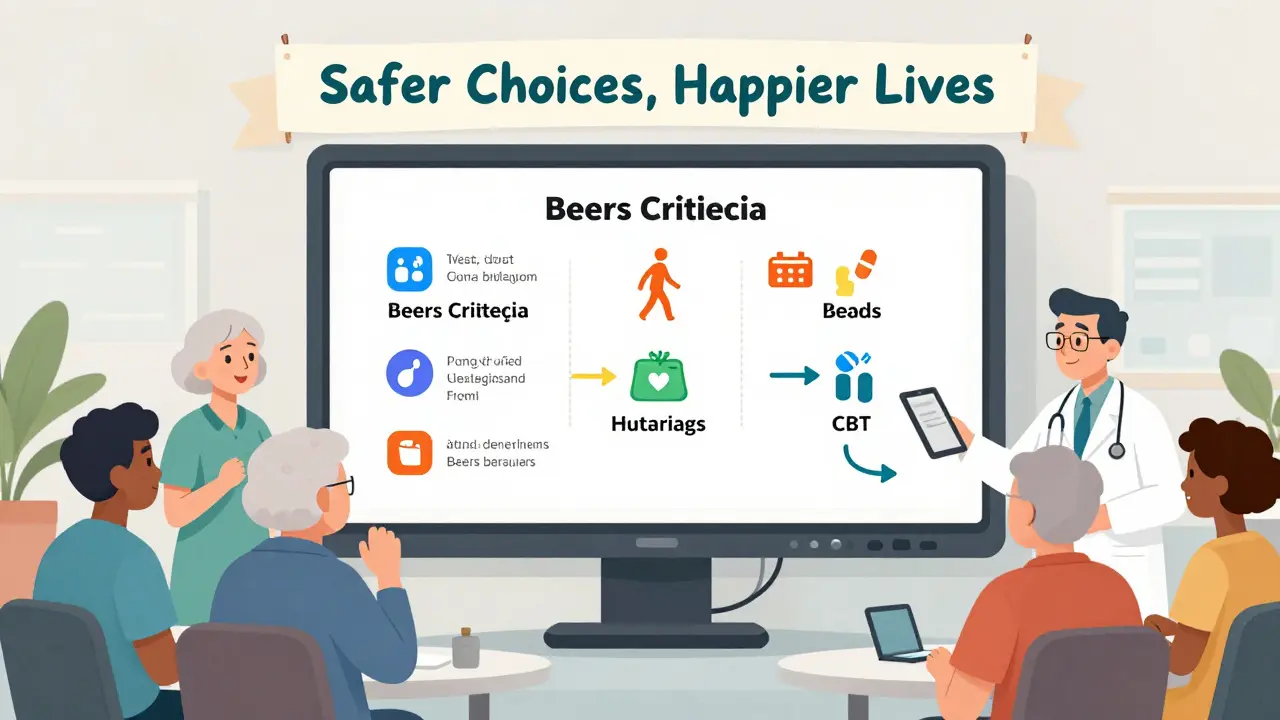
In July 2025, the AGS released a groundbreaking companion guide: Alternative Treatments to Selected Medications in the 2023 Beers Criteria. This isn’t just a list of safer drugs. It includes non-drug options too - like cognitive behavioral therapy for insomnia instead of sleeping pills, or physical therapy and heat packs for chronic back pain instead of NSAIDs. For the first time, the guidelines say: “Here’s what you can do instead.”Looking ahead, the 2026 update will add kidney dosing guidance for every medication cleared by the kidneys. Right now, only 68% have specific recommendations. That’s a huge gap. And the AGS is partnering with Google Health AI to build tools that predict which patients are most at risk - not just based on age or meds, but on lab results, mobility, and history of falls.
What You Can Do
If you or a loved one is over 65 and taking multiple medications:- Ask your doctor: “Are any of these on the Beers Criteria list?”
- Ask your pharmacist: “Can we review all my meds together?”
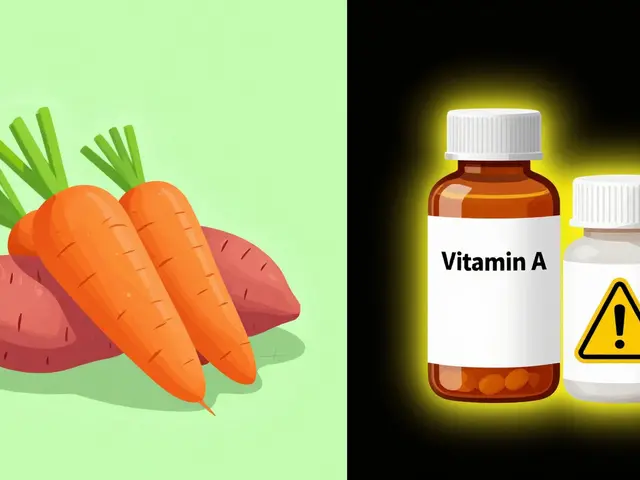
- Don’t assume a drug is safe just because it’s over the counter. Benadryl, sleep aids, and some antacids are on the list.
- If a medication was stopped, ask why - and what the alternative is.
- Use the free AGS Beers Criteria app. It’s updated quarterly and works offline.
The goal isn’t to stop all meds. It’s to make sure every pill is worth taking. For older adults, the balance between benefit and harm shifts. What helped at 55 might hurt at 75. The Beers Criteria doesn’t take away choices. It helps make better ones.
Is the Beers Criteria a law or just a guideline?
It’s a clinical guideline, not a law. But in the U.S., Medicare Part D requires drug plans to use it for medication reviews for beneficiaries taking eight or more prescriptions. Many hospitals and pharmacies have made it part of their standard practice, so while you can’t be fined for ignoring it, not following it increases liability and risk.
Can a senior ever safely take a Beers-listed medication?
Yes - but only if the benefits clearly outweigh the risks and no safer alternative exists. For example, an antipsychotic might be used short-term for severe agitation in dementia when non-drug approaches fail. The key is intention: it’s not a default choice, but a last-resort one, with close monitoring and a plan to taper off.
Why are antihistamines like Benadryl on the list?
First-generation antihistamines like diphenhydramine have strong anticholinergic effects, meaning they block a brain chemical called acetylcholine. In older adults, this can cause confusion, memory problems, dry mouth, constipation, urinary retention, and increased fall risk. Studies show these drugs can mimic dementia symptoms and may even accelerate cognitive decline over time. Safer alternatives exist for allergies and sleep.
Do the Beers Criteria apply to hospice or palliative care patients?
Not always. In hospice or end-of-life care, the goal shifts from prevention to comfort. A medication flagged as inappropriate - like an opioid or benzodiazepine - might be exactly what’s needed to relieve pain or anxiety. The Beers Criteria includes a note to exclude these patients from routine screening. Decisions here are based on individual goals, not general rules.
How often should a senior’s medications be reviewed using the Beers Criteria?
At least once a year, and anytime there’s a change in health - a new diagnosis, hospital stay, fall, or change in cognition. If a senior takes five or more medications, a full review every six months is recommended. Many pharmacies now offer free medication therapy management (MTM) visits for Medicare beneficiaries - this is the perfect time to ask for a Beers Criteria check.
Are over-the-counter drugs included in the Beers Criteria?
Yes. Many of the most dangerous drugs for seniors are available without a prescription. Diphenhydramine (Benadryl), doxylamine (Unisom), and some cold and sleep aids are on the list. These are often taken without consulting a doctor, making them a major hidden risk. Always check labels for active ingredients - and ask your pharmacist if you’re unsure.
What should I do if my doctor prescribes a Beers-listed drug?
Ask: Why this drug? Is it the safest option? Are there non-drug alternatives? Is there a lower-risk medication I could try first? Don’t assume your doctor doesn’t know about the Beers Criteria - many don’t use it daily, but they’ll welcome the conversation. Bring a list of all your meds, including supplements and OTCs, to your appointment.



Eli In
OMG I just realized my grandma’s been taking Benadryl for sleep for years 😱 I thought it was harmless! Time to schedule a med review with her pharmacist ASAP. Thanks for this eye-opener!
Megan Brooks
The Beers Criteria represents a critical evolution in geriatric pharmacology-one that acknowledges the physiological realities of aging rather than applying a one-size-fits-all model. It is not merely a list, but a philosophical recalibration of risk-benefit analysis in elderly care.
Ryan Pagan
Let me tell you something-this list is a godsend. I’ve seen too many old folks get wrecked by NSAIDs and anticholinergics like they’re candy. My aunt ended up in the ER after taking 3 nights of Advil for her arthritis-heart failure flared up like a damn bonfire. Docs need to stop treating seniors like 40-year-olds with wrinkles. This isn’t just smart-it’s survival.
Paul Adler
This is one of the most important pieces of clinical guidance I’ve read in years. The fact that 23% of community-dwelling seniors are on Beers-listed meds is staggering-and terrifying. I hope this reaches every primary care clinic, every nursing home, every pharmacy counter. Safety shouldn’t be an afterthought.
Robin Keith
It’s fascinating, isn’t it? The Beers Criteria-this modern-day pharmacological oracle-forces us to confront the uncomfortable truth that our medical system, for all its technological prowess, still treats aging as a disease to be medicated rather than a natural phase to be honored. And yet… how many of these so-called ‘inappropriate’ drugs are prescribed not because of ignorance, but because of systemic neglect? The real villain isn’t diphenhydramine-it’s the 12-minute visit, the insurance forms, the lack of geriatric training… and the quiet, unspoken assumption that old people are just… expendable.
Sheryl Dhlamini
MY GRANDPA WAS ON LORAZEPAM FOR 8 YEARS. EIGHT. YEARS. I didn’t even know it was dangerous until I read this. He fell. Broke his hip. Then they switched him to melatonin. He’s been sleeping like a baby since. I’m crying. Thank you.
Doug Gray
Interesting framework, though I’m skeptical about the utility of flagging meds without considering polypharmacy dynamics or patient autonomy. The Beers Criteria, while well-intentioned, risks pathologizing normal aging through a reductionist lens. The real issue? Lack of longitudinal care coordination.
Kristie Horst
Oh, so now we’re supposed to believe that doctors who prescribe Benadryl to seniors are just… unaware? Really? Let’s be honest-most of them don’t care. They’re rushed, overworked, and honestly, they’ve been trained to treat symptoms, not people. And now you’re surprised that seniors are getting wrecked by OTC meds? Honey, this isn’t a gap in knowledge. It’s a gap in compassion.
LOUIS YOUANES
Look, I’ve read the Beers Criteria. It’s just another bureaucratic checklist designed to make pharmaceutical companies look good while keeping old people docile. If you really want to help seniors, stop pushing pills altogether. Let them walk. Let them meditate. Let them eat real food. But don’t pretend this list is some kind of salvation-it’s just another way to profit off fear.
Andy Steenberge
One of the most overlooked aspects of the Beers Criteria is how it empowers patients and families. Too often, elders are told, ‘This is what we do,’ without context. When you give them the language-‘This is on the Beers list’-they become active participants in their care. That’s not just safer medicine. That’s dignity.
Alex Flores Gomez
Y’all act like this is some revolutionary breakthrough. I’ve been telling my grandma to ditch the Benadryl since 2019. She still takes it ‘cause it’s cheap and she thinks it ‘helps her chill.’ The real problem ain’t the list-it’s the people who ignore it.
Frank Declemij
Pharmacists are the real MVPs here. They catch what doctors miss. If your pharmacy doesn’t offer a free med review, ask for one. It’s covered by Medicare.