
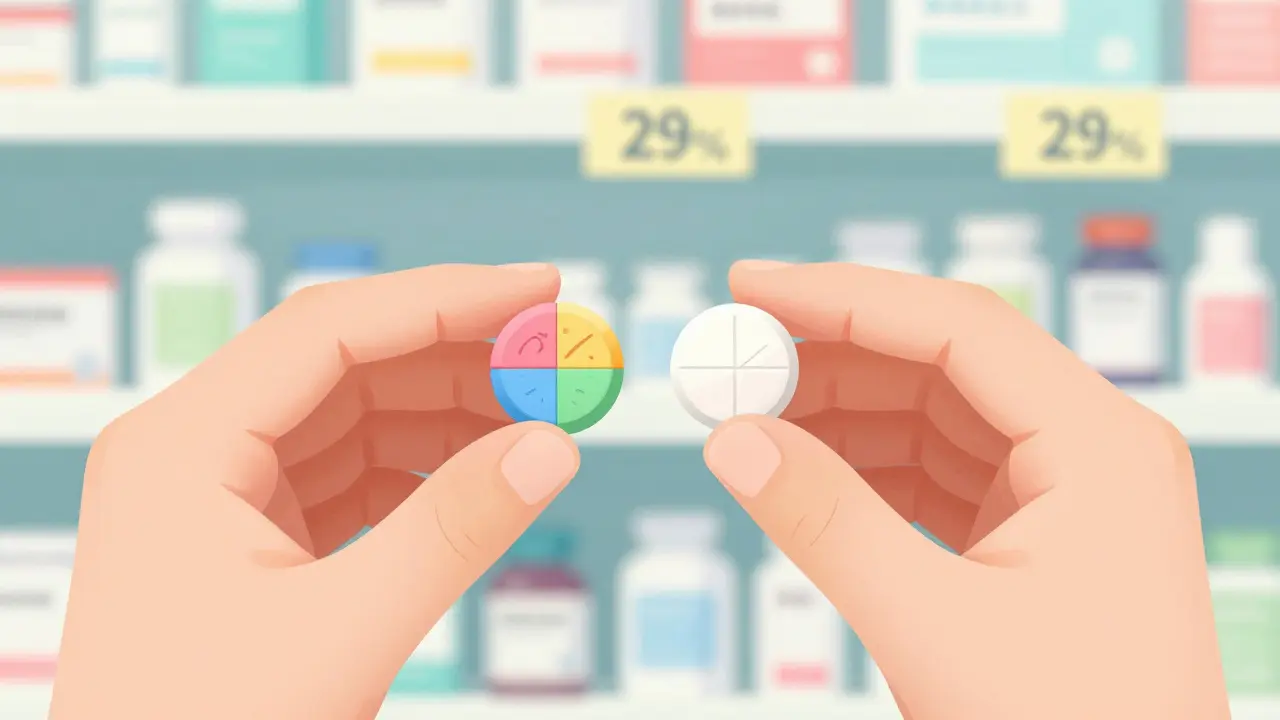
Ever picked up your prescription and thought, "This isn’t the same pill I’ve been taking"? You’re not alone. Many people are startled when their authorized generic looks completely different from the brand-name drug they’ve used for years. The color is off. The imprint is gone. Maybe it’s smaller, or shaped differently. It feels wrong. But here’s the truth: authorized generics are not a different medicine. They are the exact same drug inside - same active ingredient, same dosage, same effectiveness. The only thing that changed is how it looks.
What Exactly Is an Authorized Generic?
An authorized generic is a brand-name drug sold without the brand name on the label. It’s made by the same company that produces the original, using the exact same formula, same factory, same equipment. The only difference? No logo, no fancy packaging, no trademarked appearance. The FDA defines it clearly: it’s identical to the brand-name product in every way - active ingredients, inactive ingredients, strength, and performance.
Unlike regular generics, which go through a separate approval process called an ANDA (Abbreviated New Drug Application), authorized generics are marketed under the original brand’s NDA (New Drug Application). That means they don’t need to prove bioequivalence again. They already passed that test - because they’re the same pill.
Think of it like buying a car. The brand-name version is the same model with the manufacturer’s logo on the hood. The authorized generic is the exact same car, same engine, same seats, same safety features - but without the logo. It’s cheaper, but it drives just the same.
Why Do They Look So Different?
If they’re the same drug, why do they look so different? The answer isn’t science - it’s law.
In the U.S., trademark law requires that no two drugs can look identical, even if they’re made by the same company and contain the same ingredients. Why? To prevent medication errors. If a pill looks exactly like another, pharmacists, doctors, or patients might accidentally take the wrong one. So the FDA mandates that all drug products - including authorized generics - must have distinguishing features.
Here’s what that means in practice: manufacturers don’t change the active ingredient. They don’t alter the dosage. But they tweak the appearance. That could mean changing the dye used in the coating (by as little as 0.05%), switching the imprint on the tablet, or adjusting the shape slightly. These changes are tiny - so small they don’t affect how the drug works. But they’re enough to satisfy trademark rules.
According to FDA data, 76.4% of authorized generics have a different color than their brand-name counterpart. Nearly 9 out of 10 have a different imprint. And while 98.7% keep the same size and shape, even that small variation is enough to make them visually distinct.
Authorized Generic vs. Regular Generic: What’s the Real Difference?
It’s easy to confuse authorized generics with regular generics. But they’re not the same.
Regular generics are made by different companies. They must prove they work the same way as the brand-name drug - but they’re allowed to use different inactive ingredients. That includes fillers, binders, dyes, and coatings. And here’s the catch: those inactive ingredients can cause problems for some people. About 4.7% of patients report reactions to these differences - things like stomach upset, rashes, or headaches - even though the active drug is the same.
Authorized generics don’t have that issue. Because they use the exact same inactive ingredients as the brand-name version, they’re the safest alternative for people with sensitivities. If you’ve ever had a bad reaction to a generic and wondered why, it’s likely because of those fillers or dyes - not the medicine itself.
Here’s a quick comparison:
| Feature | Brand-Name Drug | Authorized Generic | Regular Generic |
|---|---|---|---|
| Active Ingredient | Identical | Identical | Identical |
| Inactive Ingredients | Proprietary formula | Identical to brand | May differ |
| Appearance | Trademarked design | Modified to comply with law | Often very different |
| Cost (30-day supply avg.) | $478.23 | $341.05 | $276.17 |
| Manufactured by | Brand company | Brand company or licensed partner | Third-party generic maker |
Authorized generics are more expensive than regular generics - but only because they’re still made by the brand-name company. Still, they’re about 29% cheaper than the original. And for people who can’t tolerate regular generics, they’re often the only affordable option that doesn’t trigger side effects.
Why Do So Many People Get Confused?
When patients see a pill that looks different, their first thought isn’t, "Oh, this is the same drug". It’s, "Did I get the wrong medicine?" or "Is this fake?"
A 2023 survey found that 58.3% of patients questioned the effectiveness of their authorized generic just because of how it looked. Another study showed that 43.2% of people initially thought their authorized generic was a completely different medication.
That confusion isn’t surprising. Most people never learn how drug labeling works. They see a pill, remember its color and shape, and assume that’s how it’s supposed to look. When that changes, even slightly, trust drops.
Pharmacists now spend an extra 1.7 minutes per prescription explaining this to patients. That’s not because the science is complicated - it’s because the system is confusing. The same pill, different look. Same effect, different price. Same company, different label.
What Should You Do If Your Pill Looks Different?
Don’t panic. Don’t stop taking it. Don’t assume it’s wrong.
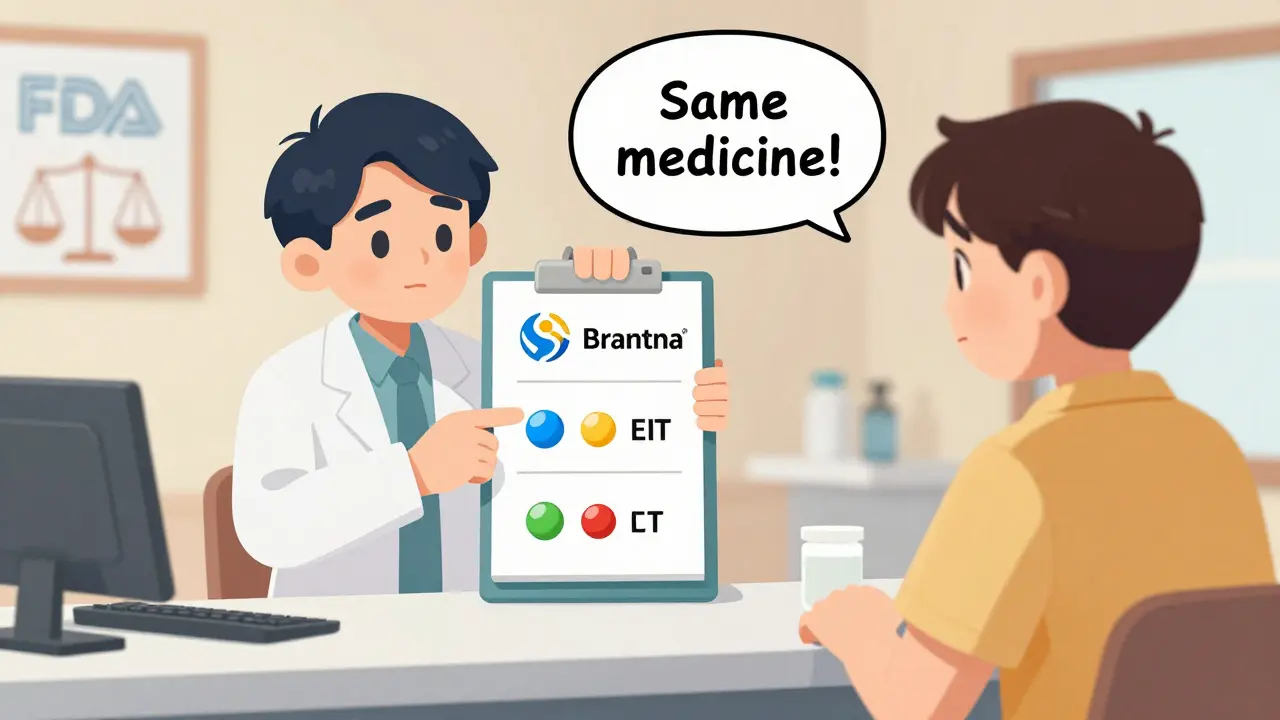
First, check the label. If it says the same active ingredient as your brand-name drug - and the dosage matches - you’re fine. Then, ask your pharmacist: "Is this an authorized generic?" They’ll confirm it. Many pharmacies now use visual comparison charts to help patients recognize the difference.
If you’ve had reactions to regular generics in the past, this might be your best option. Authorized generics are the only generic version that guarantees the same inactive ingredients as the brand.
And if you’re worried about cost, ask your insurance plan if they cover authorized generics. Many PBM (Pharmacy Benefit Manager) networks now prefer them because they reduce adverse events - and lower overall healthcare costs.
The Future of Authorized Generics
The market for authorized generics is growing fast. In 2022, it was worth $18.7 billion. By 2027, it’s projected to hit $26.4 billion. Why? Because more people are learning about them - and more patients are asking for them.
The FDA is also stepping in. Starting in 2025, authorized generics will be listed in the Orange Book - the official database that tracks drug equivalence. That means clearer labeling, less confusion, and better tracking.
Some companies, like Pfizer, are already testing "appearance continuity" programs. Instead of changing the shape or imprint, they’re keeping the pill’s look the same and only altering the color slightly - enough to meet legal rules, but familiar enough to reduce patient anxiety.
Meanwhile, patient advocacy groups are pushing for better education. They want pharmacies to hand out simple cards explaining: "This looks different, but it’s the same medicine. No side effects. Same active ingredients. Just cheaper."
Bottom Line: It’s the Same Medicine, Just Different Packaging
Authorized generics exist because the system needs to balance three things: patient safety, trademark law, and cost savings. The result? Pills that look different but work exactly the same.
If you’ve been avoiding generics because of side effects, an authorized generic might be your solution. If you’re trying to save money and don’t want to risk a reaction, this is the middle ground.
Don’t let the color or shape fool you. The medicine inside hasn’t changed. And if you’re unsure, your pharmacist is your best resource. Ask questions. Get clarity. And remember - the pill that looks different might just be the one that works best for you.
Are authorized generics as effective as brand-name drugs?
Yes. Authorized generics contain the exact same active and inactive ingredients as the brand-name drug. They are made in the same facility using the same process. The FDA considers them therapeutically identical. The only difference is the label and appearance.
Why do authorized generics cost less than brand-name drugs but more than regular generics?
Authorized generics cost less than brand-name drugs because they don’t include marketing, advertising, or brand-name packaging costs. But they cost more than regular generics because they’re made by the original manufacturer - not a third-party generic company competing on price. The savings come from eliminating brand-name markup, not from lower production costs.
Can authorized generics cause side effects?
They’re far less likely to cause side effects than regular generics because they use the same inactive ingredients as the brand-name version. Regular generics often contain different fillers or dyes that can trigger reactions in sensitive individuals. Authorized generics eliminate that risk.
How do I know if I’m getting an authorized generic?
Check the label. Authorized generics will list the same active ingredient as the brand-name drug. The manufacturer name may be different, but it’s often the same company under a different label. Ask your pharmacist directly - they can tell you if it’s an authorized generic and show you a visual comparison chart if available.
Are authorized generics available for all brand-name drugs?
No. Only about 38.4% of brand-name drugs with generic competition have an authorized generic version. They’re more common for high-cost, high-demand medications - like asthma inhalers, blood pressure pills, or antidepressants. If you don’t see one listed, it may not be available yet.


Virginia Seitz
This looks different but works the same? Mind blown. 🤯 I’ve been panic-checking my pills for years. Thanks for the clarity.
Salome Perez
Thank you for this exceptionally well-researched breakdown. As a pharmacist, I’ve spent countless minutes reassuring patients that a change in pill appearance does not equate to a change in efficacy. Authorized generics are the unsung heroes of cost-effective, safe medication access. The FDA’s trademark-driven appearance requirements are a necessary evil - and this post illuminates why.
What’s often missed is that the inert ingredients in regular generics aren’t just ‘fillers’ - they’re chemically distinct compounds that can trigger immune responses in sensitive individuals. For those with histamine intolerance, celiac, or dye allergies, an authorized generic isn’t a preference - it’s a medical necessity.
And yes, the 1.7-minute pharmacist consultation? That’s real. We’re not being slow; we’re preventing adverse events. Imagine a diabetic receiving a generic with sucrose as a binder instead of mannitol - that’s not theoretical. It’s documented.
Pharmacies need to be mandated to hand out those simple cards. Patient education isn’t a luxury - it’s part of clinical care. Let’s stop treating pill aesthetics like a branding exercise and start treating them like a safety protocol.
Also - Pfizer’s appearance continuity initiative? Brilliant. Human-centered design meets regulatory compliance. More of this, please.
Evelyn Vélez Mejía
There’s a deeper philosophical issue here: we’ve conflated familiarity with safety. We trust the color, the shape, the logo - not the chemistry. That’s not science. That’s conditioning. We’ve been trained by pharmaceutical marketing to believe that a pill’s identity is tied to its appearance, not its composition. This is capitalism masquerading as medicine.
The same company makes the exact same drug - but we’re told to distrust it because it lacks a trademark. That’s absurd. And yet, we accept it. Why? Because we’ve been conditioned to equate brand with quality, even when the evidence says otherwise.
The real tragedy isn’t the pill’s appearance. It’s that we’ve surrendered critical thinking to packaging. If a drug’s efficacy hinges on its logo, we’ve already lost.
Victoria Rogers
Ugh. So now we’re letting Big Pharma dictate what our pills look like just so they can charge more? This is just another way they squeeze us. Regular generics are fine. I don’t care if it’s a different color. I’m not paying extra for a logo-free version of the same thing. This is scammy.
Patrick A. Ck. Trip
Thank you for this. I’ve had patients come in crying because they thought they’d been given the wrong medication. It’s heartbreaking. This article should be printed and handed out in every pharmacy. The science is clear - the confusion is not. We need better communication, not more pills.
Sam Clark
This is one of the clearest explanations I’ve ever read on this topic. I’ve been on the same brand-name medication for 12 years and was terrified when my pharmacy switched me to an authorized generic. I thought I was being cheated. Turns out, I was being saved - from both cost and potential side effects from random fillers.
For anyone reading this: if you’ve ever had a reaction to a generic, ask for the authorized version. It’s not a premium product - it’s a safer one. And if your pharmacist doesn’t know what it is, find a new one.
Nishant Desae
As someone from India where generics are the norm and brand-name drugs are often unaffordable, I’ve seen firsthand how confusing this can be. In my country, many people believe that if a pill looks different, it’s inferior - even if it’s the same active ingredient. This article is a wake-up call not just for Americans, but globally.
I’ve had friends stop taking their blood pressure meds because the tablet changed color. They thought it was fake. One even went to the police. Imagine that - calling the cops because your pill looks different.
What’s needed is a global standard - not just for labeling, but for patient education. Maybe a QR code on every pill bottle that links to a simple video explaining: ‘This is the same medicine. Different look. Same results.’
Also, I appreciate how you mentioned the inactive ingredients. That’s the real issue. In India, we often get generics with fillers that cause bloating, rashes, even nausea. I wish we had authorized generics here. They’re the bridge between affordability and safety.
Thank you for writing this. It’s not just informative - it’s compassionate.
Kaylee Esdale
I used to hate when my pills changed. Now I know why. Thank you.
Chris Van Horn
While I appreciate the technical precision of this exposition, I must point out a glaring epistemological flaw: the conflation of pharmaceutical equivalence with perceptual legitimacy. The FDA’s regulatory architecture, while ostensibly grounded in pharmacovigilance, is in fact a capitulation to the aesthetic hegemony of trademark law - a legal fiction that prioritizes semiotic distinction over therapeutic continuity. One cannot, in good conscience, assert that a pill is ‘the same’ when its phenomenological signature has been deliberately altered to satisfy corporate intellectual property norms. The patient’s cognitive dissonance is not a failure of education - it is a rational response to an irrational system. The authorized generic is not a solution; it is a compromise between regulatory absurdity and market pragmatism. And while cost savings are laudable, they do not absolve the system of its fundamental incoherence.
Moreover, the assertion that ‘the medicine inside hasn’t changed’ is a tautology that ignores the embodied experience of the patient. The pill is not merely a chemical delivery mechanism - it is a symbolic object. To alter its form is to disrupt its ritual function in daily health maintenance. This is not trivial. It is existential.
And yet - I am still compelled to use them. Because I am poor. And the system is rigged. So here we are.
Jody Patrick
Why are we letting big pharma control our pills? This is just another way they keep us hooked. Stick with the brand. You get what you pay for.
Meghan O'Shaughnessy
My mom switched to an authorized generic for her antidepressant last year. She was terrified at first - said the pill felt ‘wrong.’ But after two weeks, she said she couldn’t tell the difference. She’s saving $180 a month. And she hasn’t had a single side effect. I’m telling everyone I know.