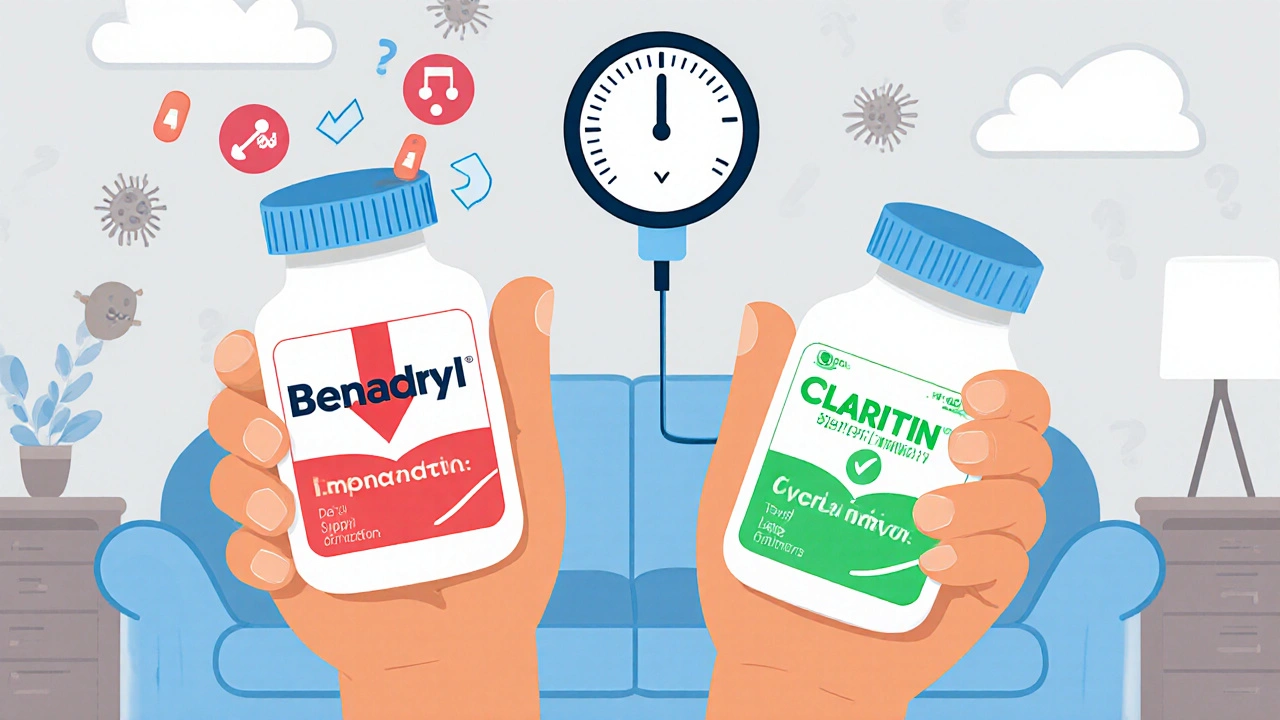
Antihistamines and Blood Pressure: What You Need to Know for Safe Use
Not all antihistamines affect blood pressure the same way. Learn which ones are safe for high blood pressure, which to avoid, and how to monitor your readings safely.

When you reach for diphenhydramine, a common antihistamine used in sleep aids and allergy pills like Benadryl. Also known as Benadryl, it’s one of the most widely taken drugs in the U.S.—but not because it’s the safest. Many people use it to fall asleep or calm allergies without thinking twice. But here’s the problem: diphenhydramine doesn’t just block histamine. It also shuts down acetylcholine, a key brain chemical that helps with memory, focus, and muscle control. This is why so many seniors feel foggy, forgetful, or unsteady after taking it—and why doctors are starting to warn against it for anyone over 65.
It’s not just about sleep. Diphenhydramine is in dozens of OTC products: cold remedies, nighttime pain relievers, even some stomach medicines. And because it’s cheap and easy to buy, people keep using it year after year. But the side effects pile up. Dry mouth? That’s one thing. Trouble urinating? That’s another. Confusion that looks like dementia? That’s the real danger. Studies show that long-term use of anticholinergic drugs like diphenhydramine is linked to higher risk of cognitive decline—even in people who never had memory problems before. And it’s not just older adults. Teens taking it for sleep, or adults using it daily for allergies, are also at risk. The body doesn’t handle it well over time. The brain starts to slow down, and the effects can stick around even after you stop taking it.
What makes diphenhydramine tricky is that it’s often mistaken for a harmless fix. You don’t need a prescription, so it feels safe. But if you’re taking it more than a few times a week, you’re playing with fire. There are better options for sleep—like melatonin or good sleep hygiene. For allergies, second-generation antihistamines like loratadine or cetirizine don’t cross into the brain the same way. They work just as well without the brain fog. And if you’re a senior or caring for one, this isn’t just a suggestion—it’s a red flag. Many memory issues labeled as "normal aging" are actually caused by meds like this. The good news? Stopping diphenhydramine can bring clarity back. People report better focus, improved balance, and fewer falls within weeks of switching.
Below, you’ll find real stories and science-backed guides on how diphenhydramine and similar drugs mimic aging, what alternatives actually work, and how to spot the hidden dangers in everyday meds. No fluff. Just what you need to know to protect yourself—or someone you love—from a drug that’s everywhere but rarely talked about the right way.
Not all antihistamines affect blood pressure the same way. Learn which ones are safe for high blood pressure, which to avoid, and how to monitor your readings safely.