
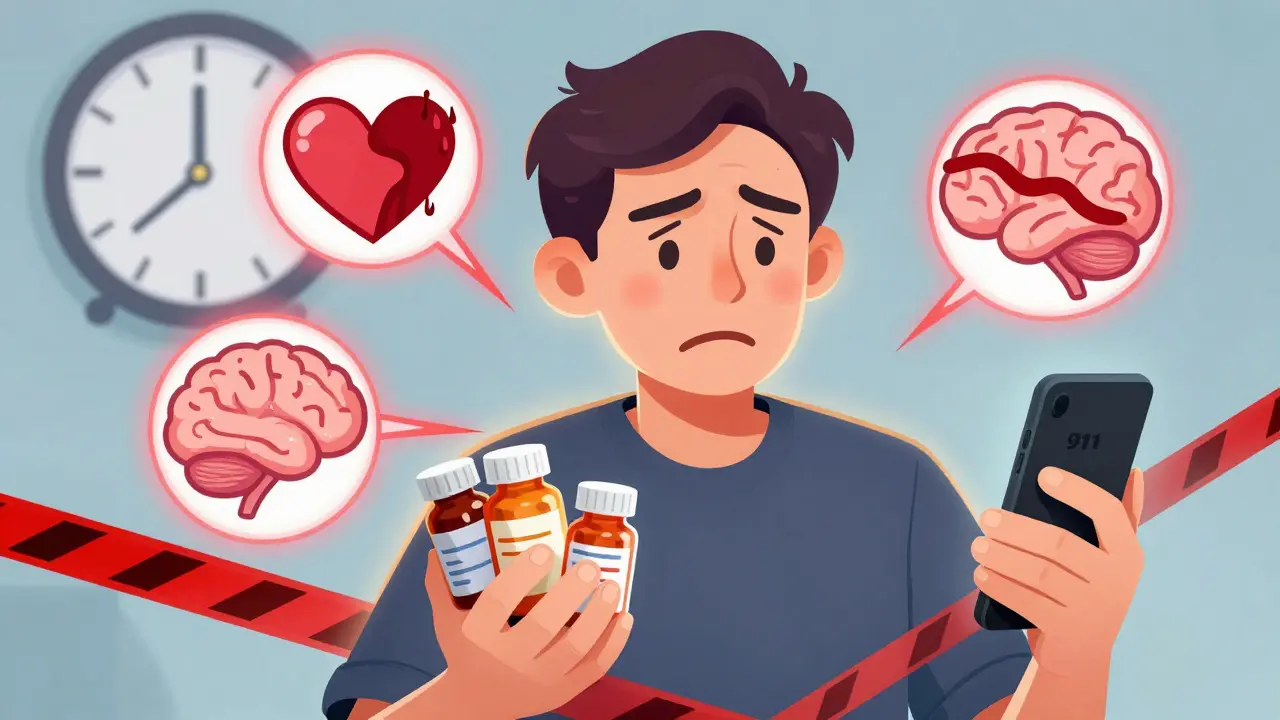
Many people take multiple medications - pills for blood pressure, antidepressants, pain relievers, even herbal supplements. But what happens when these drugs start working against each other? A drug interaction isn’t just a minor inconvenience. It can turn a routine dose into a life-threatening event. The good news? Most serious interactions can be avoided - if you know when to act.
What Counts as a Dangerous Drug Interaction?
A drug interaction happens when one substance changes how another works in your body. It could be a prescription pill, an over-the-counter painkiller, a vitamin, a supplement like St. John’s wort, or even grapefruit juice. The U.S. Food and Drug Administration says these interactions can make a drug less effective, cause new side effects, or boost its power to dangerous levels. The most common types are:- Drug-drug - about 60% of serious cases, like mixing blood thinners with NSAIDs
- Drug-food - 20%, such as statins with grapefruit
- Drug-disease - 20%, like giving decongestants to someone with high blood pressure
Call 911 Right Now If You Have These Symptoms
Some reactions don’t wait. If you or someone else experiences any of these, don’t call your doctor - call 911 immediately.- Difficulty breathing or oxygen levels below 90% - This isn’t just “a little short of breath.” If your chest feels tight, you’re gasping, or your fingers or lips turn blue, your airway could be closing. This happens in 78% of severe allergic reactions.
- Swelling of the face, lips, tongue, or throat - Known as angioedema, this can block your airway completely in as little as 15 minutes. Once it starts, it moves fast.
- Sudden drop in blood pressure with racing heart - If your systolic pressure falls below 90 mmHg and your heart is beating over 120 times per minute, you could be going into shock. This is a classic sign of anaphylaxis.
- Seizures lasting more than 2 minutes - Especially if you’re on medications like antibiotics, antidepressants, or seizure drugs. A case from the University of Virginia showed lidocaine toxicity triggering seizures after dental work.
- High fever above 106°F, rigid muscles, and extreme agitation - These are signs of serotonin syndrome, often from mixing antidepressants (SSRIs, SNRIs) with pain meds like tramadol or fentanyl. Muscle rigidity so severe you can’t move, plus sweating and confusion, means your body is overheating.
- Temperature above 104°F, dark urine, and muscle pain - This could be neuroleptic malignant syndrome, a rare but deadly reaction to antipsychotics. Creatine kinase levels above 10,000 U/L confirm muscle breakdown.
See a Doctor Within 24 Hours If You Notice These Signs
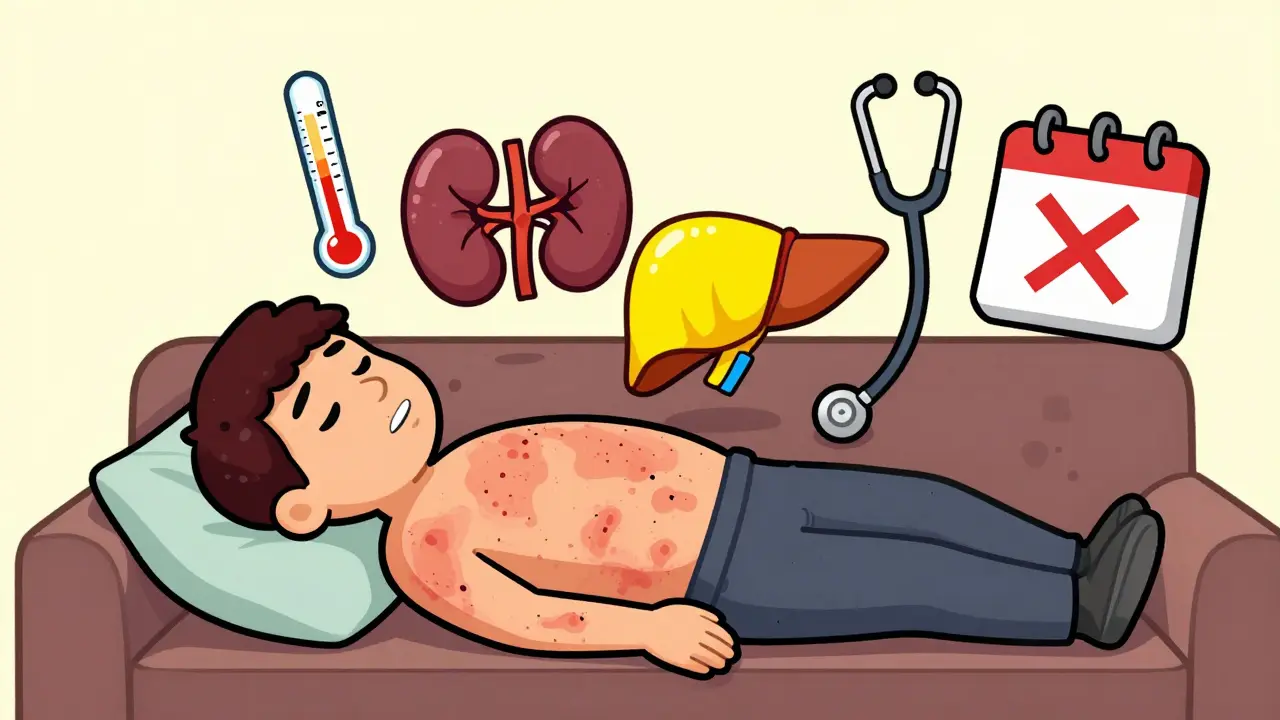
Not every interaction causes an emergency - but that doesn’t mean it’s harmless. Some reactions creep up slowly. If you notice any of these, don’t wait until your next appointment. Call your doctor or go to an urgent care center.- Widespread rash covering more than 30% of your body - Especially if it’s red, raised, and itchy. This could be DRESS syndrome - a severe delayed reaction that can damage your liver, kidneys, or lungs. It happens in 1 out of every 1,000 to 10,000 drug exposures.
- Unexplained fever over 101.3°F for more than 48 hours - Especially if you started a new antibiotic, anticonvulsant, or antiretroviral. This isn’t a cold. It could be serum sickness or another immune reaction.
- Bleeding gums, nosebleeds, or unusual bruising - A platelet count below 100,000/μL means your blood can’t clot properly. This can happen with antibiotics like vancomycin or sulfa drugs.
- Yellow skin or eyes, dark urine, or belly pain - These are signs of liver damage. ALT levels over 120 U/L are a red flag. Drug-induced liver injury is rare but serious - and often missed until it’s advanced.
- Little or no urine output for 6+ hours, with rising creatinine - If you’re not peeing normally and your blood test shows kidney stress, you could be developing drug-induced nephritis. This causes 18-25% of sudden kidney failure in hospitals.
Doctors Use These Rules to Spot Serious Reactions
Emergency medicine experts have developed clear guidelines to help identify dangerous interactions before it’s too late. The American College of Emergency Physicians says if you have two or more of these symptoms together, you’re likely having a serotonin syndrome or similar reaction:- Heart rate over 100 bpm
- Breathing faster than 20 times per minute
- Excessive sweating
- Dilated pupils
- Overactive reflexes
- Shaking or tremors
- Did the symptoms start after taking the drug?
- Did they go away when you stopped it?
- Did they come back when you took it again?
High-Risk Drugs to Watch Out For
Some medications are more dangerous when mixed. Even small changes in their levels can cause big problems.- Warfarin - A blood thinner. Mixing it with antibiotics, NSAIDs, or even cranberry juice can cause dangerous bleeding.
- Digoxin - Used for heart rhythm. Grapefruit, antibiotics, or kidney problems can spike levels, leading to fatal arrhythmias.
- Phenytoin - An anti-seizure drug. Its narrow window means a 20% change in blood level can trigger seizures or toxicity.
- SSRIs and SNRIs - Antidepressants like fluoxetine or venlafaxine. Combining them with pain meds, migraine drugs, or even certain cough syrups can trigger serotonin syndrome.
What Most People Get Wrong
A 2022 study in JAMA Internal Medicine found that 68% of patients couldn’t identify serious interaction symptoms from their medication leaflets. They saw “dizziness” or “nausea” and thought, “That’s normal.” Real stories from patients tell a different tale:- A woman on sertraline took a cold medicine with dextromethorphan. Within hours, she was shaking, sweating, and confused. She waited 12 hours before calling her doctor - by then, she needed ICU care.
- A man on lisinopril took ibuprofen for back pain. He didn’t feel different until he couldn’t urinate. His kidneys were failing.
- On Reddit, users report that 41% of serotonin syndrome cases from mixing SSRIs with fentanyl ended in hospitalization - and many didn’t realize the painkiller was the trigger.
What to Do Before It Gets Worse
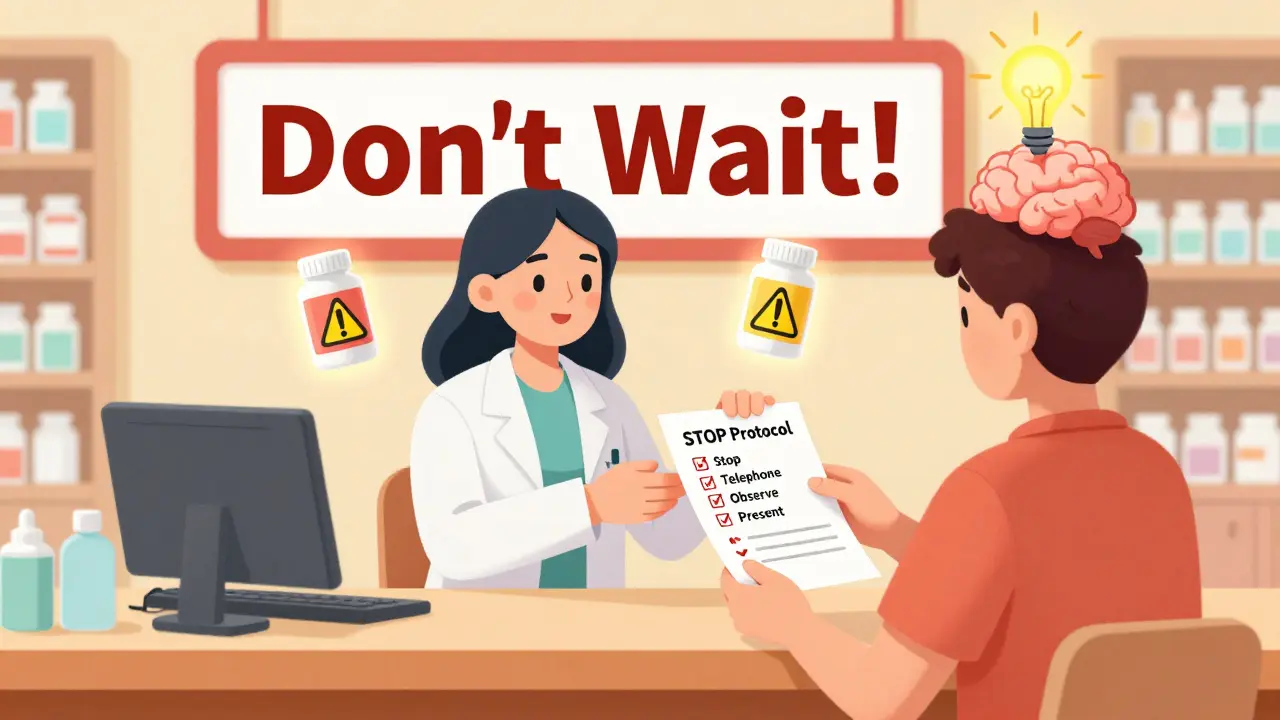
You don’t need to be a doctor to protect yourself. Use the STOP protocol recommended by Kaiser Permanente:- Stop taking the medication you suspect is causing the problem.
- Telephone your doctor, pharmacist, or poison control (1-800-222-1222).
- Observe your symptoms. Write down what you feel, when it started, and how it’s changed.
- Present all your medications - pills, patches, vitamins, herbs - to the provider. Don’t assume they know what you’re taking.
How to Prevent Interactions Before They Start
Prevention is better than reaction. Here’s how:- Keep a full list - Write down every pill, supplement, herb, and even over-the-counter drug you take. Include doses and why you take them.
- Use a drug checker - Tools like Drugs.com or Lexicomp let you enter all your meds and flag interactions. Don’t skip herbal supplements - they cause 18% of serious interactions.
- Ask your pharmacist - Every time you pick up a new prescription, ask: “Could this interact with anything else I take?”
- Use one pharmacy - This lets them track everything you’re on and catch conflicts before you even get the prescription.
- Know your high-risk meds - If you’re on warfarin, digoxin, or anticonvulsants, treat every new drug like a potential threat.
Final Thought: Your Body Talks - Listen
Medications save lives. But they’re not harmless. The difference between a minor side effect and a life-threatening reaction is often timing. You don’t need to be an expert. You just need to know when to stop, call, and speak up. If something feels off - and you’re on multiple drugs - trust that feeling. Don’t wait for a textbook symptom. Don’t assume it’s “just stress.” Don’t hope it goes away. Your life isn’t worth the risk of waiting.What are the most common drug interactions people miss?
People often overlook interactions between common over-the-counter drugs and prescriptions. For example, mixing ibuprofen with blood thinners like warfarin can cause dangerous bleeding. Another hidden risk is combining antidepressants (like SSRIs) with cough syrups containing dextromethorphan - this can trigger serotonin syndrome. Herbal supplements like St. John’s wort also interfere with many medications, including birth control, antidepressants, and heart drugs. Many assume natural means safe, but that’s not true.
Can food really interact with my medications?
Yes. Grapefruit juice is the most well-known example - it can block how your body breaks down statins, blood pressure drugs, and some anti-anxiety medications, causing toxic levels to build up. Other foods matter too: leafy greens high in vitamin K can reduce the effect of warfarin. Salt substitutes with potassium can be dangerous if you’re on ACE inhibitors or potassium-sparing diuretics. Even dairy can interfere with antibiotics like tetracycline.
How do I know if my symptoms are from a drug interaction or just a cold?
Look at timing. If you started a new medication within the last few days and suddenly feel unwell - especially with symptoms like rash, fever, confusion, or rapid heartbeat - it’s likely related. A cold usually comes with a sore throat, runny nose, and mild fatigue. Drug interactions often cause sudden changes in how you feel - like dizziness you’ve never had before, or swelling that appears overnight. If symptoms appear after changing your meds, assume it’s connected until proven otherwise.
Is it safe to just stop a medication if I think it’s causing problems?
Sometimes yes, sometimes no. For example, stopping an antibiotic early can lead to resistant infections. Stopping blood pressure or seizure meds suddenly can cause dangerous rebound effects. Always call your doctor or pharmacist before stopping anything. If you’re having a severe reaction - like trouble breathing or chest pain - stop the drug and call 911 immediately. But for milder symptoms, get professional advice first.
Can I rely on my phone app to check for drug interactions?
Apps like Drugs.com or Medscape are useful tools, but they’re not perfect. They might miss interactions with supplements, foods, or herbal products. They also don’t know your full medical history - like kidney function or allergies. Use them as a starting point, not a final answer. Always confirm with a pharmacist or doctor, especially if you’re on multiple drugs or have chronic conditions.
Why do some doctors ignore interaction alerts in their systems?
Many electronic health record systems flood doctors with too many alerts - even for low-risk interactions. This is called “alert fatigue.” A 2022 study found that nearly half of doctors override 20% or more of these warnings because they’re tired of being interrupted. But that’s why you need to be your own advocate. Don’t assume your doctor caught every risk. Bring your full med list to every appointment.
Are older adults more at risk for drug interactions?
Yes. About 45% of adults over 65 take five or more medications daily. As we age, our liver and kidneys process drugs more slowly, so even normal doses can build up. Plus, older adults are more likely to see multiple specialists who may not know what others have prescribed. This is called polypharmacy, and it’s the #1 risk factor for dangerous interactions in seniors.
What should I bring to the ER if I think I have a drug interaction?
Bring all your medications - in their original bottles. Include prescriptions, over-the-counter drugs, vitamins, supplements, and herbal products. Don’t just list them - bring the actual containers. This helps doctors see the exact names, dosages, and expiration dates. If you have a printed list or a photo of your meds on your phone, bring that too. The more complete the picture, the faster they can treat you.


jay patel
so i took ibuprofen with my warfarin cuz my back was killin me and honestly thought "eh it's just a little painkiller"... yeah turns out i almost bled out in the shower one morning. my socks were red. not metaphorically. like, i had to change them three times before realizing it wasn't sweat. never again. also grapefruit juice? nope. not even as a treat. i now drink water like a monk.
Ellie Norris
OMG YES. I'm a pharmacist and I see this ALL the time. People think "natural = safe" but St. John’s wort messes with like 80% of meds. I had a lady on birth control take it for "mood" and got pregnant. She was furious. I was just like... ma'am, it's not magic, it's biochemistry. Always check with your pharmacist. We're not just the people who hand you pills.
Brittany Marioni
PLEASE, everyone, keep a list. Write it down. On paper. In your wallet. Take it to every appointment. Even if you think your doctor "knows" what you’re on. They don’t. They’re rushing. They’re tired. They’re overwhelmed. And if you don’t speak up, no one will. I’ve seen people die because they didn’t bring their supplements. Don’t be that person. Your life isn’t a guess.
Monica Slypig
Americans are so lazy they think a phone app can replace medical training. I’ve seen people argue with ER staff because their app said "low risk" but they were having serotonin syndrome. You don’t get to decide what’s dangerous. Your body doesn’t care about your algorithm. If you’re on SSRIs and take tramadol? You’re playing Russian roulette with your brain. Stop being dumb.
Becky M.
i just want to say thank you for writing this. i’m a single mom on 5 meds and i used to ignore the tiny stuff - dizziness, weird fatigue, tingling hands. i thought it was just stress or not sleeping enough. but after my cousin ended up in the hospital from mixing her antidepressant with a cough syrup, i started asking questions. now i bring my meds to every appointment in a shoebox. it’s embarrassing, but it saved my life. you’re not alone if you’re scared. just ask.
Eli Kiseop
serotonin syndrome is wild i had a friend on venlafaxine take some dextromethorphan for a cold and he went from chill to screaming in a corner like a demon within 2 hours his pupils were huge and he was sweating through his shirt we called 911 and they said he was 10 minutes from seizing
Sandeep Kumar
why do westerners make everything so complicated? in india we just take what the doctor says and stop asking questions. if you feel bad maybe you need to stop being weak. this post is full of fear tactics. people die from everything. why focus on drugs? just live.
Gary Mitts
lol the "STOP" protocol. yeah right. I stopped my blood pressure med once because I felt dizzy. Guess what? I passed out in the grocery store. Now I just take everything and ignore the symptoms. If it doesn’t kill me, it makes me stronger. Also, I hate doctors.
Hannah Gliane
if you're taking supplements you're basically a walking medical disaster 🤦♀️👏 how are you not dead yet? your liver is screaming and you're still drinking grapefruit juice like it's a smoothie? i have a friend who died from this. literally. she was 42. don't be her. stop being a guinea pig.
Murarikar Satishwar
as someone who takes 8 medications for diabetes, hypertension, and thyroid, I can say this: the most dangerous thing isn't the drugs - it's silence. I used to be afraid to ask questions. Now I bring my list to every visit, even if it's just a checkup. My pharmacist remembers me by name. I've saved myself from two near-misses just by asking, "What could this interact with?" You don't need to be a genius. You just need to be consistent. And if you're on warfarin? Keep a food journal. Kale is not your friend.