
Running out of your daily medication shouldn’t mean driving across town every month. If you’re taking pills for high blood pressure, diabetes, cholesterol, or depression, you’re not alone-millions of people do this. But here’s the truth: 90-day prescription supplies aren’t just a convenience. They cut down on trips, save money, and actually help you stay on track with your treatment. And yes, you can get one. You just need to know how to ask.
Why 90-Day Supplies Work Better Than Monthly
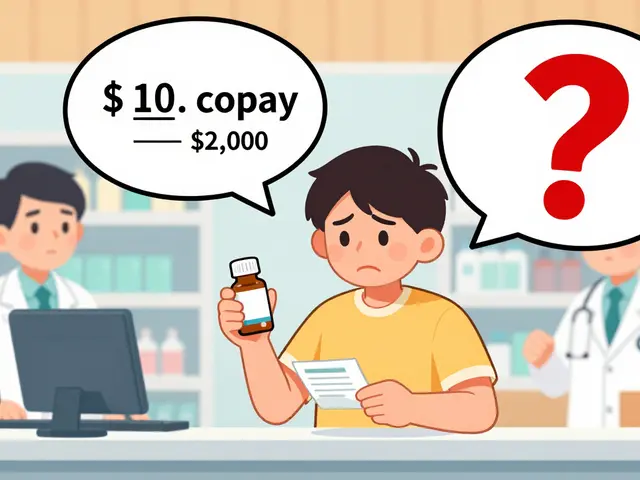
Most people get their prescriptions filled every 30 days. That’s four trips a year. But a 90-day supply? That’s just four trips a year. Less time in the pharmacy, less chance of forgetting, and fewer missed doses. Studies show people who get 90-day supplies are 27% more likely to take their meds as prescribed. That’s not a small boost-it’s the difference between your condition staying under control or flaring up. The math is simple: if you’re on a $100-a-month drug, a 30-day supply costs $100. A 90-day supply? Often $270 or less. That’s not a discount-it’s a 30% drop in out-of-pocket costs per month. For generics, it’s even better. Walmart, for example, charges $10 for a 90-day supply of common generic meds like metformin or lisinopril. That’s $3.33 a month. You’re not just saving time-you’re saving hundreds a year.Which Medications Qualify?
Not every drug is eligible. 90-day supplies are meant for maintenance medications-drugs you take daily for long-term conditions. Think:- High blood pressure (lisinopril, amlodipine)
- Diabetes (metformin, glimepiride)
- Cholesterol (atorvastatin, rosuvastatin)
- Depression and anxiety (sertraline, escitalopram)
- Thyroid (levothyroxine)
Drugs you take for a week or two? Not eligible. Antibiotics, painkillers after surgery, or short-term steroids don’t count. Even some drugs like oral contraceptives might only be available as 84-day supplies (three packs), but they still count as 90-day prescriptions under most plans.
Specialty drugs-like those for MS, rheumatoid arthritis, or cancer-are trickier. Most plans require you to fill a 30-day supply three times before you can switch to 90 days. That’s a rule, not a suggestion.
How to Get Started: 4 Simple Steps
Step 1: Check your insurance planLog into your insurer’s website or call the number on your card. Ask: “Do you offer 90-day supplies for maintenance meds?” Look for programs like Cigna 90 NowSM, Express Scripts, or CVS Caremark Mail Service. Medicare Part D plans must offer this option. Medicare Advantage plans sometimes go even further-Aetna, for example, offers 100-day supplies for its members. Step 2: Confirm your meds qualify
Open your medication list. Are you taking any of the maintenance drugs listed above? If yes, you’re likely eligible. If you’re unsure, call your pharmacy. They can tell you in seconds whether your prescription fits the criteria. Step 3: Talk to your doctor
This is where most people get stuck. Your doctor might default to writing a 30-day script. You need to ask for a 90-day supply. Say this: “I’d like to switch to a 90-day supply to make refills easier and save money. Is that possible?” Most doctors say yes. If they hesitate, mention that studies show better adherence with longer supplies. If they’re still unsure, ask them to check your insurer’s guidelines-they’re usually online. Step 4: Choose how you’ll get it
You have two main options:
- Mail order: Use your insurer’s mail pharmacy (like Express Scripts or CVS Caremark). You’ll get your meds delivered in 7-10 business days. This works best if you’re on a regular schedule and don’t need meds urgently.
- Pharmacy pickup: Some retail chains like Walmart, CVS, and Walgreens offer 90-day fills at the counter. Walmart is the cheapest for generics. Just bring your new prescription and ask for the 90-day option. No mail needed.
Important: If you’re on Cigna 90 NowSM, you can’t just go to any pharmacy. You must use one in their network. Check their website first. Same goes for Express Scripts-only certain pharmacies are approved.
What Could Go Wrong (And How to Fix It)
You might hit a snag. Here’s what to expect:- Your doctor won’t write a 90-day script. Don’t take no for an answer. Ask if they can use an electronic system to send it to your mail pharmacy. Many insurers have tools that make this easy for doctors. Or ask the pharmacy to call the doctor on your behalf.
- Your pharmacy says it’s not allowed. Double-check your plan. Some states block 90-day programs-California, Minnesota, New Hampshire, Texas, and Washington have restrictions. If you live there, mail order might be your only option.
- You’re on a specialty drug. You’ll need three 30-day fills first. Keep the receipts. Once you’ve done that, call your pharmacy and ask to switch.
- The cost is higher than expected. Check your tier. Brand-name drugs cost more than generics. If you’re paying $40 for a 90-day supply, ask if a generic version exists. If it does, your doctor can switch you.
What to Do After You Get Your 90-Day Supply
Once you have it, set up reminders. Most mail-order pharmacies send texts or emails when your refill is due. Sign up for them. Use your insurer’s app-Cigna, CVS, and Express Scripts all have dashboards where you can track your meds, reorder, and see your spending. Also, keep your original 30-day script until your 90-day supply arrives. Don’t run out. If you’re switching from retail to mail, give yourself a 10-day buffer. That way, you never go without.
Who Can’t Use This? (And What They Can Do)
Medicare and Medicaid beneficiaries in some states can’t use certain 90-day programs. If you’re in California or Texas, your options are limited. But you can still get 90-day supplies through mail-order pharmacies approved by Medicare Part D. Call 1-800-MEDICARE to ask which ones are available in your area. If you’re uninsured, Walmart, Target, and Costco offer ultra-low prices on generics. A 90-day supply of metformin? $10. That’s cheaper than most insurance copays.Final Thought: It’s Not About Convenience-It’s About Your Health
Skipping doses because you forgot to refill? That’s not laziness. It’s a system failure. The pharmacy system was built for 30-day fills. But your body doesn’t care about that. It needs consistency. A 90-day supply removes the friction. Less stress. Fewer missed days. Better control. And yes-less time in the parking lot of the pharmacy. You don’t need to be a medical expert to ask for this. You just need to know it’s an option. And now you do.Can I get a 90-day supply for any medication?
No. Only maintenance medications for chronic conditions qualify-like those for high blood pressure, diabetes, cholesterol, or depression. Short-term drugs like antibiotics, painkillers, or steroids don’t qualify. Specialty drugs usually require three 30-day fills before you can switch to 90 days.
Do I need a new prescription for a 90-day supply?
Yes. Your doctor must write a new prescription for 90 days. You can’t just ask the pharmacy to extend your existing 30-day script. The prescription must specify the quantity (e.g., 90 tablets) and days’ supply (90 days). Most doctors can send this electronically to a mail pharmacy or your local pharmacy.
Is a 90-day supply cheaper than three 30-day fills?
Almost always. Even if your copay is the same per fill, insurers often lower the cost for 90-day supplies. For example, a 30-day generic might cost $15, so three fills would be $45. A 90-day supply might cost $25-$30. Walmart offers many generics at $10 for 90 days. You’re saving money and time.
Can I use my local pharmacy for a 90-day supply?
Yes-if your plan allows it. Some insurers like Cigna restrict 90-day fills to select network pharmacies. Others, like Walmart, let you get it right at the counter. Check your plan’s website or call customer service. If your local pharmacy says no, ask if they can order it through your insurer’s mail service.
What if I live in a state that doesn’t allow 90-day supplies?
States like California, Minnesota, New Hampshire, Texas, and Washington have restrictions on certain 90-day programs. But Medicare Part D plans still offer mail-order 90-day supplies in these states. Call 1-800-MEDICARE to find approved pharmacies. If you’re uninsured, pharmacies like Walmart and Costco still offer low-cost generic 90-day supplies regardless of your state.






Freddy King
Let’s be real-the 90-day supply thing is just pharmacy logistics dressed up as a health hack. You’re not ‘saving money,’ you’re just shifting the cost structure to bulk purchasing. The 27% adherence boost? Correlation isn’t causation. People who care enough to ask for 90-day scripts are probably the same ones who already take their meds. The system rewards the conscientious, not the struggling.
And don’t get me started on Walmart’s $10 metformin. That’s not a discount-it’s a subsidy. The real cost is hidden in your premiums. You think you’re winning? You’re just not seeing the full balance sheet.
Also, ‘maintenance meds’ is such a corporate euphemism. It makes chronic illness sound like a subscription service. You’re not maintaining, you’re surviving. But hey, if it gets you out of the parking lot faster, I guess that’s progress.
Jayanta Boruah
It is imperative to acknowledge that the structural inefficiencies inherent in the current pharmaceutical distribution model necessitate systemic reform rather than individual workaround strategies. The notion that 90-day prescriptions constitute a panacea is, in fact, a fallacy predicated on the assumption that access to healthcare is uniformly equitable, which is demonstrably untrue. In jurisdictions where regulatory frameworks prohibit extended supply dispensing, such as California and Texas, the proposed methodology is not merely inconvenient-it is institutionally exclusionary.
Furthermore, the economic rationale presented is predicated upon the assumption of generic drug availability, which ignores the reality of formulary restrictions and tiered pricing architectures. The assertion that ‘you’re saving hundreds a year’ is statistically misleading without controlling for income stratification, insurance type, and geographic disparities in pharmaceutical pricing. A more rigorous approach would involve policy-level intervention, not consumer-side optimization.
James Roberts
Okay, but… did anyone else notice how the post literally says ‘you just need to know how to ask’ like it’s a magic spell? You’re telling people with depression to ‘just ask their doctor’ like it’s not a 3-hour wait, 3 missed appointments, and a 15-minute consult where the doctor is already halfway out the door?
Also, mail-order pharmacies? Try calling Express Scripts when your meds are late. You’ll be on hold for 47 minutes while a bot asks you if you’re ‘still experiencing your condition.’
And don’t get me started on the ‘Walmart $10’ thing. Yeah, for metformin. What about the 12 other pills you take? Those aren’t on the $4 list. You’re just trading one grind for another. But hey-at least you’re not in the pharmacy line. 🙃
Danielle Gerrish
I just want to say-I’ve been on 90-day supplies for my thyroid and Zoloft for 5 years now, and it changed my LIFE. Not because it’s ‘convenient’-but because I stopped having panic attacks every time my pill bottle ran out. I’d forget. I’d be traveling. I’d be in a bad headspace and just… not refill. And then? The crash. The dizziness. The anxiety spiral. It was a cycle.
Switching to 90 days meant I didn’t have to think about it. I got a box in the mail. I opened it. I took it. No guilt. No stress. No ‘I’ll do it tomorrow.’
It’s not about money. It’s about mental space. And if you’re telling someone with chronic illness to ‘just ask’-you have no idea how exhausting that is. I cried the first time my doctor said yes. I’m not proud of that. But I’m proud of this. So thank you for this post. I needed to hear it again.
Liam Crean
My mom’s on 90-day supplies for her blood pressure meds. She’s 72. She doesn’t use a phone. Doesn’t have email. The mail-order system? She hates it. She’d rather drive 20 minutes to CVS and talk to Brenda behind the counter who remembers her name.
So she gets it at the pharmacy. No mail. No app. Just walks in, hands over the script, and walks out with 90 pills. Cost? Same as mail. No hassle.
Point is: it’s not one-size-fits-all. Some people need convenience. Others need human contact. Both are valid. Just because you don’t like waiting in line doesn’t mean everyone else should be forced into a system they hate.
madison winter
Let’s be honest-the entire post reads like a pharmaceutical industry marketing pamphlet disguised as ‘helpful advice.’
Who benefits? The insurers. The mail-order pharmacies. The corporations that profit from bulk dispensing and reduced customer service overhead.
Not you. Not the patient. You’re just being optimized. And the ‘studies show’ thing? Always from the same 3 studies funded by Express Scripts and CVS Caremark.
It’s not about health. It’s about efficiency. And efficiency is code for ‘we don’t want to deal with you anymore.’
Ellen Spiers
The article’s linguistic construction is syntactically sound, yet its underlying assumptions are empirically tenuous. The conflation of adherence with clinical outcomes is a well-documented methodological flaw in pharmaceutical literature. Furthermore, the assertion that 90-day supplies reduce out-of-pocket costs presumes uniform formulary alignment, which is not the case across Medicare Part D plans, particularly in tiered formularies where brand-name agents are subject to higher cost-sharing.
Additionally, the omission of copay accumulator programs and manufacturer coupons-both of which can render 90-day supplies financially disadvantageous-is a significant oversight. The claim that ‘Walmart offers $10 metformin’ is contextually incomplete; it applies only to cash-paying patients without insurance, a demographic that constitutes less than 12% of U.S. prescription users. The narrative is thus both statistically misleading and socially exclusionary.
Marie Crick
People who don’t refill their meds are lazy. Period. You think a 90-day supply fixes that? No. It just hides it. If you can’t be responsible for your own health, don’t blame the system. Get your act together. Or stop taking the pills. Your body doesn’t care how convenient it is.
John Cena
My sister got her 90-day supply of sertraline through mail-order last year. She forgot to renew her subscription, and the mail stopped. She didn’t realize until she ran out. Had a rough week. Now she has a reminder on her phone. But she still hates the mail system. So she switched back to CVS. They let her get 90 days at the counter now. No one told her that was an option. That’s the real problem-not the 90-day thing. It’s the lack of clear, simple info.
Just say: ‘Ask your pharmacy. Ask your doctor. Don’t assume you can’t.’ That’s all.
Tommy Chapman
Oh, so now we’re supposed to be grateful because Walmart gives us $10 pills? What about the 50 other drugs that cost $400? This whole thing is a scam to get people to rely on big-box pharmacies and mail-order monopolies. You think they care about your health? They care about your data, your refill patterns, your insurance info. They’re not helping you-they’re profiling you.
And if you’re in Texas? Good luck. They don’t want you to have 90-day supplies because they want you to keep coming back. It’s not about your health. It’s about control.
Greg Scott
Just got my 90-day supply of lisinopril last week. Took 10 minutes at the pharmacy. No mail. No fuss. Just asked the pharmacist. She said, ‘Oh, yeah, we do that.’
Turns out, you don’t need a PhD to get this. You just need to ask. And maybe bring your insurance card.
Also, Walmart’s $10 metformin? Still real. Still cheaper than my copay. I’m not complaining.
Scott Dunne
The suggestion that 90-day prescriptions constitute a panacea for medication non-adherence is, in my estimation, both naive and patronizing. The Irish healthcare system, for instance, does not permit extended-supply dispensing for chronic conditions without prior clinical review. The notion that ‘you just need to ask’ presumes a level of agency and systemic access that is not universally available.
Furthermore, the economic argument is flawed. In jurisdictions with universal healthcare, the marginal cost of a 90-day supply is negligible. The real issue is not cost-it is access to prescriber buy-in, which remains inconsistent across primary care networks. This is not a consumer problem. It is a governance problem.
James Roberts
Wait, so you’re telling me that if I’m on 12 meds and only 3 are eligible for 90-day, I’m supposed to juggle 3 different refill systems? Mail for one. CVS for another. And the rest? 30-day, because ‘specialty drug.’
And then the pharmacy calls me because my mail-order Zoloft is ‘delayed.’
So now I have to call 3 different places, check 3 different apps, and pray I don’t run out of the one drug my insurance won’t cover in bulk?
Yeah. I’ll stick with my 30-day schedule. At least I know where I stand.