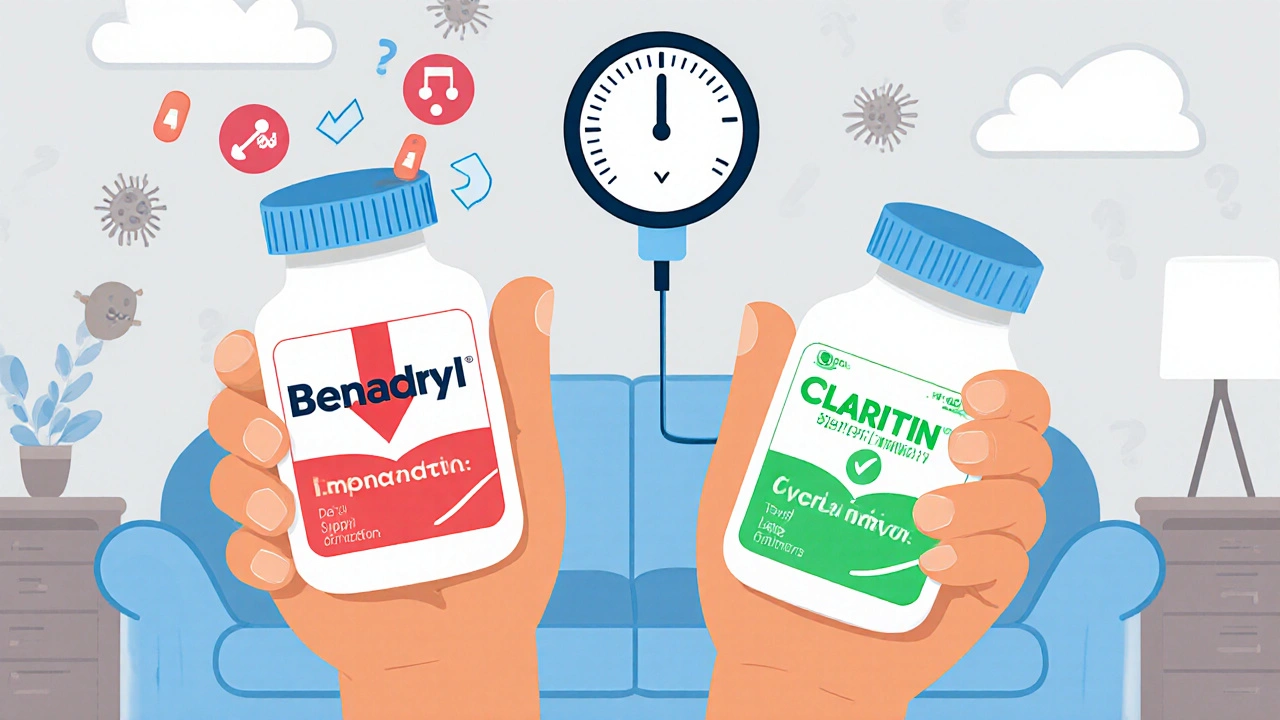
Antihistamines and Blood Pressure: What You Need to Know for Safe Use
Not all antihistamines affect blood pressure the same way. Learn which ones are safe for high blood pressure, which to avoid, and how to monitor your readings safely.

When you’re dealing with runny nose, itchy eyes, or sneezing that won’t quit, loratadine, a second-generation antihistamine used to treat allergic reactions. Also known as Claritin, it’s one of the most widely used over-the-counter allergy meds in the U.S. and Europe—taken by millions every day without drowsiness. Unlike older antihistamines like diphenhydramine (Benadryl), loratadine doesn’t cross the blood-brain barrier easily, which is why most people stay alert while using it. It’s not a cure, but it blocks the histamine your body releases during an allergic reaction, calming symptoms fast.
It works for seasonal allergies, pet dander, dust mites, and even some skin reactions like hives. But it won’t help with nasal congestion on its own—that’s why some versions combine it with pseudoephedrine. If you’ve tried other allergy pills that made you sleepy or foggy, loratadine might be the switch you’ve been looking for. It’s also used off-label for mild chronic urticaria and is often recommended for kids over two years old, though always under a doctor’s guidance.
What makes loratadine stand out isn’t just its lack of drowsiness—it’s how often it shows up in real-world discussions about medication safety, interactions, and alternatives. You’ll find posts here that compare it to cetirizine (Zyrtec) and fexofenadine (Allegra), look at how it behaves with common drugs like amoxicillin or antacids, and even warn about rare but serious side effects like liver enzyme changes. Some users report it stops working after months of daily use—others swear by it for years. The science is clear on its safety profile, but real experience? That’s where the real insights live.
And while loratadine is available without a prescription, it’s not always the best choice. If your allergies are tied to asthma, chronic sinus issues, or immune disorders, you might need something more targeted. That’s why our collection includes posts on how antihistamines interact with other meds, what to do when symptoms return after stopping treatment, and when to consider prescription alternatives. You’ll also find guidance on visual dosing aids for kids, how protein-rich meals can affect absorption, and how to spot if what you think is an allergy is actually something else—like a side effect from another drug.
Whether you’re new to allergy meds or have been using loratadine for years, this collection gives you the practical, no-fluff facts you won’t get from a pharmacy shelf label. You’ll see how it fits into broader health patterns—from senior medication safety to drug shortages and interactions with diabetes treatments. No marketing. No hype. Just what works, what doesn’t, and what you need to watch for.
Not all antihistamines affect blood pressure the same way. Learn which ones are safe for high blood pressure, which to avoid, and how to monitor your readings safely.