
Quick Summary
- Communication gaps between patients and providers lead to dangerous medication errors.
- Using family members for translation increases error risks by up to 25%.
- Federal law guarantees free professional interpreter services for LEP patients.
- The teach-back method ensures you understand how to take your medicine correctly.
- Technology tools exist, but professional human interpretation remains the gold standard.
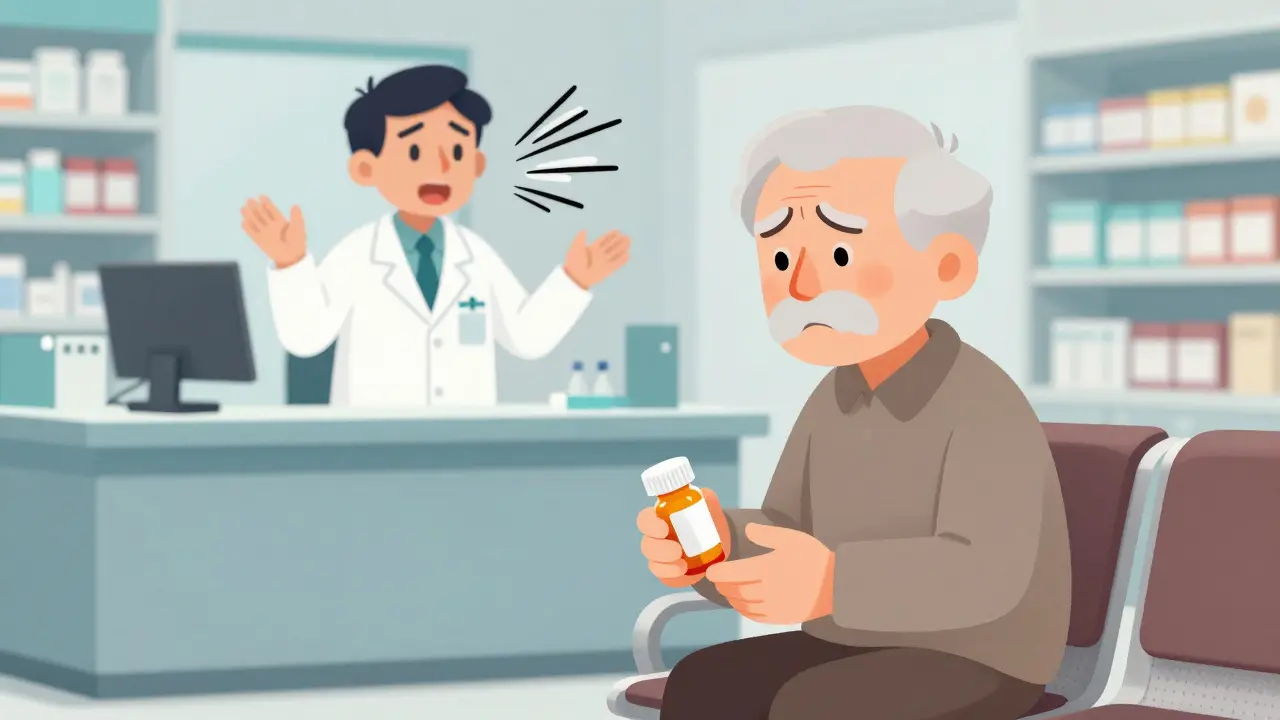
You are sitting in a pharmacy waiting room. You don't speak much English, and neither does the pharmacist. You hand over a prescription for insulin. The pharmacist speaks quickly. You nod, thinking you understand. Later, you take too much. You end up in the hospital. This isn't a hypothetical horror story; it happened to a woman documented on Reddit recently. Her confusion cost her days in a hospital bed.
This reality highlights a critical issue in modern healthcare. When medication safety collides with language barriers, lives are at risk. Approximately 50% of adults with Limited English Proficiency face at least one major communication hurdle in healthcare within three years. That is half the population. If you are one of these patients, knowing your rights and how to navigate the system is vital.
The Hidden Cost of Miscommunication
Many people think a misunderstanding is just an inconvenience. In healthcare, it is often a safety hazard. Studies show that adverse drug events occur at twice the rate for children from families with Limited English Proficiency compared to those who speak English proficiently. We are talking about real physical harm.
Limited English Proficiency (LEP) is defined as an individual whose primary language is not English, resulting in a functional limitation in speaking, reading, writing, or understanding English.
A report by the Children's Hospital of Philadelphia found that medication-related errors are significantly higher in these populations. One study cited by the Agency for Healthcare Research and Quality noted that irreparable patient harm due to communication failures costs the healthcare system around $1.7 billion annually. This money represents pain, suffering, and lost trust.
Why does this happen? Often, it comes down to assumptions. Staff might assume you understand if you nod. You might nod just to be polite because you feel awkward asking for repetition. But when it involves dosage, frequency, and side effects, politeness can kill you.
Why Family Translation is Not Enough
A common instinct when you cannot speak English is to bring your spouse or child to translate. It feels natural. However, relying on family members introduces significant risks. According to resources from NCBI StatPearls, up to 25% of interpretations done by family members contain incorrect medical information.
Think about the dynamics. A child translating for a parent regarding sensitive health issues puts that burden on the child. They may lack the vocabulary for complex terms like 'hypotension' or 'contraindication.' They might accidentally skip details to protect you from bad news. Or, worse, they might misremember a specific number on the label.
| Method | Error Rate | Cost to Patient | Confidentiality |
|---|---|---|---|
| Professional Interpreter | Lowest | Free (covered by policy) | High |
| Family Member | ~25% | N/A | Variable |
| Translation App | Moderate | Varies | Private |
While apps are convenient, they struggle with context. A word like 'dropperful' might mean different volumes depending on the bottle. An app might not know that. A trained medical interpreter knows the standard measurements used in your region.

Know Your Legal Rights
You have protections under federal law that many people do not know about. The cornerstone of this protection is Title VI of the Civil Rights Act of 1964. This act states that anyone receiving federal funds must provide meaningful access to individuals with Limited English Proficiency.
This includes hospitals, clinics, and even pharmacies participating in Medicare or Medicaid programs. If a facility refuses to provide an interpreter, they may be violating federal law. Penalties for violations can reach up to $100,000 per incident according to the Office for Civil Rights. While you likely won't sue immediately, knowing this empowers you to ask assertively.
In addition to legal mandates, standards from The Joint Commission require organizations to identify language needs at intake. This means there should be a system where your preferred language is recorded before the doctor even walks into the room. If your chart shows "English" but you speak Spanish, that is a clerical error you should correct.
Tools and Resources for Better Safety
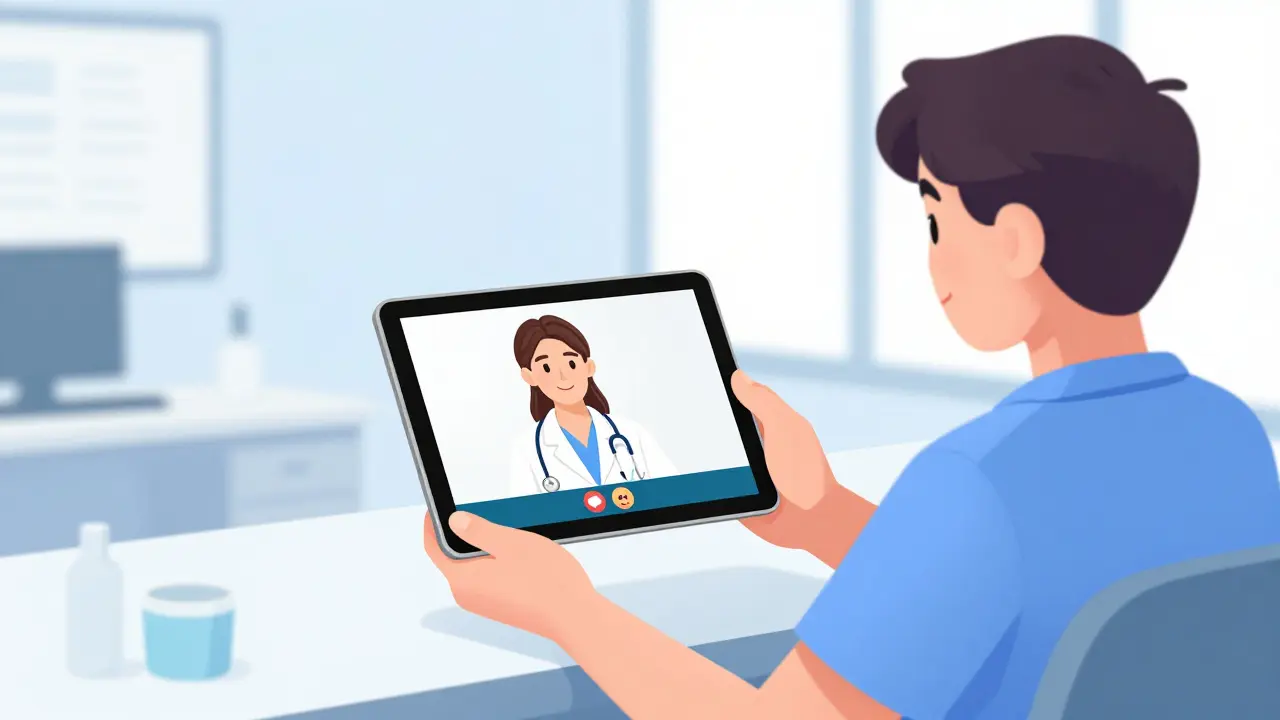
Healthcare is moving toward technology, but human connection still wins for safety. Video Remote Interpretation (VRI) has become more common. A 2023 University of Michigan Medicine study showed some hospitals are still lagging behind, with nearly 30% lacking online language services. However, if available, VRI connects you to a certified interpreter via tablet or phone instantly.
Pricing for these services varies. Telephone interpretation services charge roughly $3.50 to $5.00 per minute. Hospital-based interpreters can cost $50 to $100 per hour. Here is the key: as a patient, you typically should not pay for this. It is an operational expense for the clinic to ensure compliance and safety.
If you are managing chronic conditions, ask about Directly Observed Dosing is a protocol where a clinician watches you take your medicine to ensure the technique is correct. This intervention enhances accuracy even when language is a barrier. It removes the guesswork of whether you understood the written instructions.
Actionable Steps to Protect Yourself
So, what exactly do you do when you walk into a clinic? You need a strategy.
- Identify yourself early: Walk up to the front desk and state clearly, "I speak [Language]. I need an interpreter." Do not wait until you see the provider.
- Request written materials: Ask if there are translated versions of prescription labels. The National Healthcare Quality Report notes that many pharmacies still fail to provide non-English labels, but policies are improving. If they cannot print in your language, ask for a picture guide or visual aid.
- Use the Teach-Back Method: This is your biggest tool. After the explanation, say: "I want to make sure I understood. Please let me explain back to you how I will take this medicine." If they correct you, you caught a mistake before leaving the office.
- Check the label: Before leaving the counter, check the medication name. If you don't know the English name, verify it with the interpreter using your native tongue.
- Bring a notebook: Write down the dose and time in your own language. "One pill after breakfast" becomes "Una pastilla después del desayuno." Visual cues reinforce memory.
Dr. Urmimala Sarkar, a lead researcher on pediatric disparities, emphasizes that from an equity standpoint, these disparities are unacceptable. She calls for safeguards. As a patient, you become part of that safeguard by actively advocating for your communication needs.
Handling Resistance
Sometimes staff will push back. They might say, "We don't have time," or "Just speak slowly." It is exhausting. But remember that 37% of LEP adults report having fewer than half their visits with a language-concordant provider. You are not alone in facing this friction.
If a small pharmacy insists on using family members, ask to speak to a manager or the pharmacist-in-charge. Explain that for safety reasons, you require a professional. Sometimes citing the law helps. Other times, simply being firm works. If you continue to face refusal, document the date, location, and staff name. File a complaint with the state Department of Health or the federal Office for Civil Rights. These complaints drive systemic change.
Do I have to pay for a medical interpreter?
Generally, no. Under federal laws like Title VI of the Civil Rights Act, covered healthcare providers must offer language assistance services at no cost to the patient. Clinics funded by Medicare or Medicaid are required to absorb these costs to ensure equitable care.
Can I use my child to translate prescriptions?
It is strongly discouraged. Children lack medical vocabulary and may introduce errors or emotional stress. Studies indicate interpretation by untrained personnel leads to higher medication error rates. Always ask for a professional interpreter.
What if the pharmacy cannot print labels in my language?
Ask for visual aids or translated information packets. Some systems cannot translate terms like 'dropperful,' so request a demonstration of the device usage. You also have the right to file a complaint if basic safety needs aren't met despite availability.
How can I be sure I understood the instructions?
Use the Teach-Back method. Repeat the instructions back to the provider in your own words. If you cannot explain it correctly, ask them to try explaining it again differently until you are confident.
Are there apps I can use instead of humans?
Translation apps are useful for quick phrases, but for prescribing life-saving medication, professional interpretation is safer. Apps miss cultural context and medical nuance, which can lead to dosage confusion.



Rohan Kumar
I guess we are supposed to trust random apps for medicines now 😅. Everyone nods and then ends up dead 🙄. It is hilarious how systems fail people daily 😤.
Monique Ball
People really do not understand how dangerous this situation is!
It happens because everyone assumes the other person gets it!!
You nod your head because you feel awkward asking again 😢.
But that nodding does not mean you actually know anything!!
Sometimes you miss a tiny detail about dosage timing 🚑.
Then you end up in a hospital bed feeling terrible 😭.
Family members try their best to help us translate words ❤️.
But kids do not have the medical vocabulary we need 🚫.
They might skip the bad parts to save us feelings 😣.
Professional interpreters are there specifically for safety reasons 💪.
Federal law protects our right to get proper help freely 📜.
Clinics lose money if they ignore these basic rules 💸.
We need to demand better care without being afraid of staff 🔥.
Using the teach-back method saves lives every single day ⭐.
Just ask them to explain it back to you clearly ✅.
Thank you for sharing this information everyone 🌟.
gina macabuhay
It is unacceptable that facilities continue to cut corners on patient safety protocols.
We cannot allow negligence to persist under the guise of limited resources.
Every individual deserves accurate communication regarding their health treatment plan.
Austin Oguche
This issue highlights significant gaps in healthcare delivery systems globally.
Many patients suffer silently due to lack of support structures.
Debra Brigman
The narrative of silence often masks catastrophic errors lurking beneath polite smiles.
Miscommunication acts as a venomous serpent coiling within the sterile walls of hospitals.
tyler lamarre
Nobody ever reads the fine print until something explodes.
Tony Yorke
That is the reality of the situation most people face daily.
Sabrina Herciu
You must request professional assistance immediately!!!
Do not let family members guess on dosage amounts!!
Everyone needs to know the laws!!
Please read the guidelines thoroughly.....
Jeannette Kwiatkowski Kwiatkowski
most clinics just dont have the cash to hire good people tho.
they rely on volunteers who dont know medical terms.
its a mess sometimes but i get why they do it.
Poppy Jackson
The human cost of these errors is staggering beyond measure.
Lives are lost unnecessarily when simple protocols are ignored.
Sophie Hallam
We should strive for better systems to protect vulnerable patients in communities everywhere.
Aaron Olney
i went to the hospitel and they made me wait forever for my script.
the guy didnt even speak spanish so i had to guess what he said.
nearly ended up in the ICU again bcuz of it!! scary stuff man.
Philip Wynkoop
Education helps everyone stay safe from mistakes 🙂.
Good info here 👍.