You open the medicine cabinet and see a bottle that used to cost a fortune. Suddenly, the label has changed, and the price tag looks unrecognizably lower. This isn't magic; it is the result of something called patent expiration. When a company loses its exclusive right to sell a specific medication, the market dynamics shift instantly. Understanding this process helps you see why your pharmacy bill fluctuates and what determines how much you pay.
The transition from monopoly to competition is the engine behind these price cuts. Before expiration, the original manufacturer holds a legal monopoly. They set the price, often high enough to recoup research costs and generate profit. Once that clock ticks down, other manufacturers can step in. They produce versions known as generic drugs or biosimilars depending on the complexity of the medicine. This shift does not happen overnight, but the trajectory is clear.
The Mechanics of Price Erosion
When the protection ends, the pricing model flips. A single competitor entering the market creates pressure, but it is the crowd that drives the hammer home. Research shows that the first generic entrant typically reduces prices by about 15% to 20%. It is noticeable, but it feels incomplete. The real financial relief arrives when more players join the game.
Consider the data from a major study analyzing 505 drugs across eight high-income nations. In the United States, prices fell roughly 32% in the first year alone. Over eight years, that number climbed to an 82% drop compared to the brand-name peak. Other countries saw different results, but the trend remained consistent. Competition is the variable that matters most. If ten companies are fighting for shelf space, none can keep prices high without losing customers.
This pattern follows a curve rather than a straight line. You might see a small dip initially, then a rapid plunge as supply increases. For standard small molecule drugs, this process moves faster. Complex biologics take longer because the manufacturing science is harder to replicate. That distinction matters if you rely on injectable medications or treatments for autoimmune conditions.
The Role of Regulatory Frameworks
Rules determine how quickly generics reach the counter. In the US, the Hatch-Waxman Act, passed in 1984, established the modern framework for this process. It balanced the need for innovation with the demand for affordable access. Without this law, generic approvals could be delayed indefinitely through litigation.
However, regulations vary globally. In Switzerland, price declines were more modest, reaching only 18% over the same period compared to the massive drops in the US. These differences stem from reimbursement policies and how health systems negotiate with manufacturers. In Europe, centralized negotiations often secure lower prices early on, so the relative drop after patent loss is smaller but still present. In the US, private insurance plans and Medicare Part D programs play a huge role in whether those savings actually reach the patient at the register.
Regulatory bodies also manage approval timelines. The FDA approves hundreds of generics every year, aiming to speed up this process. Yet, complex generics involving difficult formulations face longer review times. Simple tablets might get approved in ten months, while intricate delivery systems can wait 24 months or more. Every month of delay means higher costs stay on the market longer.
| Region | Price Reduction | Typical Market Behavior |
|---|---|---|
| United States | 82% | Rapid initial drop, high volume competition |
| Australia | 64% | Moderate decline, government pricing schemes |
| United Kingdom | 60% | NHS negotiation leverage |
| Switzerland | 18% | Slower erosion, limited generic uptake |
Why Some Prices Remain High
You might wonder why some blockbuster drugs do not follow the rules. The phenomenon is often called evergreening. Companies file secondary patents on minor changes to extend their exclusivity window. A report highlighted that nearly 80% of new patents filed were not for new drugs, but extensions of existing products.
Take adalimumab, commonly known as Humira. Despite the core patent expiring earlier, the company maintained near-monopoly pricing for seven years afterward using a "patent thicket" of over 130 secondary patents. Competition eventually arrived in 2023 when biosimilar alternatives like Amjevita entered the market. Even then, rebate structures complicated the price drop for some patients. Insurance rebates can sometimes hide the true discount, making the savings less visible on your wallet even if the wholesale price dropped.
Newer classes of drugs like semaglutide, found in weight loss medications, show similar patterns. By 2026, analysts expect these to accumulate significant patent layers. While the base compound patent may expire, the formulation patents push effective protection further out. This delays the moment when you can grab a cheaper alternative off the shelf.
Impact on Patient Wallets
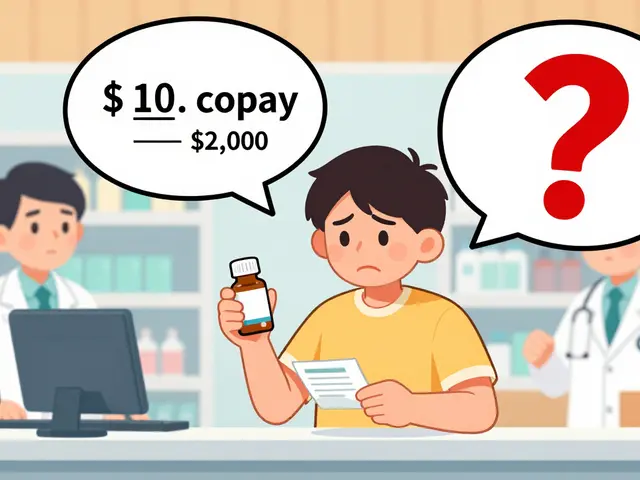
The theoretical economics translate to real money for families. Patients switching to generics often see their monthly costs plummet. One instance involved patients paying $850 per month for a brand-name blood thinner before generic entry. After expiration, the generic version cost about $10. That is not just a discount; it is the difference between taking medication or skipping doses.
Insurance formularies influence who benefits most. Some plans prefer to steer you toward generics with low copays, while others might lock you into high-cost specialty tiers due to contract details. A survey indicated that while most insured adults saw lower costs, a portion faced delays due to formulary changes. Access depends on understanding both the market availability and your insurance plan's incentives.
For doctors and pharmacists, substitution laws dictate daily operations. Most states allow automatic substitution of equivalent generics unless a doctor specifies otherwise. However, for biologics, the rules are stricter. Pharmacists must verify therapeutic equivalence before swapping, which adds a layer of administrative work but ensures safety remains intact during the transition.
Future Outlook and Economic Trends
Looking ahead, the market for generic drugs continues to expand. Projections suggest billions in value added annually as more patents hit expiration dates. Governments are watching closely. Legislation like the Inflation Reduction Act introduces negotiation mechanisms that could force price reductions before patents fully expire in certain cases. Meanwhile, global agencies like the EMA are pushing for faster biosimilar adoption targets.
Industry strategies are evolving too. Rather than fighting generic entry outright, some originator companies now launch authorized generics themselves to capture some of the lower-priced market share. This creates a hybrid environment where multiple branded options exist alongside traditional generics. Your prescription might come from one of five different manufacturers, all offering slight variations in packaging or supply chains.
The fundamental rule remains unchanged: competition lowers prices. Whether through a sudden drop after patent expiry or a gradual squeeze via regulatory caps, the path leads toward accessibility. Monitoring these cycles helps you time medical decisions or understand why your co-pay changed unexpectedly this month.
Frequently Asked Questions
How soon do prices drop after a patent expires?
Prices usually start dropping within the first few months once the first generic competitor enters the market. The average generic entry occurs around 30 months post-patent in the US, though this varies by drug type.
Are generic drugs exactly the same as brand name drugs?
Yes, they contain the same active ingredients in the same strength. They must demonstrate bioequivalence to the brand name product to receive approval from regulators like the FDA.
Why do some drugs stay expensive even after patents end?
Complex molecules like biologics have fewer manufacturers willing to enter the market. Additionally, secondary patents can legally extend exclusivity beyond the original expiration date.
Does insurance affect how much I save on generics?
Absolutely. Insurance formularies often prioritize generics with lower copays, maximizing savings. However, rebate agreements between insurers and manufacturers can sometimes obscure the true price.
What is a patent thicket in pharmaceuticals?
It refers to a network of secondary patents filed on modifications of a drug. These overlap with each other to block competitors from launching generic versions, extending market exclusivity.