
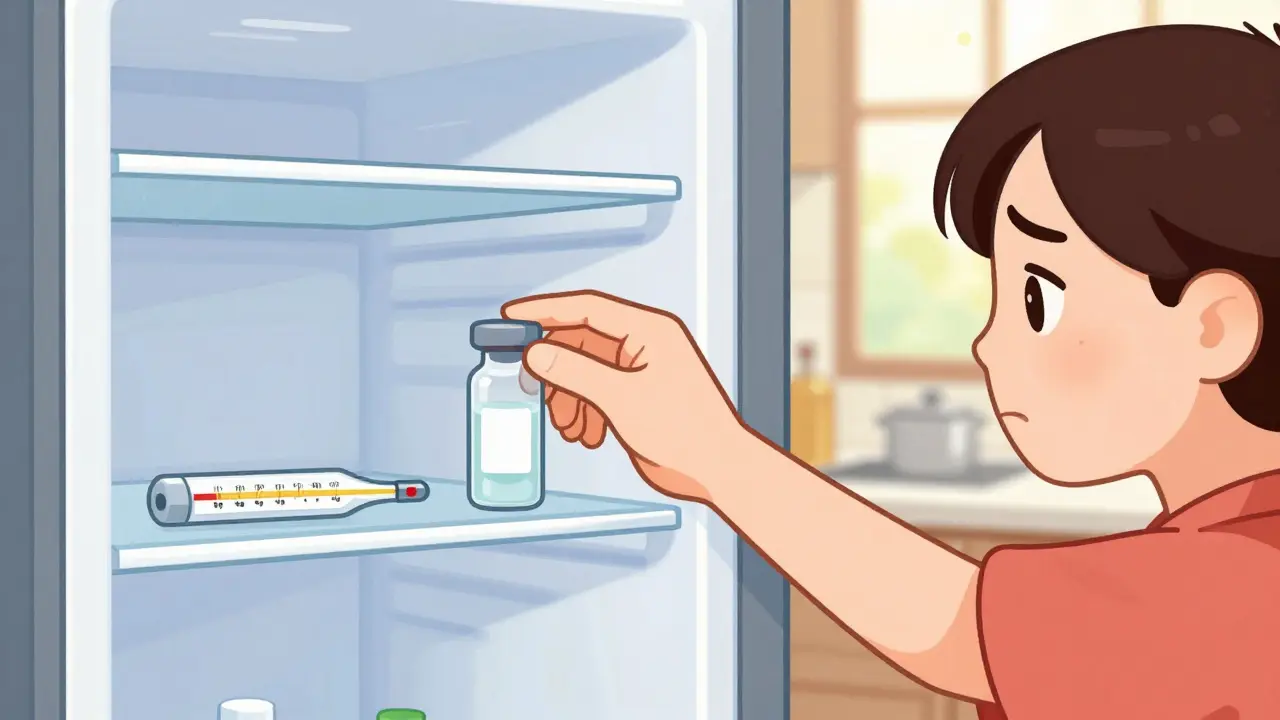
Imagine taking your insulin shot only to find out later that it was stored in the fridge door, where temperatures can swing wildly. That small mistake could mean your medication isn’t working as it should. Proper storage of medications requiring refrigeration isn’t just a recommendation-it’s a safety issue. This article breaks down exactly how to store these critical drugs at home to keep them effective and safe.
Why the 2°C to 8°C Range is Non-Negotiable
The U.S. Pharmacopeia (USP) Chapter <1079> and FDA guidelines require refrigerated medications to stay between 2°C and 8°C (36°F to 46°F). This narrow range prevents degradation while avoiding freezing. A 2023 GoodRx study showed some biologics lose 50% potency after just 24 hours at 25°C. Even brief exposure outside this range can compromise effectiveness. For example, insulin exposed to temperatures above 37°C for 48 hours loses 30-40% potency, leading to dangerous blood glucose fluctuations. The FDA has documented cases where improperly stored insulin caused diabetic ketoacidosis requiring hospitalization.
Household Fridge Mistakes You Might Be Making
Most people store refrigerated meds in the same fridge as food, but that’s risky. Household fridges often have temperature variations. Door shelves average 11.3°C-way above the safe range. Back shelves stay around 3.4°C, which is better. A 2022 study in the Journal of the American Pharmacists Association found that fridge doors are the warmest spots, with temperatures fluctuating by up to 6°C. Storing insulin in the door can lead to ineffective doses. Also, placing meds near the freezer compartment or in the crisper drawer can expose them to freezing temperatures. Once frozen, insulin is permanently damaged-thawing won’t restore it. A Reddit user on r/diabetes shared how their insulin pump reservoir failed after being left in a car at 85°F, causing blood sugar spikes to 450.
How to Check and Maintain Proper Temperatures
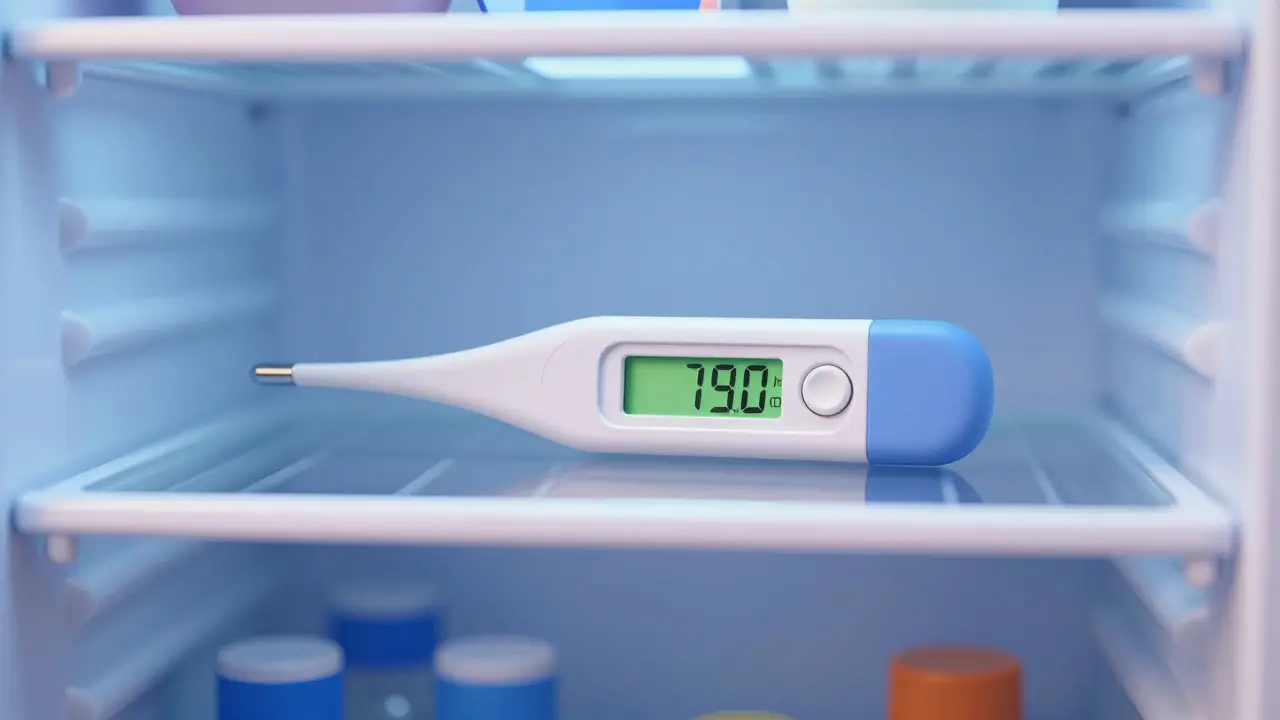
Don’t guess-use a digital thermometer. Place it in the center of the fridge, away from walls and doors. Check it daily. Many household fridges have temperature displays that aren’t accurate. The CDC recommends using a standalone thermometer with a data logger. For example, a $25 thermometer from Amazon can track minimum and maximum temperatures. Place medications on the middle shelf where temps are most stable. Avoid putting them in the door or near the freezer. If your fridge doesn’t maintain consistent temps, consider a dedicated medication fridge. Basic models like the Whynter FM-50G cost $150-$500 and maintain precise temperatures.
Storage Guidelines for Insulin, Vaccines, and Biologics
Not all refrigerated medications are the same. Insulin products require refrigeration until first use (2°C-8°C), then can stay at room temperature (up to 30°C) for 28-30 days. Vaccines like MMR must stay strictly between 2°C-8°C with no exceptions-once taken out, they can’t be returned to refrigeration. Biologics like Remicade® (infliximab) can be stored at up to 30°C for 6 months but must not exceed the expiration date. Always check the specific label. For example, Lantus® insulin must be stored below 30°C for no more than 28 days after opening. A 2023 Novo Nordisk bulletin confirmed newer insulin formulations can handle up to 37°C for 7 days, but always follow the manufacturer’s instructions.
| Medication Type | Refrigeration Before Use | After Opening | Room Temp Limit |
|---|---|---|---|
| Insulin | 2°C-8°C (36°F-46°F) | Room temperature | Up to 30°C for 28-30 days |
| Vaccines | Must stay refrigerated | Never at room temperature | Strictly 2°C-8°C |
| Biologics (e.g., Remicade®) | 2°C-8°C | Up to 30°C for 6 months | Do not exceed 30°C |
| Some Antibiotics | 2°C-8°C | Varies by type | Check label |
Travel Tips and Power Outage Solutions
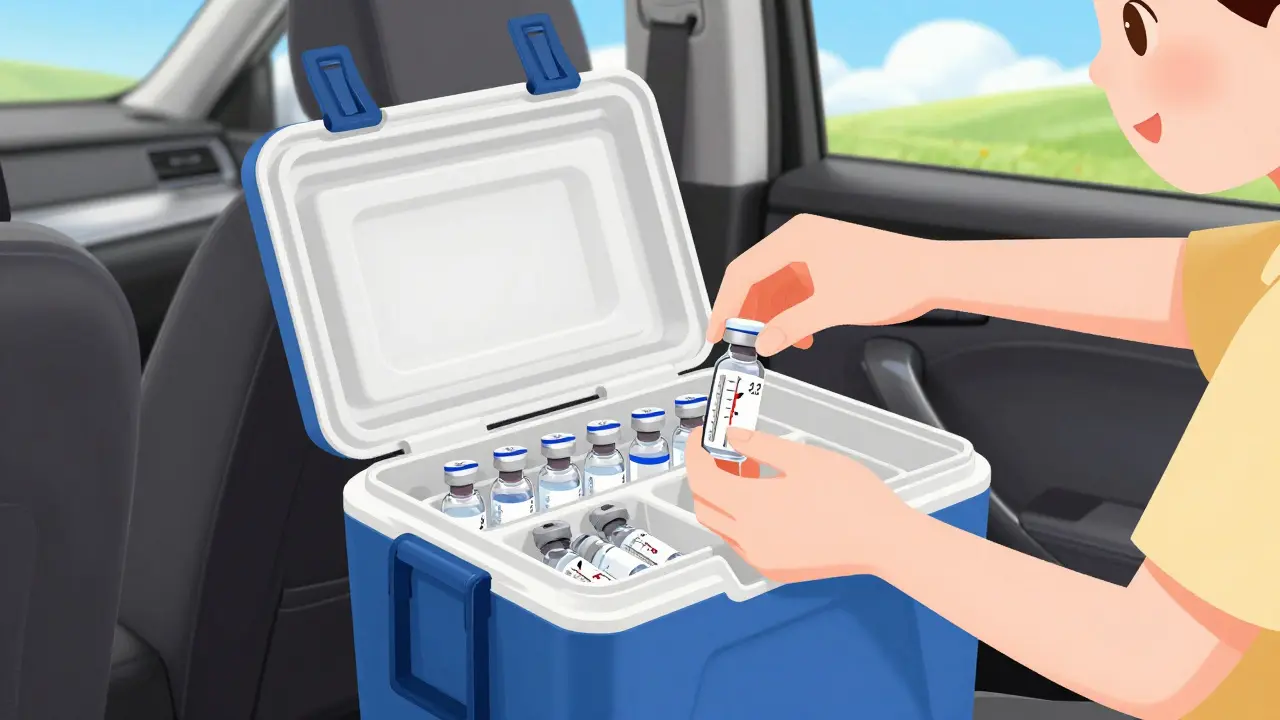
Traveling with refrigerated meds? Use insulated travel containers with phase-change materials. The TempAid MediCool maintains 2°C-8°C for 48 hours. For power outages, keep a backup cooler with ice packs. Never use dry ice-it can freeze medications. If you lose power for more than 4 hours, discard perishable meds unless you have a backup fridge. Keep a thermometer in your travel container. A 2022 UCSF study found patients who used validated travel containers had 92% fewer temperature excursions during trips. For longer trips, portable medical refrigerators like the Helmer iSeries can keep meds stable for days.
What to Do If Your Medication Gets Too Warm or Frozen
If insulin or biologics freeze, throw them away. Freezing destroys the molecular structure. If they get too warm, check the manufacturer’s guidelines. For example, some insulins can be used if exposed to high temps for less than 24 hours, but others can’t. When in doubt, contact your pharmacist. The FDA states any deviation from labeled storage conditions is an unapproved use. A 2021 FDA report documented a case where improperly stored insulin led to diabetic ketoacidosis requiring hospitalization. Better safe than sorry-when in doubt, get a new dose.
When to Contact Your Pharmacist
If you’re unsure about storage, reach out. Pharmacists are trained to advise on refrigeration needs. They can provide free thermometers or help you set up proper storage. Many pharmacies offer temperature monitoring services. For example, NeedyMeds distributes free medication thermometers to those in need. During a power outage, call your pharmacist for guidance on whether your meds are still safe. They’ll know the specific risks for your medication. A 2023 GoodRx survey found 62% of patients received unclear storage instructions from pharmacists-so always ask for clarification.
What happens if my insulin gets too warm?
If insulin is exposed to temperatures above 30°C for more than a few hours, it loses effectiveness. Signs include cloudiness or clumping. Discard it immediately-using degraded insulin can cause dangerous blood sugar spikes. Always check the manufacturer’s guidelines, but when in doubt, replace it.
Can I store vaccines in the freezer?
No. Freezing vaccines destroys their effectiveness. They must stay strictly between 2°C-8°C. Some vaccines, like MMR, can’t even be returned to refrigeration once taken out. Always follow the specific storage instructions on the label-never guess.
How do I check my fridge’s temperature accurately?
Use a standalone digital thermometer with a data logger. Place it in the center of the fridge, away from walls and doors. Check it daily. Household fridge displays are often inaccurate-relying on them is risky. The CDC recommends this method for reliable monitoring.
What should I do during a power outage?
Keep the fridge door closed to maintain cold air. If the outage lasts more than 4 hours, move refrigerated meds to a cooler with ice packs. Never use dry ice-it can freeze medications. For extended outages, contact your pharmacist for guidance on whether your meds are still safe to use.
Is it okay to leave refrigerated medications in a car?
Never. Cars heat up quickly-on a 25°C day, a car interior can reach 40°C within 30 minutes. Insulin left in a car for 2 hours at 85°F caused a user’s blood sugar to spike to 450. Always carry refrigerated meds in an insulated cooler when traveling.



lance black
Insulin storage is critical. Always check the fridge temp. Simple as that.
Johanna Pan
Proper storage isn't just a recommendation-it's a lifesaver.
I've learned that the hard way.
Always keep them in the middle shelf.
The door is a no-no.
Temperature swings can ruin your meds.
A good thermometer is worth the investment.
Trust me, it's better to be safe than sorry.
We all want our meds to work, right?
Let's look out for each other.
Kieran Griffiths
I've been storing my insulin in the back of the fridge for years.
It's the most stable spot.
Always check the temp with a separate thermometer.
The built-in ones are unreliable.
This is basic but crucial info.
Thanks for the reminder.
Lisa Scott
The middle shelf is a myth.
The real issue is that the FDA allows manufacturers to set arbitrary storage conditions.
They don't test real-world scenarios.
The '2-8°C' range is a joke.
I've seen studies showing that even at 10°C, the drugs are still effective.
This is all about profit.
They want you to buy new ones too often.
Don't fall for it.
Just keep them at room temp.
It's fine.
Carol Woulfe
The '2°C to 8°C' range is a gross oversimplification.
Real science requires precision.
The FDA's guidelines are outdated.
I've consulted peer-reviewed journals that show the actual safe range is narrower.
For example, 3°C to 5°C.
Anything outside this is dangerous.
Most people don't have the equipment to monitor this.
That's why so many medications fail.
It's a systemic failure.
The pharmaceutical industry is to blame.
They don't want you to know the truth.
Jenna Elliott
Storing meds in the fridge door is a bad idea.
Never do that.
Back shelf is the only place.
Temperature swings in door make meds useless.
Follow the rules.
No exceptions.
Gregory Rodriguez
Oh sure, because everyone has a perfectly calibrated fridge.
The '2-8°C' range is a nice theory but reality is messy.
My fridge's door is always 15°C.
I'm not buying a $500 fridge.
So yeah, just hope for the best.
Kate Gile
I always stored my meds in the fridge door, but now I know better.
Always check the temp with a separate thermometer.
So simple but so crucial.
Thanks for sharing!
Tehya Wilson
The importance of accurate temperature monitoring cannot be overstated.
Many household refrigerators fail to maintain consistent temperatures.
It is advisable to utilize a dedicated medical refrigerator for critical medications.
This ensures compliance with manufacturer specifications.
Failure to do so may result in compromised efficacy.
Patient safety must be prioritized above all else.
jan civil
I've been using a cheap thermometer from Amazon.
It works great.
$25 is worth it.
Always check the middle shelf.
Georgeana Chantie
We don't need a $500 fridge. That's ridiculous.
Most people can't afford it.
The real problem is the government and big pharma.
They want to make money off us.
Use ice packs if needed.
Simple solution. 🤦♀️
Laissa Peixoto
The concept of medication storage is more complex than it seems.
It's not just about temperature; it's about understanding the molecular stability of each drug.
For example, insulin's structure changes when exposed to heat, leading to reduced efficacy.
This degradation isn't always visible to the naked eye, which makes it especially dangerous.
The body might not receive the full dose, causing unpredictable blood sugar levels in diabetics.
This is a silent threat that can lead to severe complications.
We need to educate ourselves on these details.
Knowledge is power.
Always verify storage requirements with the manufacturer's guidelines.
Consult your pharmacist for specific advice.
They can provide tailored recommendations based on your medication.
It's a small step with huge impact on your health.
Proper storage isn't just a recommendation-it's a critical part of your treatment plan.
Trust me, taking the time to learn this can save your life.
Understanding the science behind storage can prevent serious health issues.
Elliot Alejo
Laissa makes a great point.
Molecular stability is key.
I've read studies showing that even slight temperature variations can affect drug efficacy.
It's not just about the fridge-it's about understanding the science behind it.
Always follow manufacturer guidelines.
When in doubt, contact your pharmacist.
They're there to help.