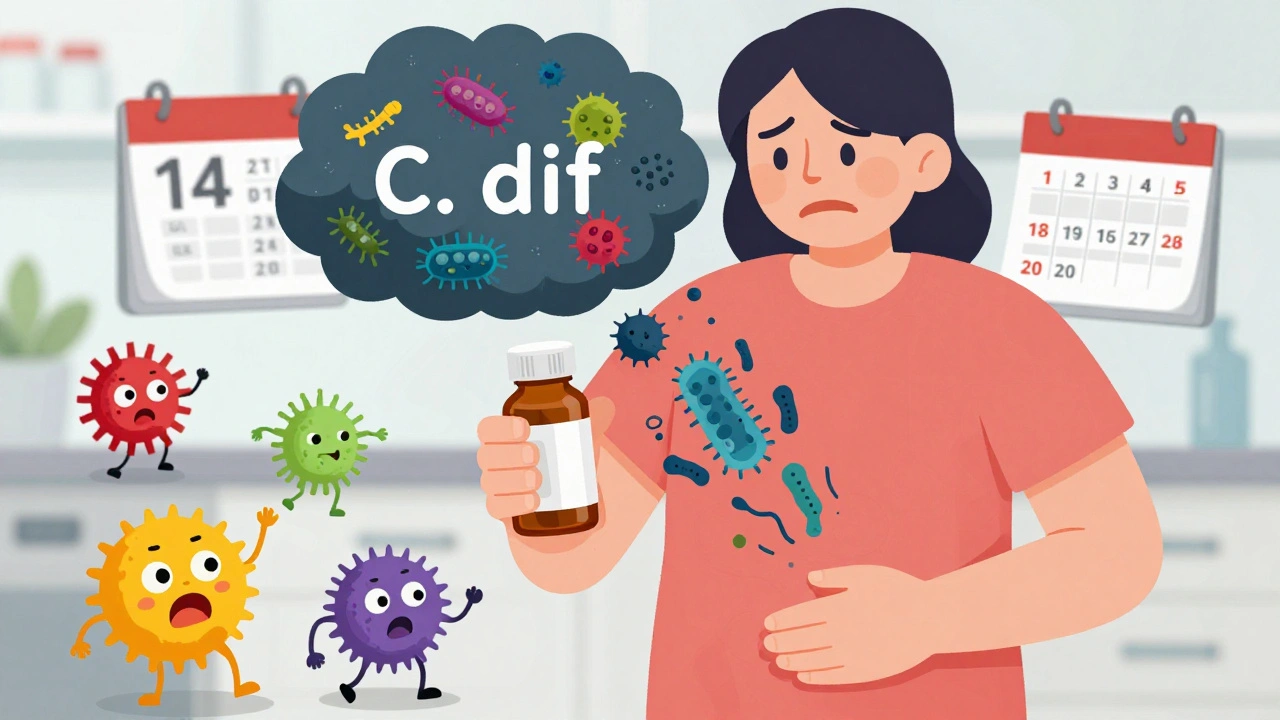
C. diff infection: Causes, Risks, and How Medications Can Trigger It
When you take antibiotics, you’re not just killing the bad bacteria—you’re also wiping out the good ones that keep your gut in balance. That’s when C. diff infection, a severe gastrointestinal infection caused by the bacterium Clostridioides difficile. Also known as Clostridium difficile, it can lead to life-threatening diarrhea, especially in older adults or people who’ve been in hospitals. This isn’t just a side effect—it’s a direct result of disrupted gut health, and it’s more common than most people realize.
Most cases happen after someone takes antibiotics like clindamycin, amoxicillin, or fluoroquinolones. These drugs don’t target C. diff directly, but they clear out the friendly bacteria that normally keep it in check. Once those good bugs are gone, C. diff multiplies fast, releases toxins, and attacks the colon lining. You might think it’s just a bad stomach bug, but if you’ve had recent antibiotics and suddenly get watery diarrhea, fever, or abdominal pain, it could be C. diff. Hospitals and nursing homes are hotspots because the bacteria spreads easily on surfaces and hands. Even after you leave, spores can stick around for months.
What makes this worse is that some people don’t realize their symptoms are drug-related. A senior on blood pressure meds might get diarrhea and assume it’s aging. Someone on thyroid medication might blame their diet. But if those drugs were followed by antibiotics, the real culprit might be C. diff. The same goes for people using long-term proton pump inhibitors—those acid reducers can raise your risk too. It’s not just about the antibiotic you took; it’s about what happened to your gut afterward.
Recovery isn’t always simple. Some people get better after stopping the offending drug. Others need a second round of antibiotics—sometimes even a different kind, like vancomycin or fidaxomicin. And for the worst cases, fecal transplants are now a proven treatment, restoring healthy bacteria from a donor. It sounds extreme, but it works. The real win? Prevention. Only take antibiotics when absolutely necessary. Ask your doctor if there’s a narrower-spectrum option. And never share or save leftover pills.
What you’ll find below are real, practical posts that connect the dots between C. diff and the medications, hospital care, and patient safety issues that make it worse. You’ll learn how generic drugs, prescription labels, and even insurance formularies play a role in who gets hit—and how to protect yourself. This isn’t theoretical. These are the stories behind the stats.
Antibiotic-induced diarrhea can lead to C. diff infection, a serious and often recurrent condition. Learn how to prevent it, recognize symptoms, and choose the right treatment based on current medical guidelines.