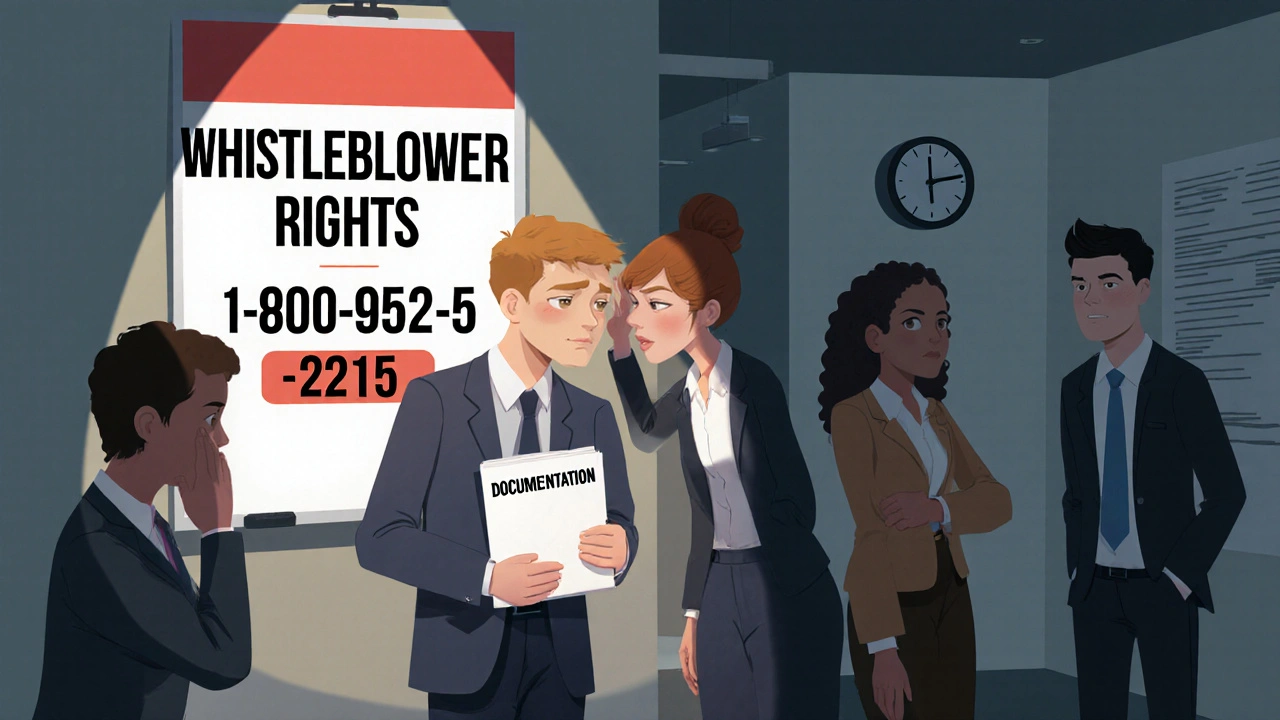
Whistleblower Laws: Protections for Reporting Violations
Whistleblower laws protect employees who report illegal or unsafe practices at work. Learn what’s covered, strict deadlines, California’s 2025 posting rules, and how to avoid retaliation.

When you speak up about dangerous conditions at work, you’re not just being brave—you’re protected by law. The OSHA whistleblower, a worker who reports violations of workplace safety rules to the Occupational Safety and Health Administration. Also known as protected reporter, it is a legal status that shields you from punishment, firing, or harassment for doing the right thing. This isn’t a vague policy—it’s a federal enforcement tool backed by real consequences for employers who try to silence you.
OSHA whistleblower protections cover more than just construction sites and factories. They apply to workers in healthcare, manufacturing, transportation, agriculture, and even offices where hazardous chemicals or equipment are used. If you report unsafe machinery, lack of protective gear, exposure to toxic substances, or cover-ups of workplace injuries, you’re covered. Employers can’t legally cut your hours, demote you, blacklist you, or force you to quit just because you called out a problem. The OSHA retaliation, any adverse action taken against an employee for reporting safety violations. is illegal, and you have 30 days to file a complaint if it happens.
These rules exist because people get hurt when safety concerns go ignored. A nurse who reports understaffing that leads to medication errors. A warehouse worker who flags broken forklifts. A janitor who notices mold in HVAC systems. These aren’t complaints—they’re lifesaving actions. And the law recognizes that. The whistleblower protection, a legal shield that prevents employers from punishing employees for reporting violations. isn’t about being a snitch—it’s about keeping everyone safe. Thousands of workers use these protections every year, and most cases are resolved without going to court, thanks to OSHA’s fast-track investigation process.
You don’t need a lawyer to start. You don’t even need to prove the violation is real—just that you had a reasonable belief it existed. Document everything: dates, names, photos, emails. File your report with OSHA directly, either online or by phone. Your identity can stay confidential if you ask. And if your employer tries to make things hard after you speak up? You’re not alone. OSHA has a dedicated team that responds to these claims quickly.
Below, you’ll find real stories and practical guides from workers who’ve faced these situations—how they reported safely, what happened next, and how they got their rights restored. These aren’t theory pieces. They’re lived experiences that show you exactly how the system works when you use it right.
Whistleblower laws protect employees who report illegal or unsafe practices at work. Learn what’s covered, strict deadlines, California’s 2025 posting rules, and how to avoid retaliation.