
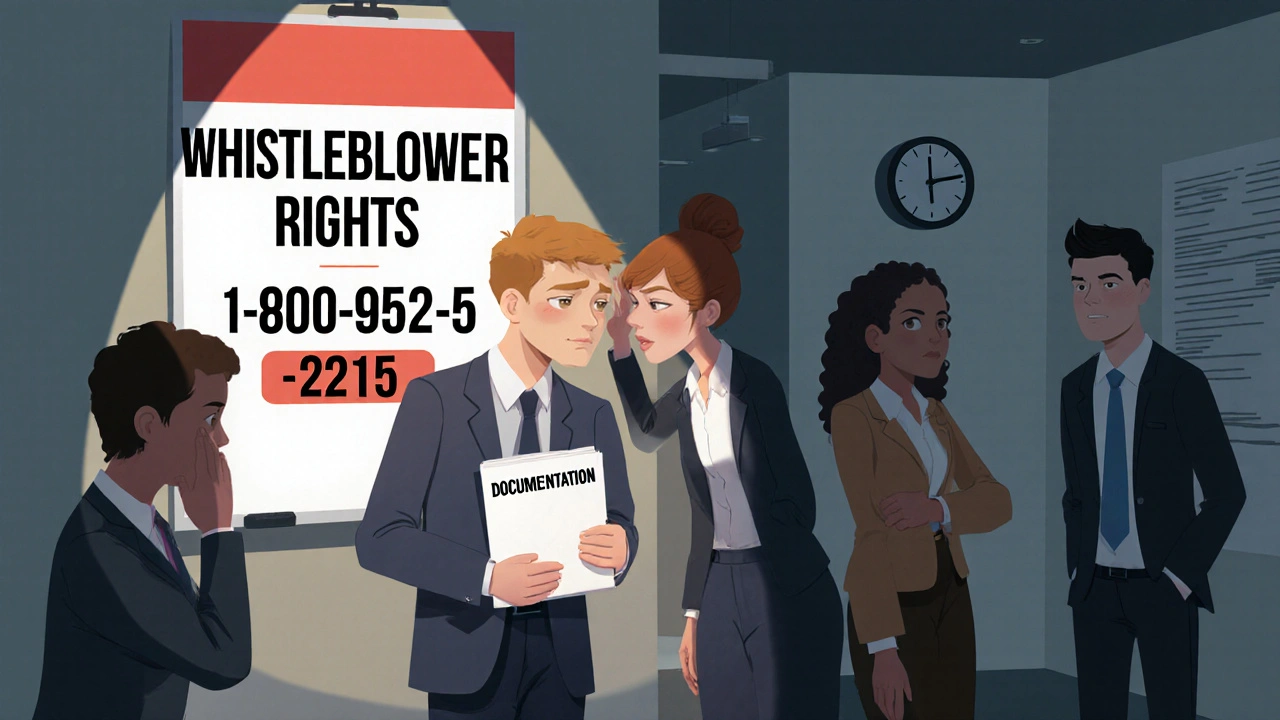
Reporting illegal or dangerous behavior at work isn’t just the right thing to do-it’s protected by law. But knowing your rights doesn’t always mean you’re safe. Thousands of people speak up every year about fraud, safety violations, or corruption, only to face hidden punishment: demotions, hostile shifts, forced resignations, or blacklisting. The laws are there, but the system is messy. If you’re thinking about blowing the whistle, here’s what you actually need to know-not the theory, but the real rules, deadlines, and risks.
What Counts as Protected Reporting?
Not every complaint is protected. Under California’s Labor Code Section 1102.5, you’re covered if you report what you reasonably believe is a violation of state or federal law. That includes things like unsafe working conditions, financial fraud, environmental violations, or falsifying medical records. You don’t need proof. You just need a good-faith belief. This protection applies to current employees, job applicants, and even people employers think might report something. It doesn’t matter if you report to your boss, HR, or a government agency. Even telling a coworker who then reports it can count. The key is that the violation must involve breaking a law-not just company policy or personal grudges. Federal laws are narrower. The Sarbanes-Oxley Act only protects people who report securities fraud at public companies. The False Claims Act covers fraud against government programs like Medicare or defense contracts. The Dodd-Frank Act adds a twist: if your tip leads to a fine over $1 million, you could get 10% to 30% of the money back. But you have to report to the SEC directly, not just internally.What Kind of Retaliation Is Illegal?
Retaliation doesn’t always look like getting fired. It’s often quieter-and harder to prove. Under California law, prohibited retaliation includes:- Termination or forced resignation
- Demotion or reduced hours
- Lower pay or denied raises
- Unfair performance reviews
- Being moved to undesirable shifts (like graveyard shifts after reporting safety issues)
- Exclusion from meetings or projects
- Creating a hostile work environment
Deadlines Are Strict-Miss One, Lose Everything
This is where most people slip up. You have a limited time to file a complaint. Miss the deadline, and even the strongest case disappears. Federal whistleblower laws have wildly different deadlines:- 30 days: Clean Air Act, CERCLA (Superfund)
- 90 days: Anti-Money Laundering Act, Asbestos Hazard Act
- 180 days: Consumer Financial Protection Act, Consumer Product Safety Act
California’s 2025 Rule Change: The Posting Requirement
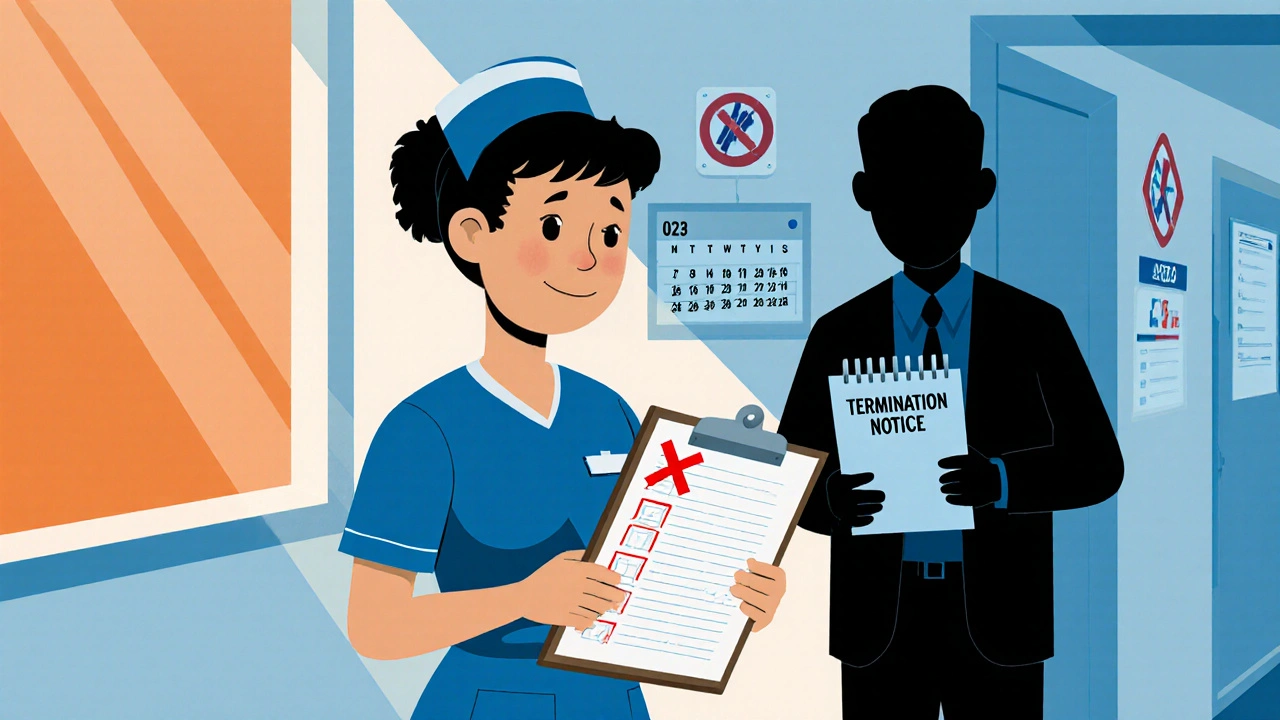
Starting January 1, 2025, every employer in California-yes, even the small ones-must post a clear, visible notice about whistleblower rights. It must include the Attorney General’s hotline: 1-800-952-5225. The font size? At least 14-point. No tiny print. No hidden in a drawer. This isn’t a suggestion. It’s the law. Violations cost up to $10,000 per incident. The state expects 1.1 million businesses to comply. But a California Chamber of Commerce survey in October 2024 found 65% of small business owners didn’t even know about it. The notice must be posted where employees can easily see it-break rooms, time clocks, bulletin boards. Remote workers? Employers must email them the notice. But there’s no clear rule on how to report violations from home. That’s a gray area.Why Federal Law Falls Short
Federal whistleblower laws are scattered. There are 25 different statutes enforced by OSHA alone. Each covers a different industry or type of violation. No single law protects all workers. For example, airline safety whistleblowers are covered under AIR21-but there’s a loophole. If the whistleblower is fired for reporting a safety issue that turns out to be a misunderstanding, they can be denied protection. The National Whistleblower Center is pushing to close that gap in 2025. Another problem: federal law doesn’t let you sue in federal court unless you’re covered under specific statutes like Sarbanes-Oxley. California employees under 1102.5 are stuck in state court, which can be slower and less favorable to whistleblowers. Meanwhile, the SEC paid out $637 million to whistleblowers in 2023. That’s up 27% from the year before. The money’s there. But only if you follow the rules.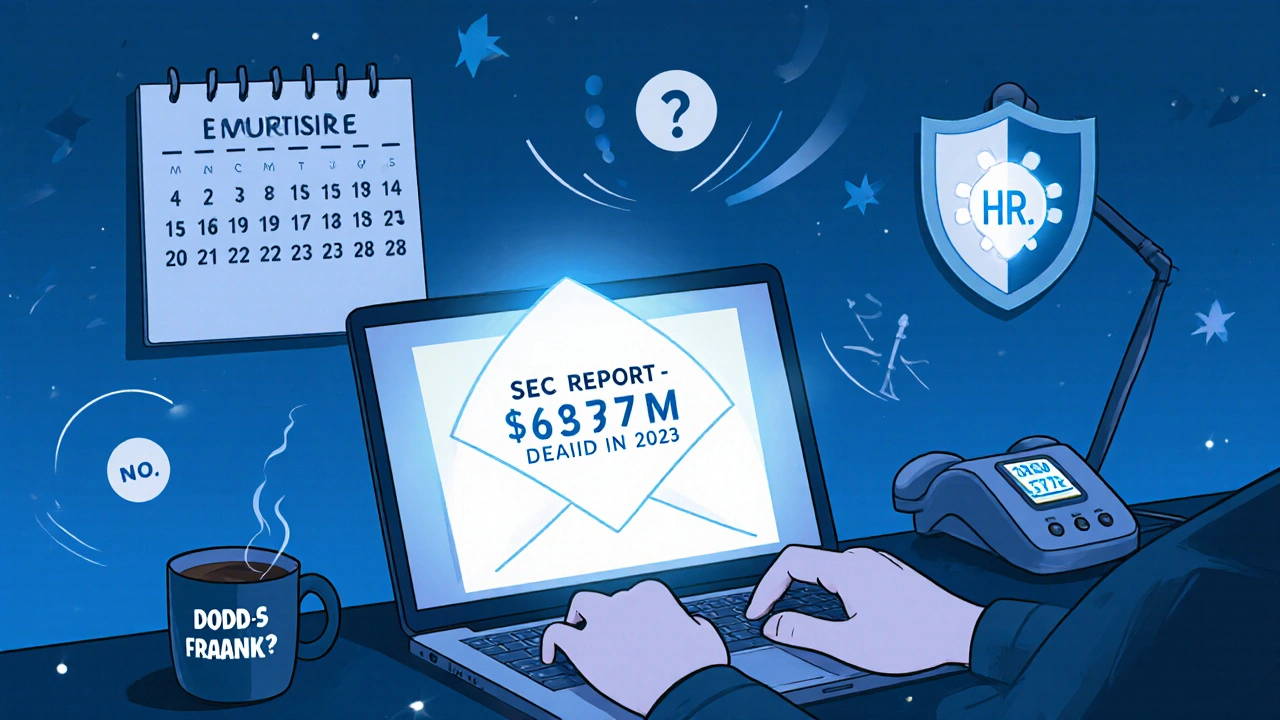
What You Should Do Before Reporting
Don’t go in blind. Here’s what works:- Document everything. Save emails, texts, performance reviews, shift schedules. Write down dates, names, and what was said. California’s DLSE requires “clear and convincing evidence” of retaliation.
- Know your deadline. Check which law applies to your situation. Write it down. Set a calendar reminder.
- Don’t rely on HR. HR works for the company. Their job is to protect the company. If you report internally, assume it might be used against you.
- Call a lawyer. The National Whistleblower Center says 78% of successful cases had legal help. Many offer free consultations.
- Use official hotlines. California: 1-800-952-5225. Federal: OSHA at 800-321-6742.
The Bigger Picture: Why This Matters
Whistleblowers aren’t troublemakers. They’re the reason unsafe drugs get pulled, contaminated water gets fixed, and hospitals stop cutting corners. The Congressional Budget Office estimates stronger protections could save taxpayers $12.7 billion a year by stopping fraud. But the system is still broken. The average case takes nearly two years. People lose homes. Families suffer. The laws are written to protect you-but they don’t make it easy. New developments are coming. In May 2025, Senator Grassley introduced the AI Whistleblower Protection Act. It would be the first federal law to protect tech workers who report unethical AI practices-like biased algorithms or hidden surveillance tools. It’s a sign that whistleblower laws are finally catching up to modern workplaces.What Comes Next?
If you’ve reported something and been punished, you’re not alone. But time is your enemy. Start documenting now. Call the hotline. Talk to a lawyer. Don’t wait for the company to “do the right thing.” They won’t. The system isn’t perfect. But the laws are stronger than most people think. Use them. Before it’s too late.Can I be fired for reporting a violation at work?
No. Under California Labor Code Section 1102.5 and several federal laws, it’s illegal to fire, demote, or punish someone for reporting what they reasonably believe is a violation of law. But proving retaliation is difficult. Employers often disguise it as performance issues or restructuring. Document everything and act quickly-deadlines are strict.
How long do I have to file a whistleblower complaint?
It depends on the law. In California, you have up to three years under Labor Code 1102.5. Federally, deadlines range from 30 to 180 days. For example, you have 30 days for Clean Air Act violations and 180 days for financial fraud under the Consumer Financial Protection Act. Missing the deadline means losing your right to pursue legal action.
Does my employer have to post whistleblower rights information?
Yes-in California, starting January 1, 2025, all employers must post a state-approved whistleblower rights notice in a visible location, like a break room or time clock. The notice must include the Attorney General’s hotline (1-800-952-5225) in at least 14-point font. Failure to comply can result in fines of up to $10,000 per violation.
Can I get paid for reporting fraud?
Yes-under the federal False Claims Act and Dodd-Frank Act, whistleblowers can receive 10% to 30% of the money recovered if their information leads to a successful enforcement action. For example, the SEC paid $637 million to 131 whistleblowers in 2023. But you must report directly to the agency, not just internally, and the fine must exceed $1 million.
What if I report something but it turns out to be wrong?
You’re still protected if you had a reasonable, good-faith belief that a violation occurred. You don’t need to be 100% right. The law protects people who act in good faith, even if their concerns turn out to be mistaken. But if you knowingly lie or make false claims, you can lose protection and face legal consequences.
Should I report internally or go straight to the government?
It depends. For financial fraud or securities violations, reporting to the SEC or DOJ directly gives you stronger protections and possible rewards. For workplace safety or labor violations, reporting to OSHA or the state labor board is your best path. Reporting internally can be risky-HR may side with management. If you do report internally, always follow up in writing and keep a copy.
Do whistleblower protections apply to remote workers?
Yes. California law protects remote workers who report violations, and employers must email them the whistleblower notice. But there’s no clear guidance on how remote workers should report violations securely or anonymously. This is a growing legal gray area, especially in tech and healthcare.






Matthew Higgins
Been there. Reported a safety issue at my warehouse job. Got moved to the graveyard shift alone with no cameras. Quit two weeks later. They called it a 'schedule change.' Yeah right.
Law says it's illegal. Reality says they'll make your life hell until you break.
Document everything. Even if you think it's stupid. Texts, emails, shift logs. They'll twist it later.
Mary Kate Powers
You’re not alone. I helped a nurse file a complaint after she reported a doctor skipping check-ins. Took 22 months. She worked two side jobs just to keep the lights on.
But she won. And now she’s training new nurses on how to protect themselves.
Don’t give up. The system sucks, but the law is on your side-if you act fast.
Monica Lindsey
People think whistleblowing is heroic. It’s not. It’s career suicide wrapped in a lawsuit.
HR isn’t your friend. The company won’t change. You’ll just be the guy who made everyone uncomfortable.
Sullivan Lauer
Let me tell you something-this isn’t just about laws. It’s about courage. You think you’re just reporting a violation? No. You’re standing up to a machine that wants you quiet.
I’ve seen good people get crushed because they trusted HR. I’ve seen others win because they had a lawyer before they even opened their mouth.
Document. Every. Single. Thing. Email. Text. Voice memo. Calendar note. Write down what they said, when they said it, who was there. Because when they come at you with ‘poor performance,’ you’ll need proof they never gave you feedback before you spoke up.
And don’t wait for ‘the right time.’ There is no right time. There’s only before they notice you’re talking and after it’s too late.
California’s new posting rule? Good. But it won’t fix the real problem: fear. People don’t speak up because they know they’ll be punished, not because they don’t know the law.
And yeah, federal laws are a mess. 25 different statutes? That’s not protection-that’s a maze designed to confuse you into silence.
But here’s the thing: the SEC paid out $637 million last year. That’s real money. Real justice. For people who knew the rules.
So if you’re thinking about it? Don’t ask Reddit. Call the hotline. Talk to a lawyer. Even if you think you can’t afford it. Most do free consults. And if you’re remote? Email that notice. Save it. Take a screenshot. Because if they claim they ‘sent it,’ you need proof they didn’t.
This isn’t about being a hero. It’s about not letting them win. And if you do it right? You might just save someone else’s life.
Sara Shumaker
It’s funny how we celebrate whistleblowers in movies but treat them like traitors in real life.
Why do we expect people to risk everything-career, income, mental health-just to tell the truth? Shouldn’t the system be built so that truth-telling is easy, not a battle?
And why are the laws so fragmented? If you report unsafe food, you’re covered. If you report biased AI, you’re in a legal gray zone. That’s not justice. That’s negligence dressed up as regulation.
Also, the 30-day deadline for Clean Air Act reports? That’s not a law. It’s a trap. Who even knows what federal statute applies to their job? Most people don’t. And that’s the point.
We need one umbrella law. One hotline. One clear path. Not 25 different agencies with different rules. Until then, we’re not protecting whistleblowers-we’re testing how much suffering they’re willing to endure.
tushar makwana
From India, I read this and felt something. Here, reporting corruption is dangerous. People disappear. Or get labeled as 'troublemakers.'
But your post made me think-maybe the fear is the same everywhere. The system wants silence. The law says no. But the law doesn’t protect you from loneliness.
Hope you’re safe out there. And if you’re reading this and thinking of speaking up-please, take a breath. Then call someone. Don’t do it alone.
Andrew Keh
Reporting violations is a civic duty. The law exists to protect those who act in good faith. It’s not perfect, but it’s better than nothing.
Document. Know the deadlines. Seek counsel. That’s the responsible path.
Robert Bashaw
They call it whistleblowing like it’s some noble act. Nah. It’s a war. And you’re the guy holding a squirt gun against a tank.
I saw a guy get fired for reporting a fake OSHA log. They called him ‘unreliable.’ He lost his house. His wife left. He’s now driving Uber.
And the company? Got a slap on the wrist. Paid a fine. Moved on.
So yeah. Go ahead. Report. But don’t expect applause. Expect silence. And a paper trail you’ll need to carry like a backpack full of bricks.
Peter Axelberg
Look, I’ve worked in three different industries and reported three different things. Each time, I got the same response: ‘We’ll look into it.’
They never did. Not really.
Here’s what actually works: you get a lawyer before you say anything. You write everything down. You copy your boss on every email. You don’t trust HR. You don’t trust your manager. You don’t trust the system.
And you pray that the law catches up before they bury you.
Also-remote workers? We’re the new frontier. No one knows how to protect us. And that’s terrifying.
Scott Collard
Most whistleblowers aren’t heroes. They’re incompetent employees who got caught doing something wrong and tried to deflect.
The system is rigged to protect the company. The laws are just theater.
Sohini Majumder
OMG this is sooo dramatic!! Like, who even cares?? I mean, if you’re getting demoted for reporting something… maybe you’re just bad at your job?? Like, why is this even a thing??
Also, 14-point font?? Who has time for this??
And why is everyone so obsessed with deadlines?? Just chill. Everything will work out. Probably.
Also, I heard the SEC thing is a scam. Like, you get 10%?? Lol. They’ll take your data and ghost you.
Also, why are there so many laws?? Like, just pick one. Jeez.
Also, I think this post is just fear-mongering. Like, people should just shut up and do their jobs. Right??
Also, I didn’t even read all of it. But I’m commenting anyway. Because I’m woke.
Also, the nurse won $287k?? That’s a lot. But like, was she even right?? Maybe the doctor was just tired??
Also, I’m not saying anything. I’m just asking questions. Like, a normal person would.
Also, I’m not mad. I’m just disappointed. In everyone. And the system. And the font size. Seriously, 14-point??
Also, I’m gonna go cry now. In my car. Alone. Because no one understands me.
Latika Gupta
My cousin reported fraud at a hospital in Mumbai. They fired her. Then they sued her for ‘damaging reputation.’ She had to move back home. No one helped. No one even asked.
Why do we treat truth like a crime?
jamie sigler
Another one of these posts. Look, I’ve been in corporate for 15 years. People who whistle blow? They’re always the ones who couldn’t cut it. The lazy ones. The drama queens.
Don’t believe the hype. The system works fine. You just didn’t play the game right.
Steven Howell
It is axiomatic that the legal architecture governing whistleblower protections is both fragmented and inconsistently enforced across jurisdictional boundaries. The absence of a unified statutory framework undermines the efficacy of existing safeguards and perpetuates a climate of institutional impunity.
Furthermore, the operational latency of federal enforcement agencies-exemplified by OSHA’s 63% failure to meet investigative deadlines-constitutes a de facto denial of due process.
It is therefore imperative that legislative reform prioritize consolidation, standardization, and the establishment of mandatory response timelines to ensure procedural justice.
Additionally, the inclusion of digital and remote work environments within statutory definitions remains an unresolved and urgent lacuna.
Brandy Johnson
Whistleblowers are traitors to the American system. They enable foreign governments and activist groups to destabilize our corporations. This isn’t justice-it’s sabotage dressed in legal jargon.
And why are we giving money to people who rat out their own country? Shameful.