
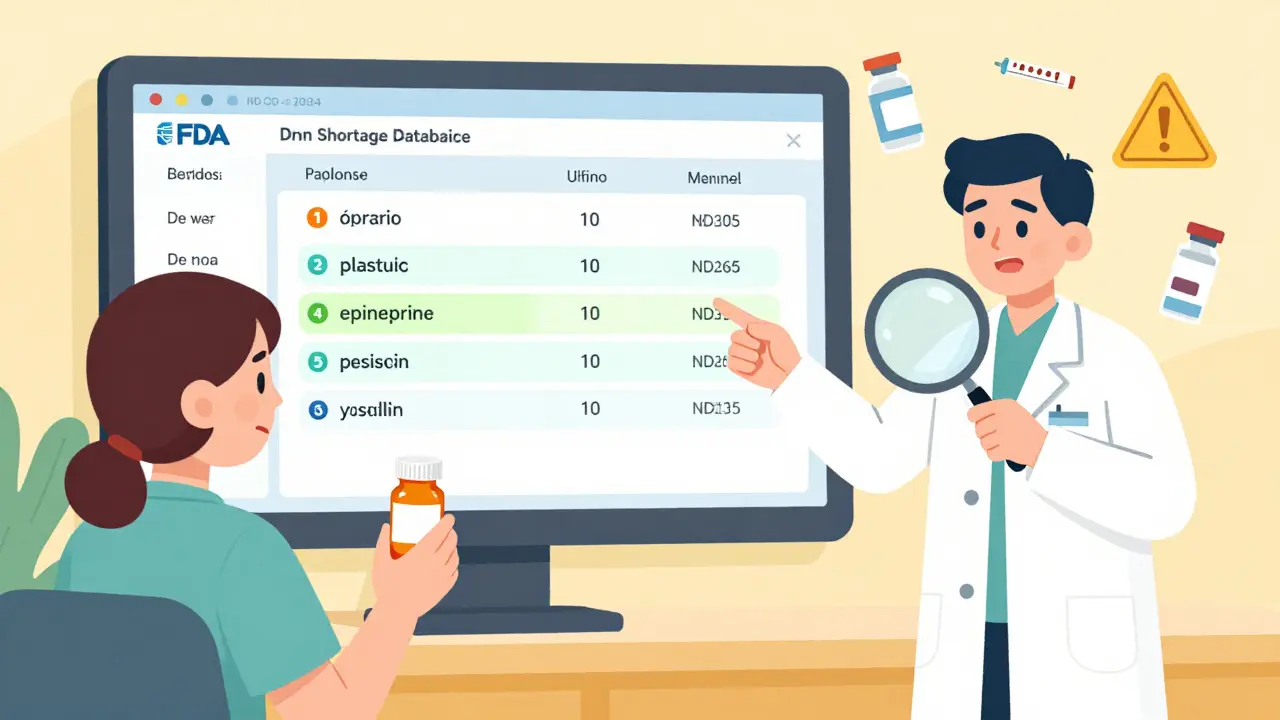
What is the FDA Drug Shortage Database?
The FDA Drug Shortage Database is the U.S. government’s official source for tracking which medications are running low or unavailable across the country. It’s not a guess, not a rumor - it’s real-time data reported directly by drug manufacturers, verified by the Food and Drug Administration. If you’re a pharmacist, nurse, doctor, or even a patient worried about getting your prescription filled, this database tells you exactly what’s in short supply, why, and how long it might last.
Since 2012, federal law has required manufacturers to notify the FDA when they expect a drug shortage. Today, the agency receives about 5,000 of these reports every year. The database went public in February 2021 and now lists between 280 and 320 active shortages at any given time. Most of these are generic injectable drugs - things like antibiotics, painkillers, and heart medications - because they’re cheaper to make and often produced by just one or two factories. If one of those factories has a problem, the whole country feels it.
How to Access the FDA Drug Shortage Database
You don’t need special access or a login to use it. The database is free and open to everyone. There are three main ways to check it:
- Website: Go to accessdata.fda.gov/scripts/drugshortages/default.cfm. This is the most detailed version. You can search by drug name, NDC number, or manufacturer.
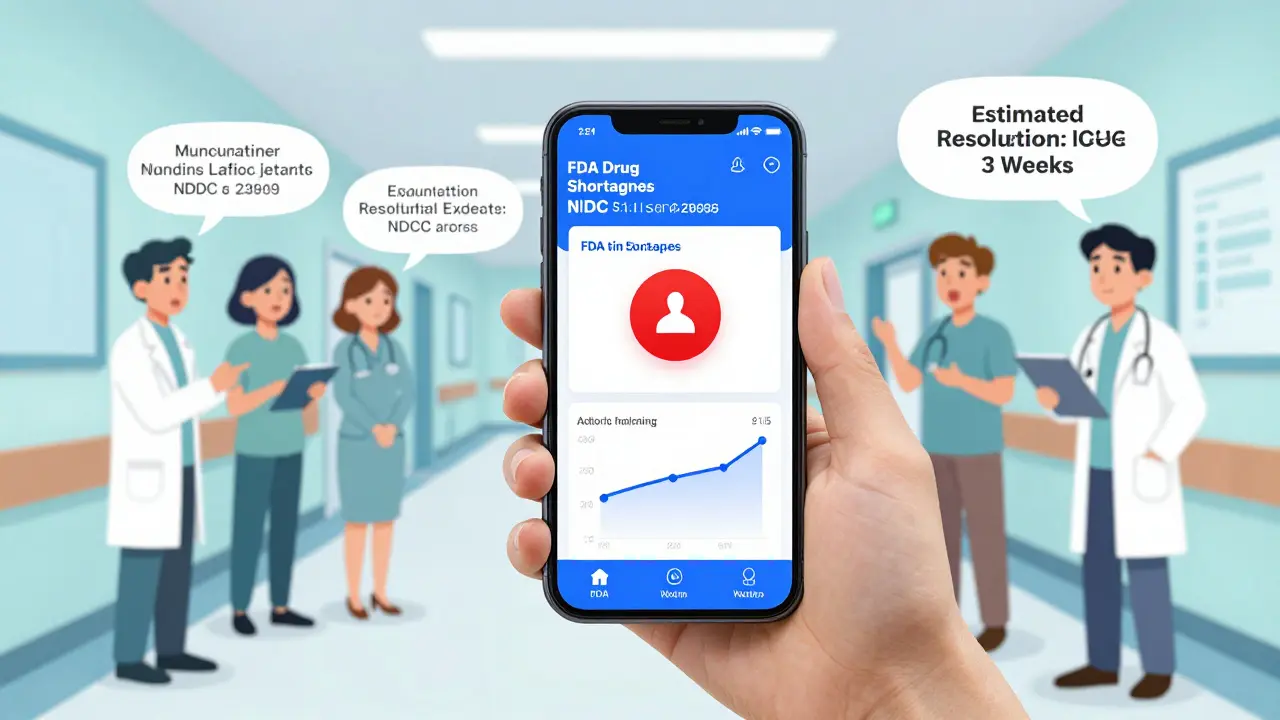
- Mobile App: Download the free "FDA Drug Shortages" app from the Apple App Store or Google Play. It’s updated daily and sends push alerts when a critical drug goes short. Over 150,000 people have installed it since 2022.
- Data.gov: If you’re a researcher or IT professional, you can download the full dataset in CSV or JSON format. It’s updated weekly and includes every drug listed, even those marked as "resolved."
The app is the easiest for quick checks. Just type in the name of your medication - say, "epinephrine" - and it will show you every version (injection, auto-injector, etc.) that’s currently short. The website gives you more detail, like the exact NDC number, the manufacturer, and the reason the drug is unavailable.
What Information Does the Database Show?
Each drug listing includes five key pieces of information:
- Generic name and active ingredient: This tells you exactly what drug is affected. Don’t rely on brand names - shortages usually hit generic versions first.
- NDC number: The National Drug Code is a unique 11-digit identifier for each product. Two versions of the same drug (like 1mg vs. 5mg tablets) have different NDCs. Always check the NDC - a shortage might only affect one formulation.
- Manufacturer name: Knowing who makes the drug helps you track down alternatives or contact your pharmacy’s distributor.
- Reason for shortage: The FDA categorizes reasons into six types. About 68% are due to manufacturing or quality problems - think contaminated batches, equipment breakdowns, or raw material delays. Other reasons include supply chain issues, discontinuations, and increased demand.
- Status and estimated duration: The status can be "Current," "Resolved," or "Discontinued." "Resolved" doesn’t mean the drug is back in stock everywhere - just that supply is meeting demand again. Estimated duration is often inaccurate; only about 79% of these estimates are correct when the shortage is reported directly by manufacturers through the FDA’s internal portal.
FDA vs. ASHP: Which One Should You Use?
Many people also use the American Society of Health-System Pharmacists (ASHP) Drug Shortages site. So which one do you trust?
The FDA database is the official source. It only lists drugs that are short on a national level. It gives you exact NDCs and manufacturer details - crucial for pharmacies trying to switch suppliers. But it doesn’t tell you what to do when the drug is gone.
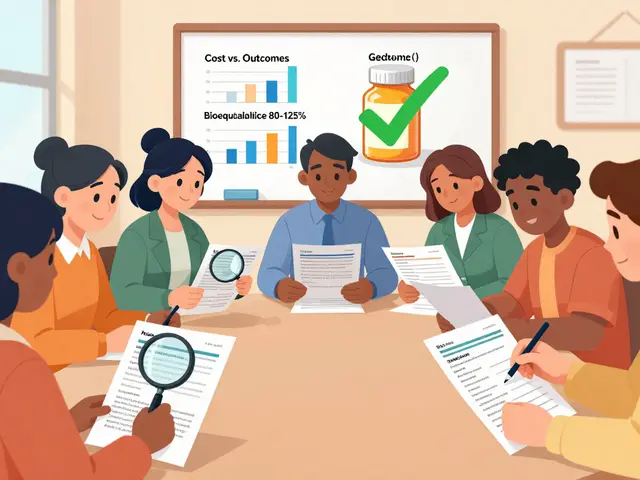
The ASHP site lists more drugs - about 15-20% more than the FDA - because it includes regional or temporary shortages. It’s better for clinical guidance. You’ll find advice like: "Use Drug X instead of Drug Y," or "Monitor for side effects when switching."
Healthcare providers use both. Most check the FDA site first to confirm a shortage is real. Then they go to ASHP to figure out what to prescribe next. In a 2024 survey, 74% of providers said they use the FDA database for verification but rely on ASHP for treatment decisions.
Common Mistakes People Make
Even with a clear database, people still get confused. Here are the top errors:
- Assuming "resolved" means full stock: Just because the FDA says a shortage is resolved doesn’t mean your local pharmacy has it. Distribution takes time. Always call ahead.
- Ignoring the NDC: If your prescription is for a 500mg tablet, but the shortage is only for the 250mg version, you’re fine. Always match the NDC on your bottle to the one listed.
- Not checking for extended use dates: Some drugs have an FDA-approved extended expiration date if stored properly. You can search for these separately on the FDA site. This matters for insulin, epinephrine, and other life-saving meds.
- Waiting until the last minute: If you see a drug you take listed as "current," don’t wait for it to run out. Talk to your doctor now about alternatives.
How to Report a Shortage You’ve Seen
If you’re a pharmacist, nurse, or patient and you notice a drug is unavailable - but it’s not listed on the FDA site - you can report it. Go to [email protected] and include:
- Drug name and NDC number
- Manufacturer
- Where you’re seeing the shortage (hospital, pharmacy, region)
- How long it’s been out of stock
The FDA doesn’t respond to every report individually, but they review all submissions. If multiple reports come in about the same drug, they’ll reach out to the manufacturer for confirmation. This is how new shortages get added to the list.
What’s New and What’s Coming
The FDA is working to make the database smarter. In July 2024, they added new filters so you can search by dosage form (tablet, injection, cream), manufacturer, or therapeutic category. That’s a big improvement - users had been asking for this for years.
By early 2025, the database will link to the National Association of Boards of Pharmacy’s verified distributor list. That means you’ll soon be able to see not just which drug is short, but which distributors still have stock.
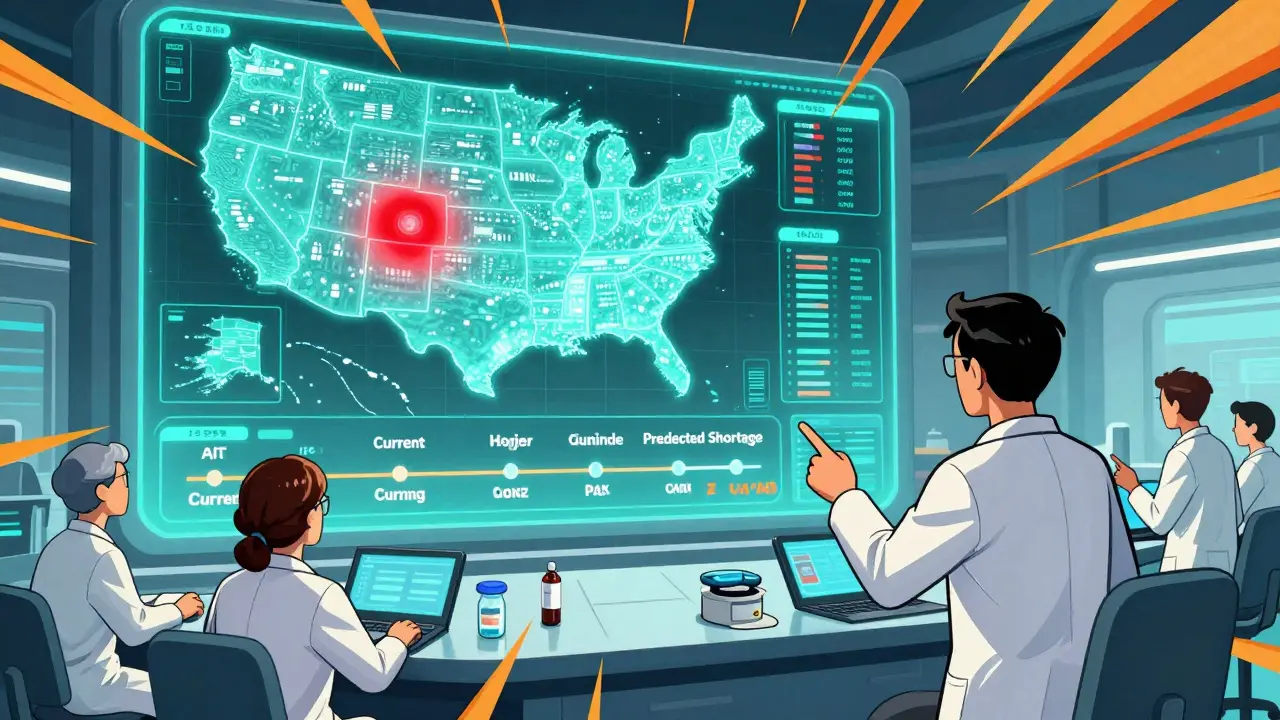
The biggest change coming? AI. The FDA started testing AI models in late 2024 to predict shortages before they happen. Right now, the database is reactive - it tells you what’s already broken. The goal is to make it predictive. If they succeed, it could prevent shortages before patients are affected.
What to Do If Your Medication Is Short
If your drug shows up on the list, don’t panic. Here’s what to do:
- Check the NDC on your prescription bottle. Is it the exact one listed as short?
- Call your pharmacy. Ask if they have any of the same drug from a different manufacturer.
- Contact your doctor. They can prescribe an alternative - often another drug in the same class.
- Use ASHP’s site to find safe substitution options.
- If you can’t get the drug and it’s critical (like insulin or seizure meds), go to the nearest hospital emergency department. They’re required to have backup supplies.
Remember: Never stop taking a medication without talking to your provider. Even if it’s short, there’s usually a safe alternative.
Why This Matters
Drug shortages aren’t just inconvenient - they’re dangerous. In 2023, a delay in heparin availability led to treatment delays at 37% of hospitals. In April 2024, the FDA’s database helped systems switch insulin brands before patients went without. That’s the power of transparency.
The FDA database isn’t perfect. It’s slow to update. It doesn’t tell you where to buy the drug. But it’s the only place that gives you the full, verified picture. For anyone who depends on prescription meds - whether you’re a patient, caregiver, or provider - knowing how to use it isn’t optional. It’s essential.




Gary Mitts
So the FDA finally made something useful. Took long enough.
Solomon Ahonsi
This is why I stopped trusting any government database. Half the time the app says 'resolved' but my pharmacy still has zero stock. I've been calling them every day for two weeks. No one cares.
Nick Flake
Imagine if we treated medicine like we treat air - like it's just always there. But nope, we wait until someone can't breathe before we fix the pipe. 🤦♂️ This database? It's not a fix. It's a mirror. And the reflection is ugly. We need to rebuild the system, not just track the cracks.
Matt W
I used to think generic drugs were cheap because they were low quality. Turns out they're cheap because the whole supply chain is held together by duct tape and hope. 😅 Just got a text from my pharmacy: 'epinephrine is back in stock... but only the 0.3mg auto-injectors, not the 0.15mg for kids.' So now I'm stuck choosing between my kid's safety and the FDA's NDC list. Thanks for nothing.
larry keenan
The distinction between FDA and ASHP is critical in clinical practice. While the FDA provides authoritative, manufacturer-verified data on national-level disruptions, ASHP offers contextually relevant therapeutic alternatives and clinical risk assessments. The former informs procurement; the latter informs prescribing. Utilizing both is not redundant - it is foundational to pharmacovigilance.
clarissa sulio
I don't care what the database says. My mom's insulin was out for 17 days and no one called to warn us. If this is 'transparency,' it's a cruel joke.
Anthony Massirman
The fact that we need an app to know if our life-saving meds exist is a national embarrassment. And now they're adding AI? Cool. Let's just make sure it doesn't predict shortages by ignoring the fact that 70% of these drugs are made in one factory in China.
Chinmoy Kumar
this is really helpfull i never knew about ndc numbers before. i thought all epinephrine was same. but now i check before i refill. also i like that u can report shortages. i did it last week for my dads blood pressure med. hope it helps
George Firican
There's something profoundly tragic about a society that can put a man on the moon but can't guarantee a steady supply of insulin. We've outsourced our resilience to profit margins and global logistics chains that snap like wet twigs under pressure. The FDA database is a digital tombstone - it marks where things died, not why they were allowed to die. We don't need better tracking. We need better values. The next time you're told a drug shortage is 'due to manufacturing issues,' ask: who decided to build only one factory? Who approved the quality control waivers? Who let the raw material supply become a single-threaded dependency? This isn't an accident. It's policy.
Sandeep Kumar
Why are we even talking about this like its some big deal. Other countries dont have this problem because they dont let pharma companies run everything. US is weak. We import everything. We dont make anything anymore. Fix the factories not the website
Bridget Molokomme
So let me get this straight. We have an app that tells us when our meds are gone… but no one’s gonna fix it? Just… here’s your warning. Have a nice day. 😏
Anthony Massirman
I just checked the database. My dad’s amiodarone is listed as 'resolved.' I called five pharmacies. Three didn’t even know what it was. One had it but the NDC didn’t match. The last one said 'it’s in the back, but we’re not supposed to sell it until next week.' So… resolved? Cool. Thanks for the update, FDA. Now go fix the actual supply chain.