
You have been taking your medication for years. It works. You feel stable. Then, your doctor or pharmacy calls. They say it is time to switch to a new version of your drug. It costs less, they say. But it feels different. This is the reality of biosimilar switching for millions of patients today. You are not imagining the anxiety. Changing from an originator biologic to a biosimilar is a major shift in modern medicine, driven by cost savings but often met with patient hesitation. By March 2026, the landscape has shifted significantly, with more data available than ever before to answer the critical question: is it safe to switch?
Understanding the Difference Between Biosimilars and Generics
Before we talk about switching, we need to clear up a common confusion. Many people hear the word "biosimilar" and think it is exactly like a generic drug. It is not. A generic drug is a carbon copy of a small molecule chemical drug. The atoms are identical. A biologic drug, however, is made from living cells. It is complex. Think of it like a recipe for a cake. A generic is a copy of the cake ingredients. A biosimilar is a new baker trying to make the same cake using a similar recipe.
Biosimilar is a biological product demonstrating high similarity to an already-approved reference product in terms of quality, safety, and efficacy, with no clinically meaningful differences in purity, potency, or safety, though minor differences in clinically inactive components are permitted. Also known as Biologic Similar, it was first approved in the European Union in 2006 and in the United States in 2015. Because these drugs are large proteins produced in living systems, they cannot be identical copies. There will always be tiny differences in the manufacturing process. The regulatory agencies, like the U.S. Food and Drug Administration (FDA) and the European Medicines Agency (EMA), require extensive testing to prove these tiny differences do not matter for your health.
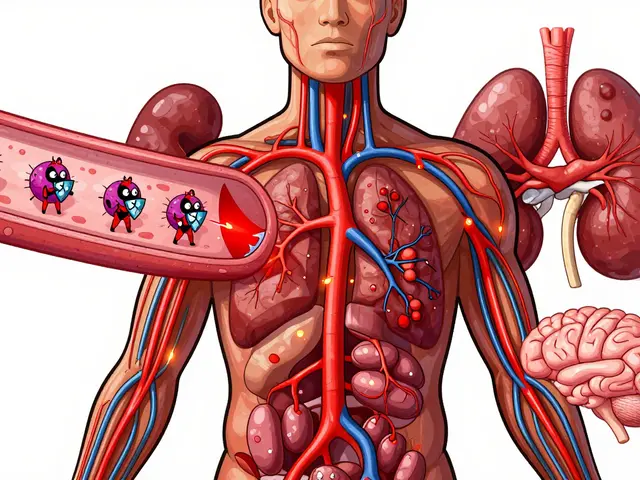
When you switch from an originator biologic to a biosimilar, you are moving from the original brand-name product to this highly similar version. The goal is to maintain the same therapeutic effect while reducing the financial burden on the healthcare system. As of late 2023, the FDA has approved 37 biosimilars covering 11 reference products. This means there are many options available now, particularly for conditions like rheumatoid arthritis and inflammatory bowel disease.
The Safety Data: What the Studies Actually Show
You might wonder if the data supports this move. The short answer is yes, but with nuances. We have moved past the early days of uncertainty. Current evidence synthesis from 32 randomized controlled trials and 48 observational studies published between 2016 and 2023 confirms that switching maintains comparable efficacy and safety profiles. This applies across major disease states like rheumatoid arthritis, psoriatic arthritis, and inflammatory bowel disease.
Consider the NOR-Switch study. This was a large real-world investigation involving 481 patients. They looked at patients switching from originator infliximab to a biosimilar version called CT-P13. The retention rate at 52 weeks was 52.6% for the biosimilar versus 60.0% for the originator. The statistical difference was not significant (p=0.16). This suggests that, clinically, the drugs performed similarly over a full year. Another study by Lauret et al. in 2022 followed 140 chronic inflammatory disease patients. They looked at immunogenicity, which is the formation of anti-drug antibodies. The rate was only 3 per 100 patient-years during successive switches. There were no statistically significant changes in adverse events or drug trough levels.
Inflammatory bowel disease patients also show promising results. A 2021 study showed that 90.6% of patients maintained clinical remission after switching from one biosimilar to another. Their fecal calprotectin levels, a marker for inflammation in the gut, remained identical before and after the switch (median 124 μg/g pre-switch vs. 118 μg/g post-switch). Even in psoriasis, a nationwide Danish cohort study demonstrated a 1-year drug retention of 79.0% for adalimumab biosimilars after switching, which is very close to the 81.3% retention seen with the originator before switching.
| Attribute | Originator Biologic | Biosimilar |
|---|---|---|
| Structure | Original reference product | Highly similar, minor inactive differences |
| Approval Pathway | Full clinical trial data required | Stepwise approach with analytical characterization |
| Cost | Higher price point | Typically 15-35% lower |
| Immunogenicity Risk | Established baseline | Comparable (rare discontinuation due to antibodies) |
| Regulatory Status | Reference product | Approved as biosimilar or interchangeable |

The Nocebo Effect: When Psychology Meets Medicine
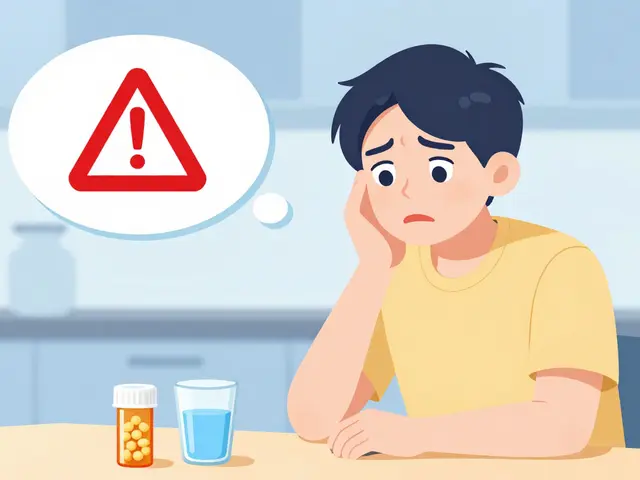
Here is where it gets complicated. Even when the lab values look perfect, some patients feel worse. This is often called the nocebo effect. It is the opposite of the placebo effect. If you expect the new drug to fail, your brain might convince your body that it is failing. A 2021 study in Frontiers in Psychology documented that 32.7% of patients reported new or worsening symptoms after non-medical switching. They attributed this to the nocebo effect. Many patients in online communities describe "feeling the difference" even when their blood tests show normal levels.
This psychological factor is a real driver of discontinuation. In an etanercept switch study, 12.6% of patients stopped treatment despite no actual efficacy difference. It is not that the drug stopped working biologically; it is that the patient lost confidence in it. This is why communication is vital. If a doctor tells a patient, "This is the same drug, just cheaper," the patient might feel undervalued. If the doctor explains, "This is a highly similar version that has been tested extensively to ensure safety," the trust remains intact.
Real discontinuation drivers include perceived efficacy loss, injection reactions, and psychological factors. Actual immunogenicity-related discontinuations remain rare, at about 1.7 events per 100 patient-years. Most people who stop treatment do so because they feel it is not working, not because their body developed antibodies. Understanding this distinction helps manage expectations during the switch.
Cost Savings and Access to Care
Why do healthcare systems push for switching? The answer is simple economics. Biologic drugs are expensive to make. Biosimilars introduce competition, which drives prices down. Biosimilars are typically priced 15-35% below originators. For example, Humira biosimilars launched at a 35% discount in 2023 according to CMS data. This saves billions of dollars globally. The global biosimilars market was valued at $26.3 billion in 2022 and is growing rapidly.
These savings are not just for insurance companies. They can mean the difference between a patient being able to afford their medication or not. Expanded patient access is a key advantage. In Europe, adoption is leading, with a 67% biosimilar share for filgrastim. The U.S. has been slower, with 24% uptake for infliximab, largely due to patent thickets and rebating practices. However, by 2023, 85% of U.S. health plans were implementing mandatory switch policies. This means the switch is often a requirement to keep coverage, not just a suggestion.

Practical Steps for Patients Facing a Switch
If you are facing a switch, you are not powerless. You can prepare. The 2023 PERFUSE study demonstrated that educational interventions reduced discontinuation from 18% to 6.4% in mandatory switch scenarios. Effective approaches include pre-switch counseling sessions of at least 20 minutes. You should ask your doctor specific questions.
- Why are we switching now? Is it for cost or medical reasons?
- What are the specific differences between the originator and the biosimilar?
- How will we monitor my response after the switch?
- What are the signs I should watch for that indicate the drug is not working?
Implementation usually takes 2-4 weeks for patient consent and baseline assessments. You should monitor your disease activity using validated indices like DAS28 for arthritis or PASI for psoriasis. Trough levels, which measure the amount of drug in your blood right before your next dose, are also important. If your trough levels drop significantly after the switch, it might indicate your body is clearing the drug faster. However, most studies show these levels remain stable.
Expert consensus from regulatory bodies supports switching safety. The FDA's 2023 analysis of 22 switching studies covering 5,700 patients concluded no increased risk of death or serious adverse events. The EMA's 2022 position paper stated switching is not expected to compromise safety or efficacy. However, patient advocacy groups like the Arthritis Foundation continue urging caution in unstable disease states. If your disease is highly active, switching might not be the best time.
Regulatory Differences and Interchangeability
Not all biosimilars are created equal in the eyes of the law. The FDA has a designation called "interchangeability." This allows a pharmacist to substitute the biosimilar for the originator without the prescribing doctor's specific approval, similar to how generic pills work. In 2024, the FDA approved the first interchangeable adalimumab biosimilar, Cyltezo. This allows automatic pharmacy-level substitution. The EMA does not have this specific designation; they maintain biosimilars are automatically switchable per their 2017 Q&A document. This regulatory fragmentation can cause confusion. In some regions, you might have a choice. In others, the switch is automatic.
Health Canada's 2021 advisory noted biologics do not have fully defined and reproducible structures, making it impossible to create identical copies. This highlights the scientific nuance. While they are highly similar, they are not clones. Dr. Kenneth Fass' 2023 critique in the American Journal of Managed Care highlighted that 20% of IBD patients lose response to infliximab annually regardless of product source. This complicates switch attribution. If you lose response, is it the switch, or is it the natural progression of the disease? Long-term viability appears strong, but individual cases vary.
Is it safe to switch from an originator biologic to a biosimilar?
Yes, extensive data from randomized trials and observational studies supports the safety of switching. Regulatory bodies like the FDA and EMA confirm that switching does not compromise safety or efficacy for stable patients.
Why would my doctor want me to switch medications?
The primary reason is cost. Biosimilars are typically 15-35% cheaper than originator biologics. This reduces the financial burden on the healthcare system and can improve patient access to necessary treatments.
Can I switch back to the originator if I don't like the biosimilar?
Yes, in many cases. If you experience adverse events or loss of efficacy, your doctor can prescribe the originator again. However, insurance coverage might be restricted depending on your plan's policies.
What is the nocebo effect in the context of drug switching?
The nocebo effect occurs when a patient expects a negative outcome from a treatment, causing them to report symptoms or feel worse despite the drug working correctly. It is a psychological response to the change in medication.
How long does it take to see if a biosimilar is working?
Monitoring typically happens 3 months after the switch. Doctors check disease activity scores and drug trough levels to ensure the biosimilar is maintaining the same therapeutic effect as the originator.





Alex Arcilla
lol they say its cheaper but my wallet feels the same anyway. the whole switch thing feels like a bait and switch to me. like sure the science says its fine but my gut says nah. people always forget the nocebo effect is real bro. if you think its gonna fail your brain will make it fail. i guess we just wait and see if the insurance companies win again. honestly the data looks good on paper though. maybe i am just being paranoid about changing meds. its just scary when you been on something for years. cost savings is great but dont mess with my health for pennies. anyway thanks for posting this info it helps a bit.
Blessing Ogboso
It is truly important that we all understand the nuances of this medical transition together. Many people feel scared when their doctor suggests a change in medication. We must remember that science has come a long way since these drugs were first introduced. The studies mentioned here show that safety is a priority for regulators everywhere. However, the emotional aspect of feeling different cannot be ignored by anyone. Patients need to feel heard and respected during this process of switching. Communication between the doctor and the patient is the most vital tool we have. If you feel anxious please talk to your specialist about your specific concerns. The cost savings help the system but should not come at the cost of trust. We are all in this together fighting for better health outcomes globally. It is wonderful to see so much data supporting the efficacy of these newer options. But we must also acknowledge the real fear that many individuals carry. Education is the key to reducing the nocebo effect significantly. Every person deserves to know exactly why a change is happening in their treatment. Let us support each other through these difficult decisions with kindness.
Amber Gray
this is just corporate greed disguised as help 🤑🙄 why do they force us to switch if the old one works fine. its all about the money not the patient safety honestly. stop pretending its for us when its for the insurance companies. we deserve the best not the cheap version of it. 🛑💊
Brandon Shatley
i dont get why they make it so hard to understnad. just tell us if its safe or not. the article says its ok but my friend said he felt weird. maybe its just in his head though. i hope i dont have to switch soon. its confusing with all the new names of drugs. thanks for the info though.
Rachele Tycksen
switching meds is always scary no matter what the data says.
Namrata Goyal
obviously the common folk dont understand the complexity here. these studies are cherry picked to make the switch look appealing. real experts know the immunogenicity risks are understated. you need to read the fine print not just the summary. most people are just too lazy to research their own health properly. the originator is superior for a reason and switching is a gamble. i suggest you stick with what you know if you can afford it. dont let the system dictate your biology.
Jefferson Moratin
The philosophical implication of medical standardization versus individual variance is profound here. We trade a known quantity for a statistically similar one to save resources. This reflects a utilitarian approach to healthcare that prioritizes the collective over the individual. Yet the individual experience of healing remains subjective and deeply personal. We must question whether the savings justify the potential psychological burden. Safety is a statistical concept while pain is a singular reality. The regulatory bodies provide assurance but cannot guarantee the personal outcome. It is a delicate balance between economic necessity and medical ethics. We should proceed with caution and informed consent always. The data is compelling but the human element remains the variable.
rebecca klady
The breakdown of the studies here helps clarify the safety concerns significantly. It helps to know there is data backing the switch. I think listening to your doctor is the best advice though. Everyone's body is different so take your time. Good post overall.
Marissa Staples
sometimes the change is necessary even if it feels uncomfortable. i wonder how long the effects last after the switch. maybe the savings will help more people get treatment. it is a hard choice to make for sure. i guess we just have to trust the process mostly. the nocebo effect is something i have heard about before. it is interesting how the mind plays a role in medicine. i hope everyone finds what works for them.